A receding hairline does not leave you with one haircut. It changes which cuts flatter you, and it punishes a few that used to work. I have spent 17 years in scalp micropigmentation and permanent makeup, and many of the men who sit in my chair arrive with a haircut that is either helping their hairline or quietly working against it. I am not a barber or a doctor. Where I pass on barber technique, I name the barber or style editor it comes from, and the hair loss facts link to dermatology sources. The opinions on what looks right are mine.
If you are not sure yet that your hairline is moving, start with how to tell if your hairline is receding. If it is, find your stage on the Norwood scale first, because almost every recommendation that follows depends on it.
What makes a haircut work on a receding hairline
Four things decide whether a cut flatters a receding hairline: contrast, direction, the edge and the product.
Contrast. The eye goes to the place where dense hair meets bare skin. Short sides and a short top shrink that difference. Master barber Darrius Peace of Hayah Beauty says a buzz cut's "short nature distracts the eye from high contrast in the visibility of the recession" (MediaFeed, via AOL, 2025).
Direction. Hair pushed forward softens the corners at the temples. Hair pushed back shows the hairline as it is, which can look confident when the top is dense and tired when it is not.
The edge. Ask for a natural line-up, not a sharp one. The editors at Luxe Digital put it plainly: "A hard line-up pushes a receding hairline back a little every visit" (Luxe Digital, 2026). Each time the front is squared off with a trimmer, a little of the soft edge goes with it.
Product. Shine shows scalp. The same editors warn that heavy gel can make thinning hair more obvious, because the shine shows the scalp through the strands. Matte clays and pastes do the opposite.
One more factor gets left out of most style lists: time. Male pattern hair loss is progressive (ISHRS), and the American Academy of Dermatology says it tends to develop slowly. A cut that flatters you at Norwood 2 may not hold at Norwood 4, so pick a style with somewhere to go. If you want to know what is driving the change, our overview of hair loss causes covers the main ones.
The 18 cuts at a glance
| Cut | Best Norwood stages | Upkeep | What it hides |
|---|---|---|---|
| Buzz cut | 2 to 4, later with a 0 or 1 guard | Low: trim every 2 to 3 weeks, often at home | Contrast at the temples |
| Crew cut | 2 to 3 | Low to medium | Mild recession, under a slightly longer front |
| Textured crop | 2 to 3 | Medium | Temple corners, under choppy texture |
| French crop | 2 to 3, and 3A | Medium | The hairline edge, behind a short fringe |
| Caesar cut | 2 to 3 | Low to medium | A widow's peak and mild recession |
| Messy fringe | 2 | Medium, daily styling | Temple corners while the front is dense |
| Taper fade | 2 to 4 | Medium | Pulls attention to the sides and back |
| Skin fade, textured top | 2 to 4 | High: the fade grows out fast | Makes the top read denser |
| High and tight | 3 to 4 | Medium to high | Deep temples, by keeping almost no length |
| High top fade | 2 to 3 | High | Moves focus to height on top |
| Edgar cut | 1 to 2 only | High | Nothing; the straight edge exposes recession |
| Ivy League | 2 to 3 | Medium | Little; suits a settled hairline |
| Side part with taper | 2 to 3 | Medium, daily styling | The deeper temple, under the swept top |
| Short quiff | 2 to 3 | Medium to high, daily styling | Draws the eye up and away from the temples |
| Slicked back undercut | 2, some 3 with a dense top | High | Nothing; it shows the hairline and owns it |
| Long hair | 2 to 3 with a dense top | Medium to high | Little at the front; moves focus to length |
| Man bun | 2, worn loose | Medium, daily styling | Nothing; tight tying can add loss |
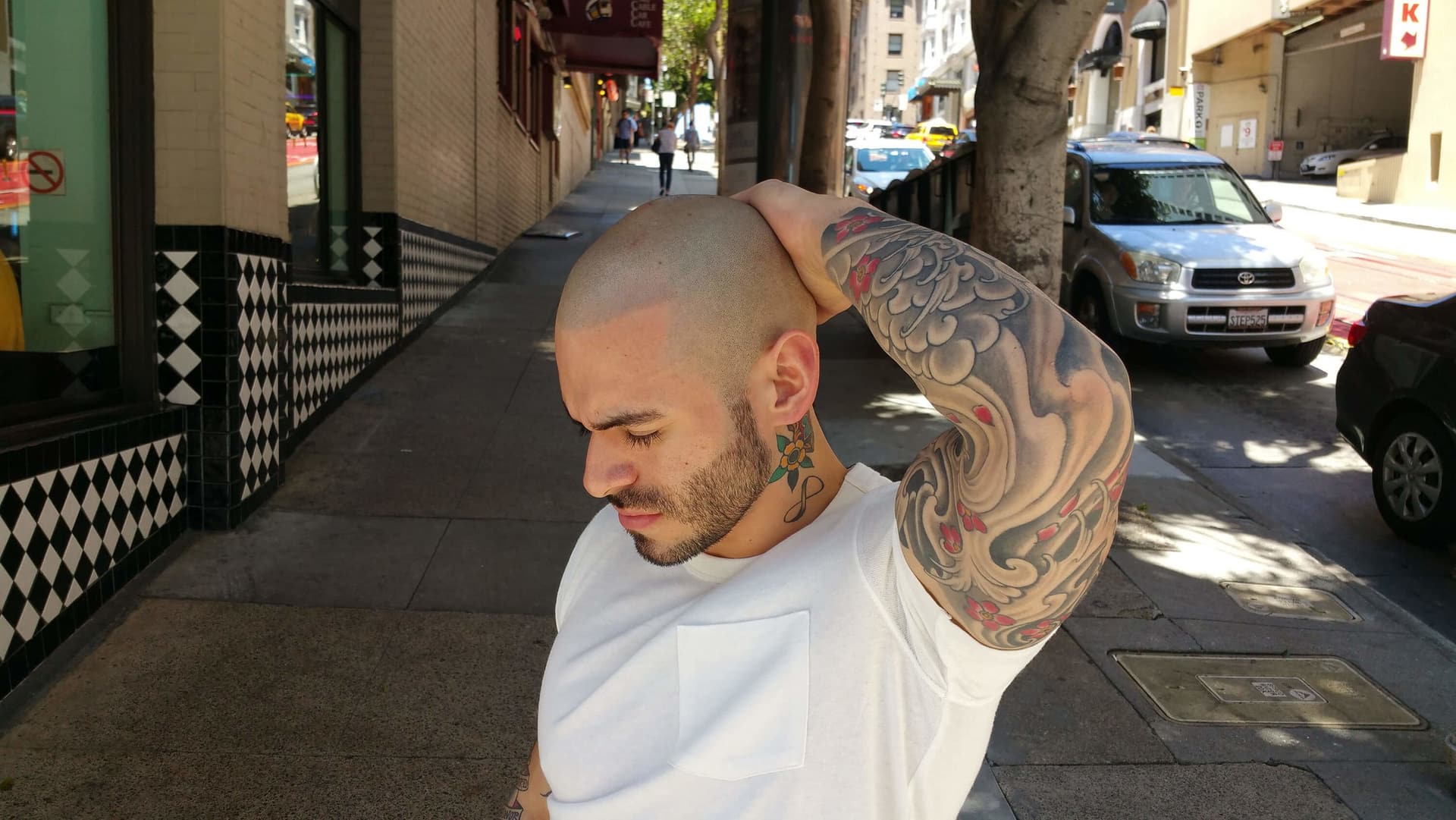
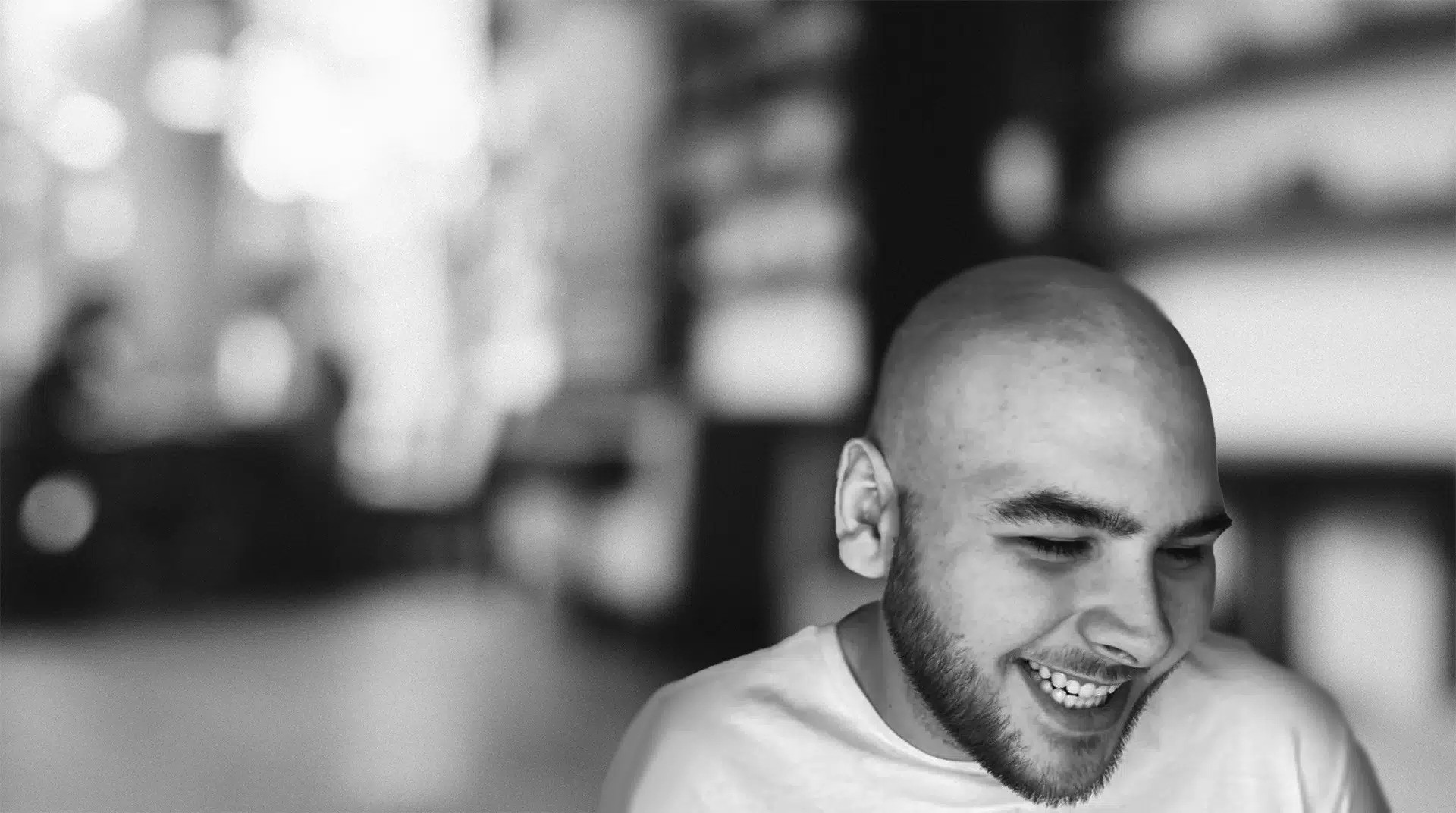
| Shaved head | 4 to 7, or any stage by choice | Shave daily or every 2 to 3 days | Everything, by removing the contrast |
Buzz cut with a receding hairline
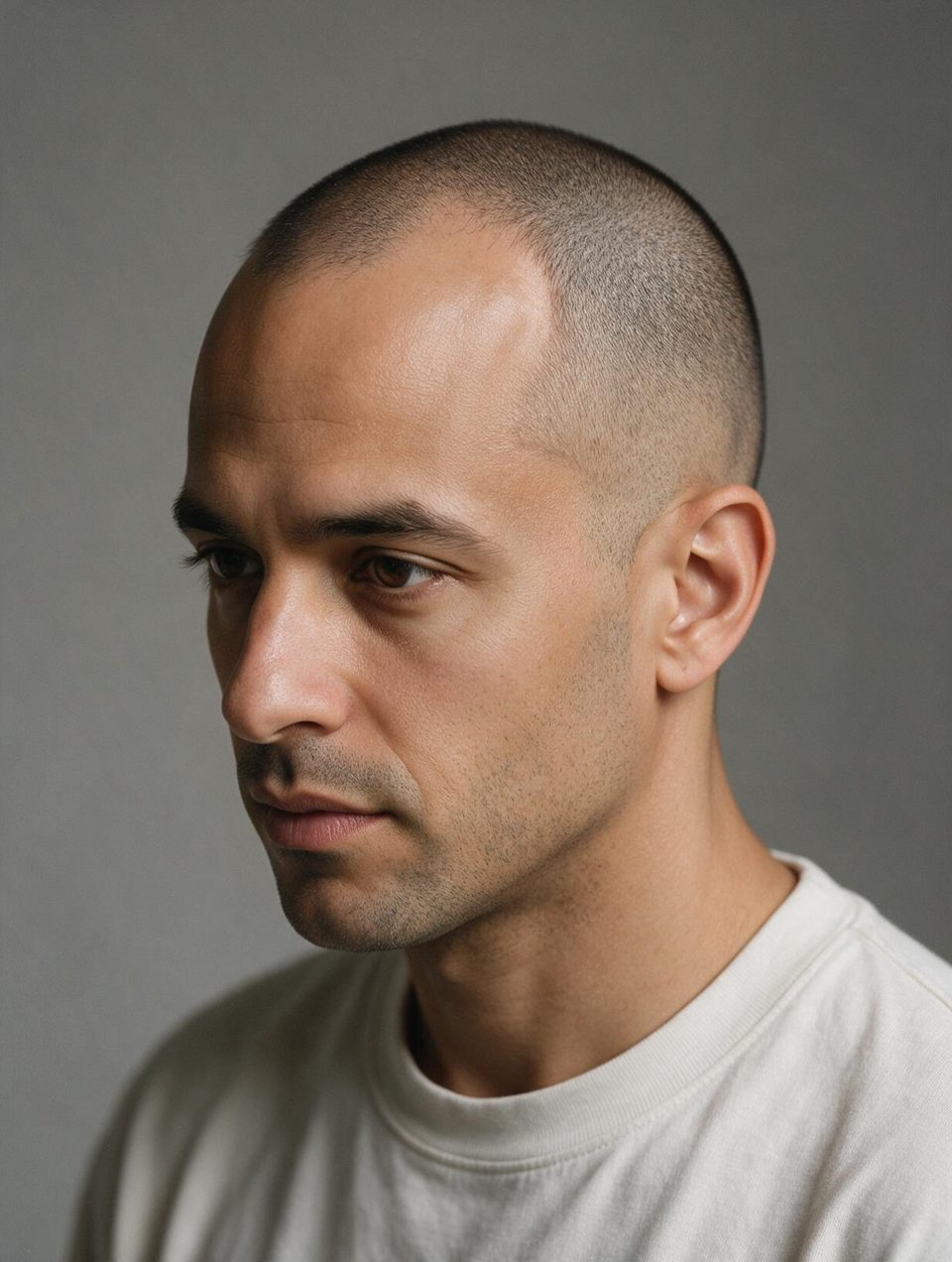
What it is. A clipper cut at one length all over, or a touch shorter at the sides, with no scissor work on top.
Why it works. The buzz cut is the cut barbers recommend most often for a receding hairline, and the reason is simple: when everything is short, the bare temples and the hair beside them read almost the same. In the MediaFeed piece, Peace and master cosmetologist and trichologist Salena Dowdy both suggest a number 1 or 2 guard for a near uniform look, and a 3 or 4 when the crown is still fairly dense. Luxe Digital suggests a number 1 all over with a natural line-up and a tapered neckline, noting that at that length "it's hard to tell where your hair is and where it used to be."
Where it fails. The same MediaFeed piece carries a warning from master barber Christopher McDaniel of The Grooming Professionals: with significant recession, "a buzz cut could draw more attention to it and potentially make it appear more severe." In my experience that happens when the guard is long enough to leave a visible block of hair in front of deep, bare temples. The piece also notes that an irregular head shape shows more at this length.
Norwood stages. 2 to 4 with a 1 to 3 guard. At 5 and beyond it still works, but only taken down to a 0 or 1, at which point it is close to a shaved head.
Ask your barber. "A number 2 all over, tapered at the neck, with a natural line-up at the front. Please don't push the hairline back." If you are nervous, the MediaFeed piece suggests starting at a 4 and going shorter once you are comfortable.
Upkeep. McDaniel suggests trims every 2 to 3 weeks to hold the even length, and Dowdy recommends good clippers at home if you will not see a barber that often.
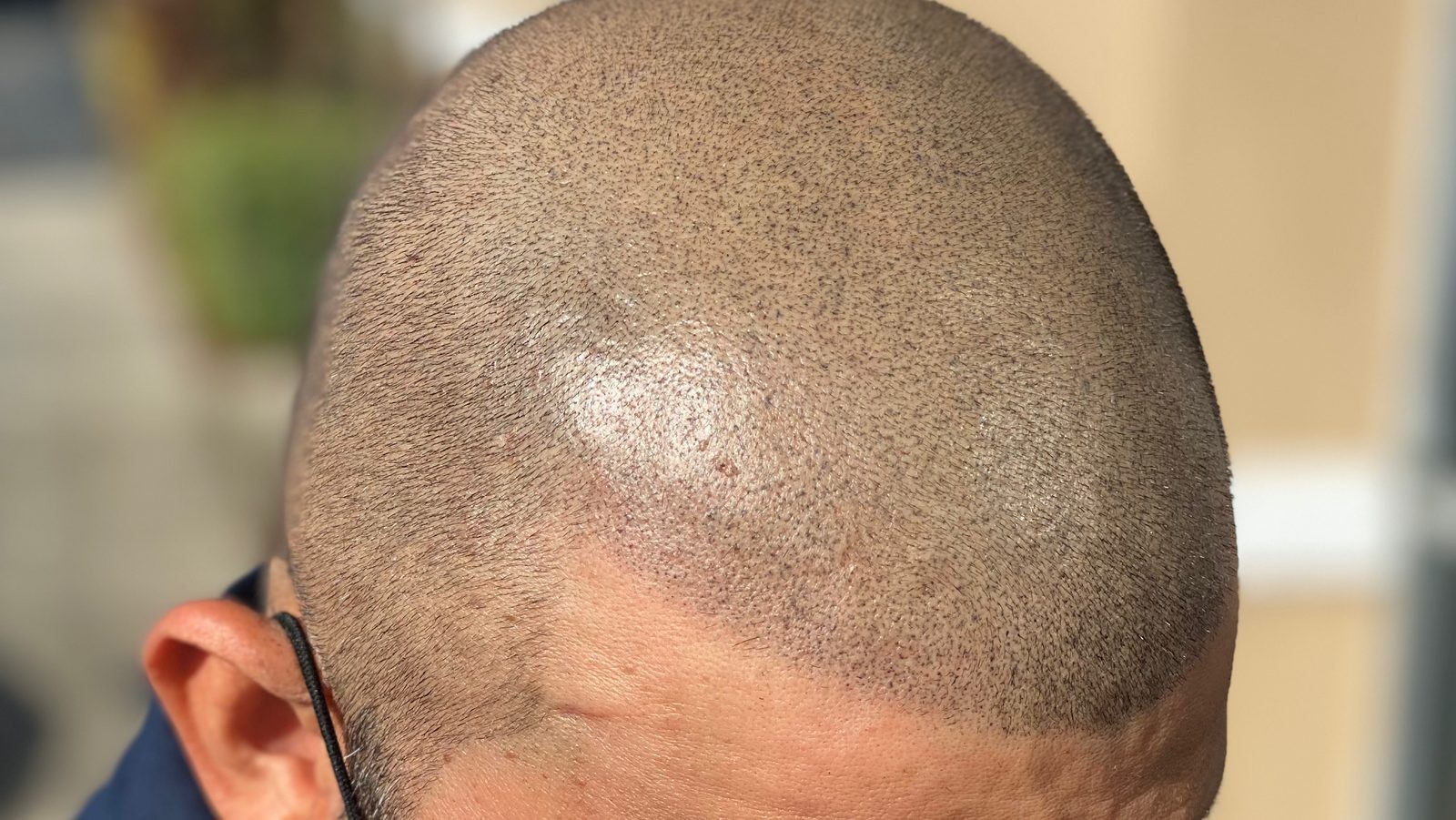
The buzz cut is also the haircut many of my SMP clients already wear before they come in, and it is the length that scalp micropigmentation is designed to sit under. If SMP might be in your future, living with a buzz for a few months tells you a lot about whether the look suits your face.
Short textured cuts
These cuts keep the sides short and use texture or a short fringe on top to soften the corners of the hairline. They suit Norwood 2 and 3, while there is still density at the front.
Crew cut
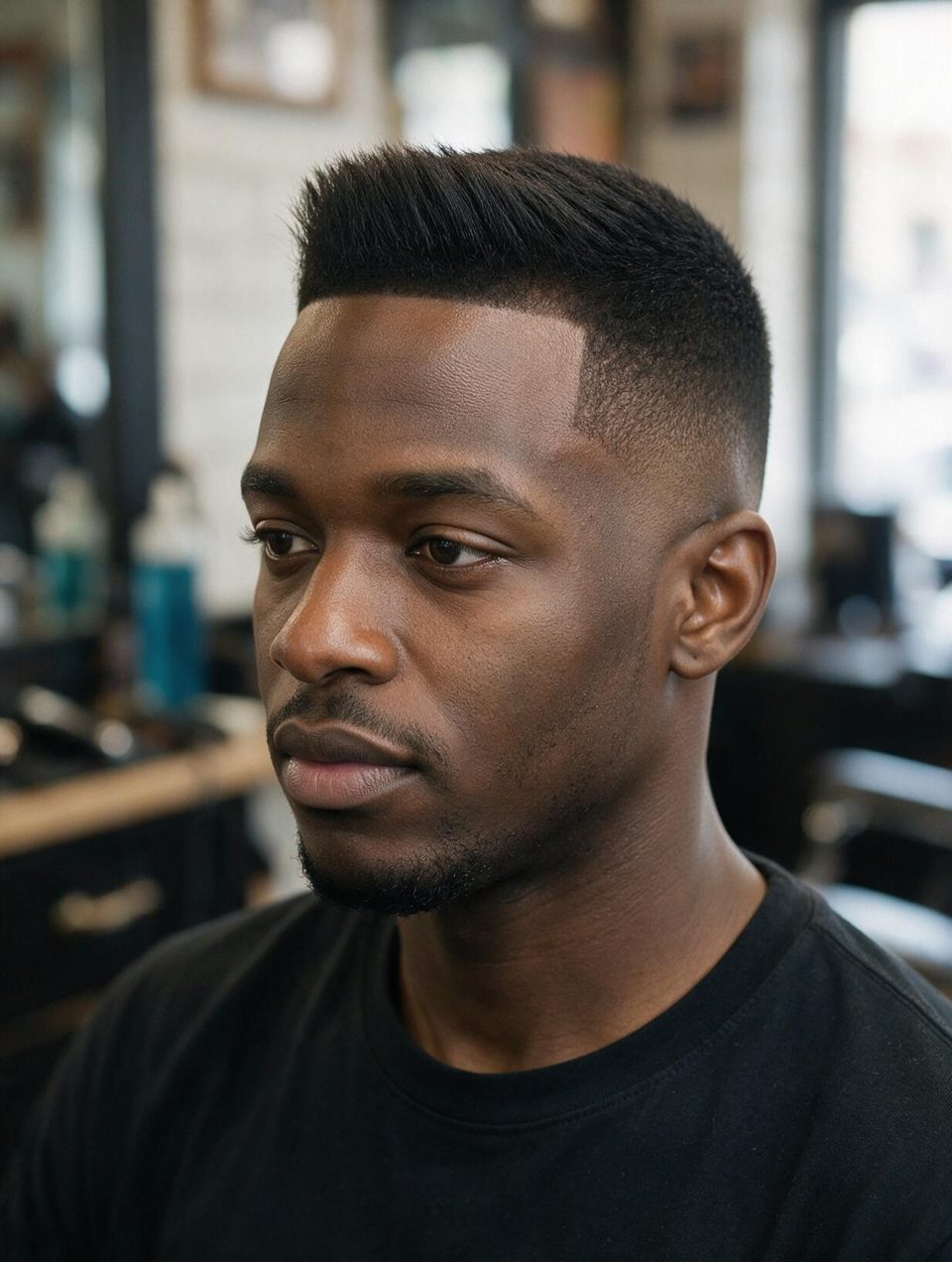
What it is. Short tapered sides with a slightly longer top that gets shorter toward the crown.
Why it works. Dowdy says the crew cut "gives the man more length on the top of the head without showing too much of the thin hair in the front," and McDaniel adds that the longest hair sits at the front (Hims, via Stacker, 2025). Brushed up or slightly forward, that front length covers the start of the recession without looking like it is trying.
Where it fails. When the front has to grow long enough to separate, the gaps show scalp, and you are drifting toward a comb-forward.
Norwood stages. 2 to 3.
Ask your barber. "A crew cut: short taper on the sides, the top graduated so it's longest at the front, natural line-up, matte finish."
Upkeep. Low to medium. A barber visit every few weeks and a small amount of matte product.
Textured crop
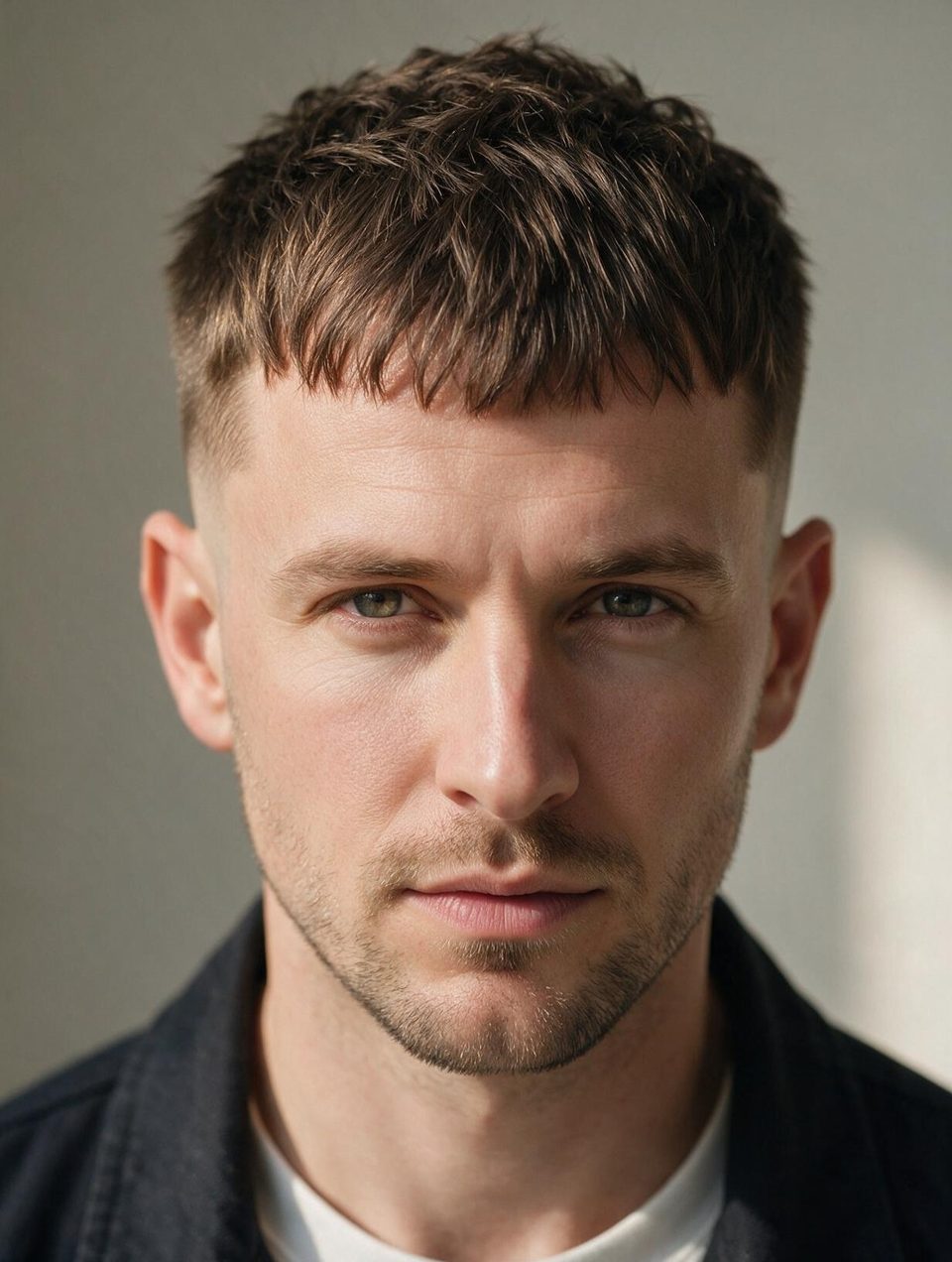
What it is. Short faded or tapered sides with a top cut into choppy, piecey texture, pushed forward into a short fringe.
Why it works. Broken-up texture hides exactly where the hairline dips. The eye reads the shape of the top, not a clean line across the forehead, and the forward pieces cover the corners at the temples.
Where it fails. When the top is thin, the texture clumps and the gaps between the clumps show scalp. Shorter and finer texture helps for a while.
Norwood stages. 2 to 3, and 3 vertex, as long as the crown is kept short.
Ask your barber. "A textured crop: taper or fade on the sides, point cut texture on top, a short fringe pushed forward, not a blunt line."
Upkeep. Medium. Regular trims to keep the shape, plus a matte clay or sea salt spray.
French crop
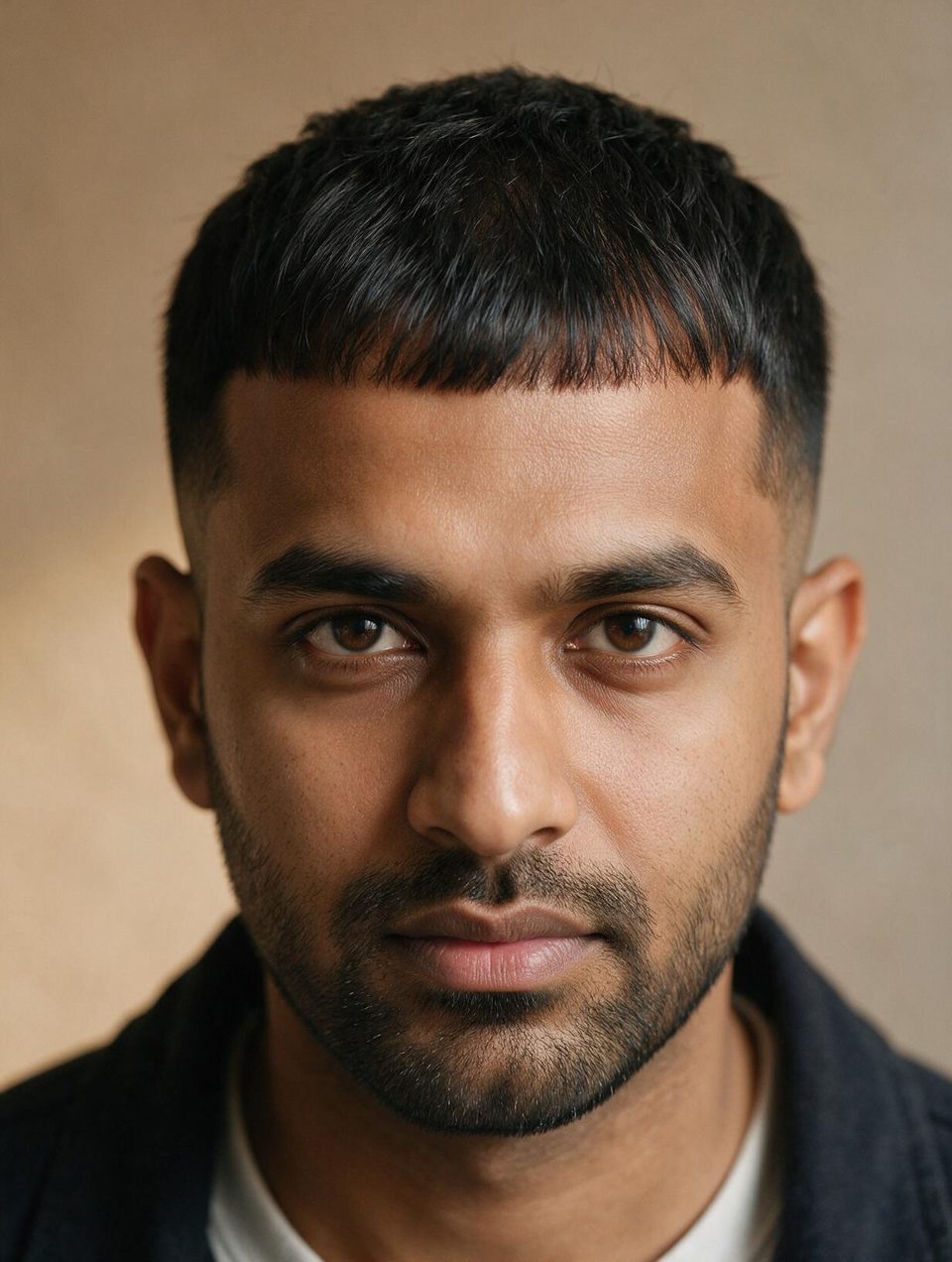
What it is. A close cousin of the textured crop with a more defined fringe: short and forward, sitting across the forehead, with short sides.
Why it works. The Hims piece explains that short, blunt, forward-brushed bangs pull hair toward the front, softening a receding hairline or widow's peak. For men whose hairline is moving back evenly across the front, the Norwood 3A pattern, I find it one of the most useful cuts there is, because the fringe hides a front-to-back recession while the hair behind it is still dense.
Where it fails. When the fringe has to be long to reach the forehead. Luxe Digital's advice is to keep a fringe short if the recession is deep, because a long fringe over a very high hairline draws the eye.
Norwood stages. 2 to 3, and 3A.
Ask your barber. "A French crop: a short fringe that sits well above the brows, texturized rather than heavy, sides tapered or faded."
Upkeep. Medium. The fringe grows into the eyes quickly, so expect regular trims.
Caesar cut
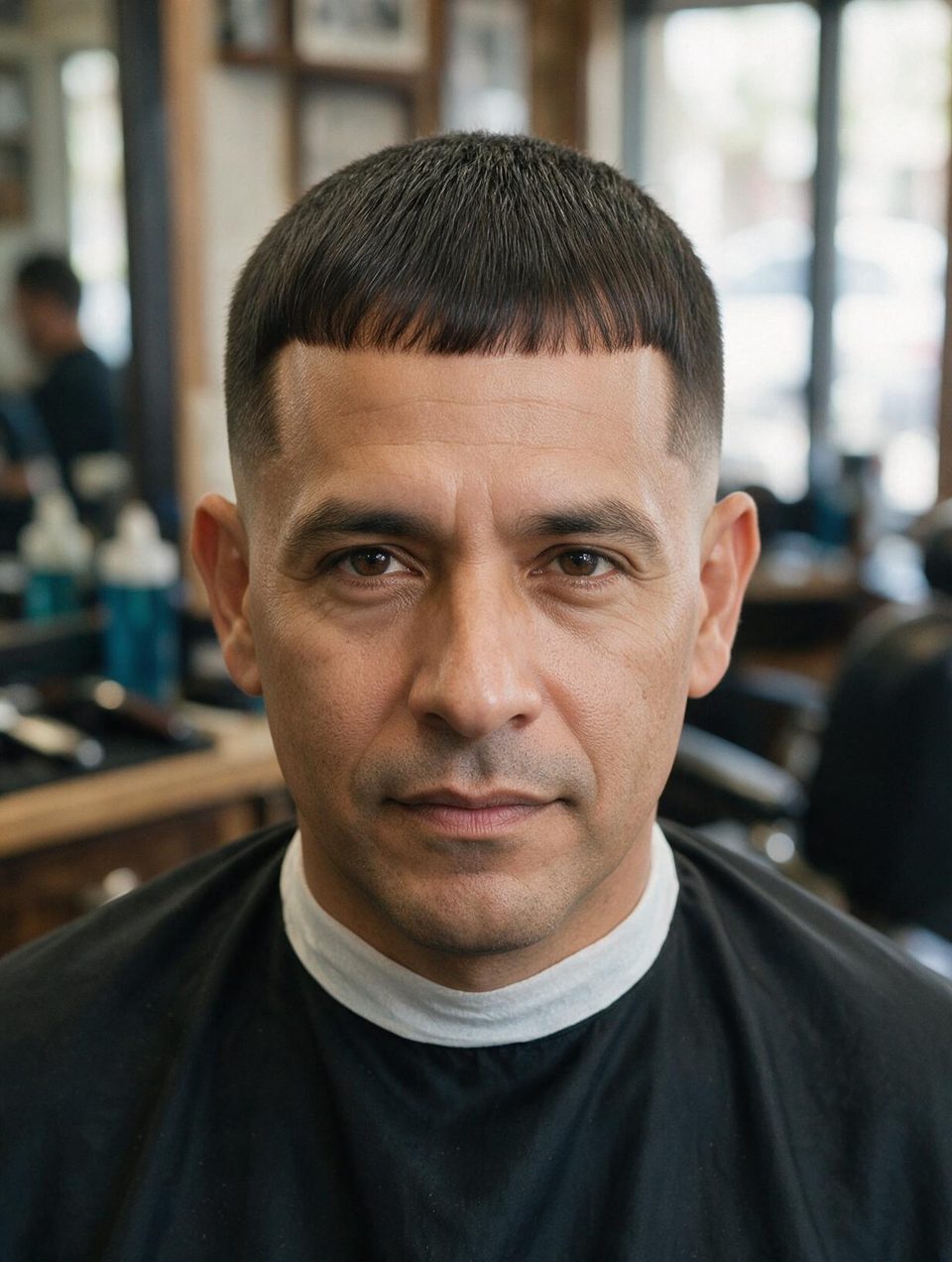
What it is. Short, even hair on top brushed forward into a short, straight fringe, with short sides. It is tighter and more uniform than a French crop.
Why it works. The Hims piece groups it with the French crop for the same reason: hair brushed forward softens the hairline. Because the whole top is short, there is less length to separate, which makes it forgiving on slightly finer hair. It handles a widow's peak particularly well.
Where it fails. When the temples are deep enough that the fringe becomes an island in the middle of the forehead.
Norwood stages. 2 to 3.
Ask your barber. "A Caesar: short and even on top, brushed forward, a short straight fringe with a soft edge, tapered sides."
Upkeep. Low to medium. Little or no product, and a trim every few weeks.
Messy fringe

What it is. A longer, layered, piecey fringe pushed forward and a little to one side, with short sides.
Why it works. At Norwood 2, when the front is still dense, a loose fringe covers the corners naturally and looks relaxed rather than engineered. Luxe Digital's point holds here too: a fringe can help or hurt.
Where it fails. From Norwood 3 onward. The fringe needs more length to cover, the length separates, and the style turns into a comb-forward.
Norwood stages. 2.
Ask your barber. "A textured fringe, layered so it moves, no longer than the brows, sides kept short."
Upkeep. Medium. Daily styling with a light matte product, and regular trims so the fringe does not get heavy.
Fades and tapers
Taking the sides close to the skin makes the top look denser by comparison and moves attention to the shape of the cut rather than the hairline.
Taper fade
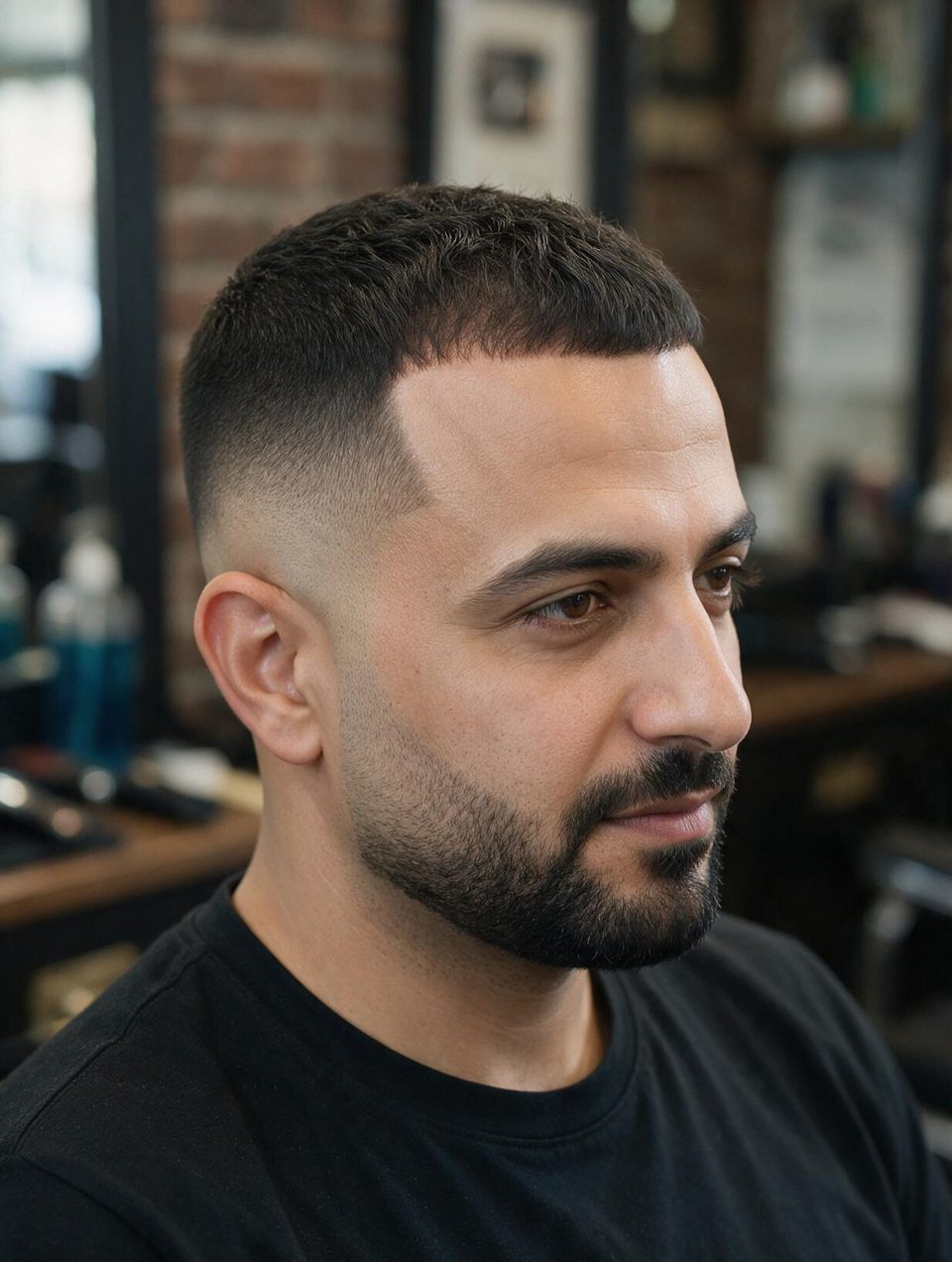
What it is. The hair at the sides and back gradually shortens from the top down to the neck and ears. It is softer than a skin fade.
Why it works. McDaniel says a taper fade "allows you to draw attention to the sides and back of your head," and Dowdy says that with proper blending it can make a head of hair look fuller (Hims, via Stacker, 2025). It pairs with nearly every top on this list.
Where it fails. Rarely on its own. The taper is the base; whether the cut works depends on what you wear on top.
Norwood stages. 2 to 4.
Ask your barber. "A low or mid taper, blended well, with a natural line-up at the front."
Upkeep. Medium. The blend softens over a few weeks.
Skin fade with textured top
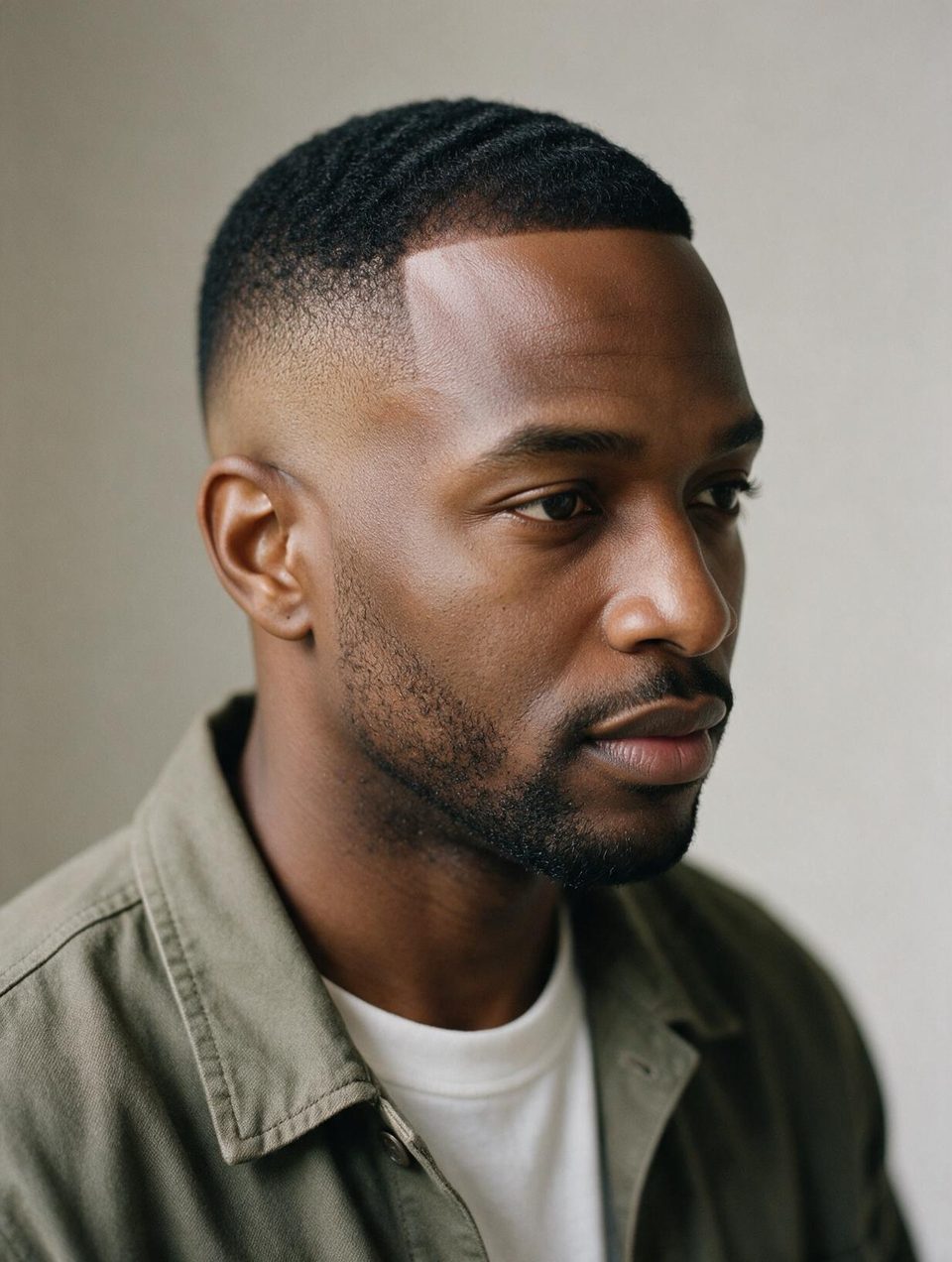
What it is. Sides taken to bare skin at the bottom, blending up into a short, textured top.
Why it works. The sharp sides create a deliberate contrast of their own, so the top reads denser and the eye has somewhere else to go.
Where it fails. When the top is thin. Skin at the sides plus a see-through top can make the whole head look patchy. The fix is to take the top shorter, not to grow it.
Norwood stages. 2 to 4.
Ask your barber. "A mid skin fade, a short textured top with matte product, and keep the front soft."
Upkeep. High. A skin fade loses its crispness quickly, so it means frequent visits.
High and tight
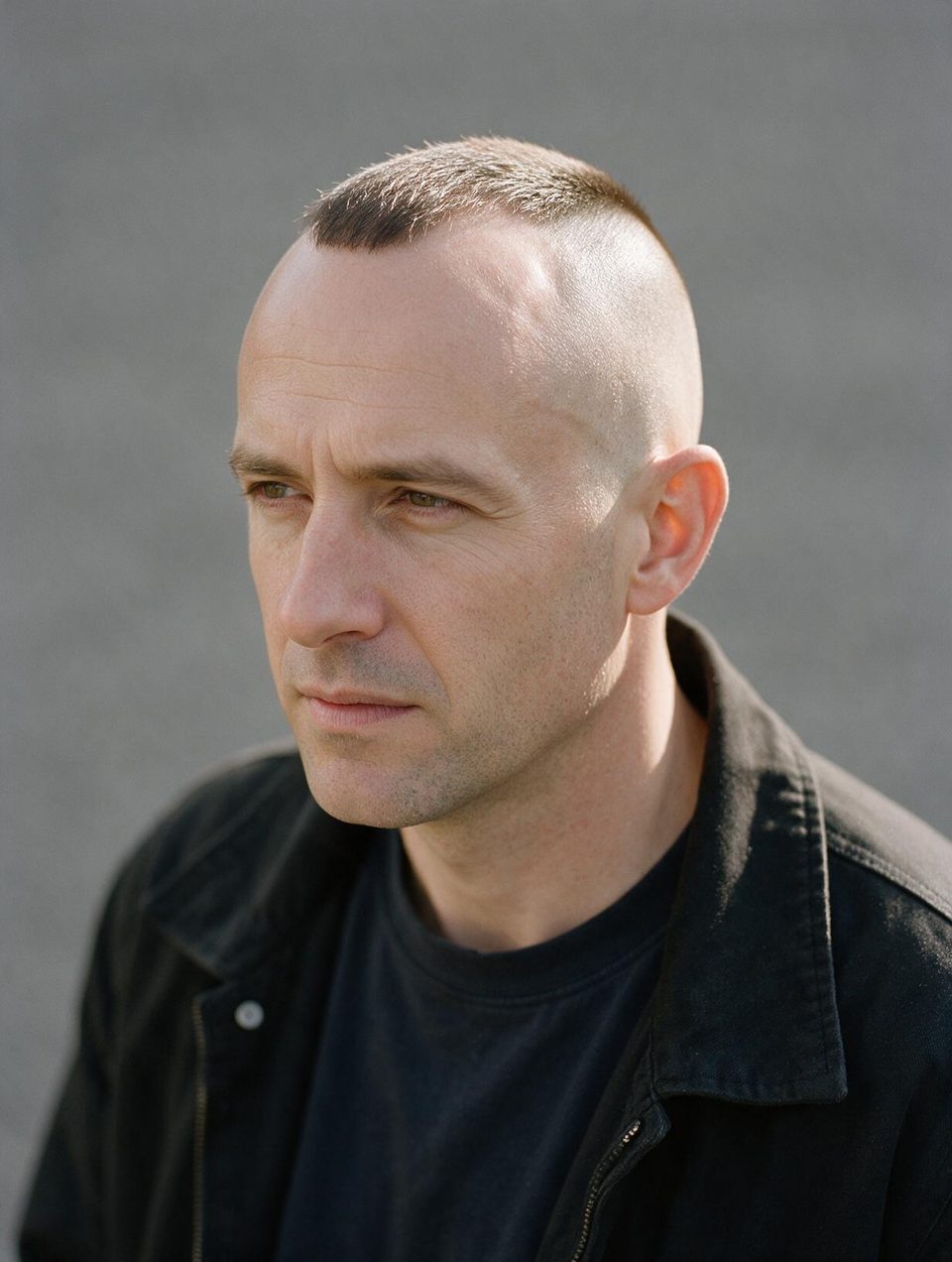
What it is. Sides and back clipped very close, high up the head, leaving a short strip of hair on top.
Why it works. There is almost no length anywhere for the temples to contrast with, and the strip on top pulls attention to the center of the head. It is a good bridge for men moving from a crop toward a buzz cut.
Where it fails. When the strip on top is thin enough to show scalp, or when the crown is going too.
Norwood stages. 3 to 4.
Ask your barber. "High and tight: sides clipped close up to where the head turns, a short top blended in, natural front."
Upkeep. Medium to high, to keep the sides tight.
High top fade
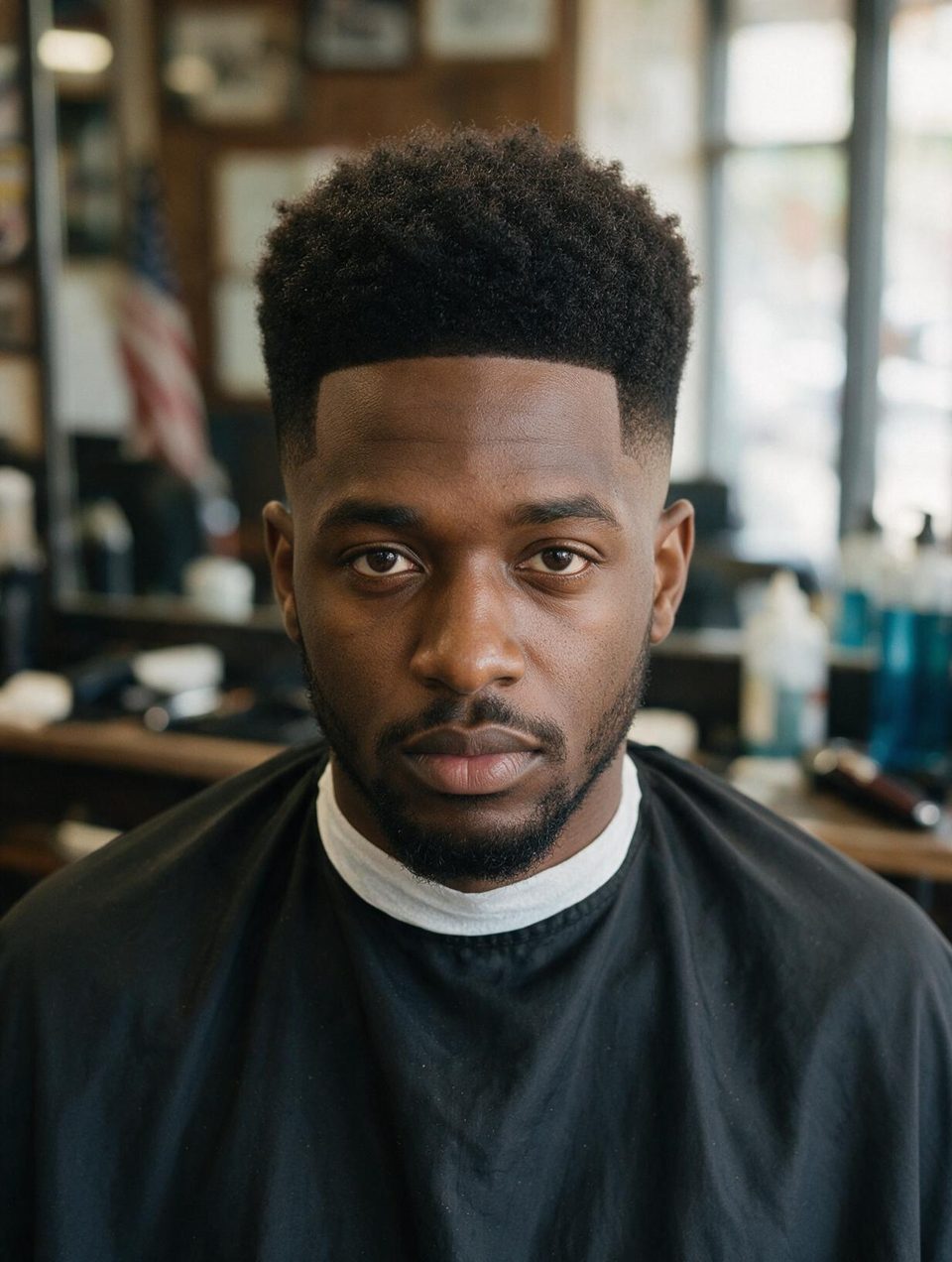
What it is. For afro-textured hair: faded sides and back with height on top.
Why it works. Dowdy says that "keeping the sides and back faded can draw the attention away from the hairline," with the volume on top shifting focus away from the sides (Hims, via Stacker, 2025). Peace adds that "tight and curly hair and textures can better conceal thinner areas" (MediaFeed, via AOL, 2025).
Where it fails. When the front of the high top thins. Height then exposes the edge rather than hiding it.
Norwood stages. 2 to 3, with a dense top.
Ask your barber. "A high top fade with blended sides, and shape the front softly rather than in a hard straight line."
Upkeep. High. Frequent shaping keeps the outline clean.
Edgar cut: usually not
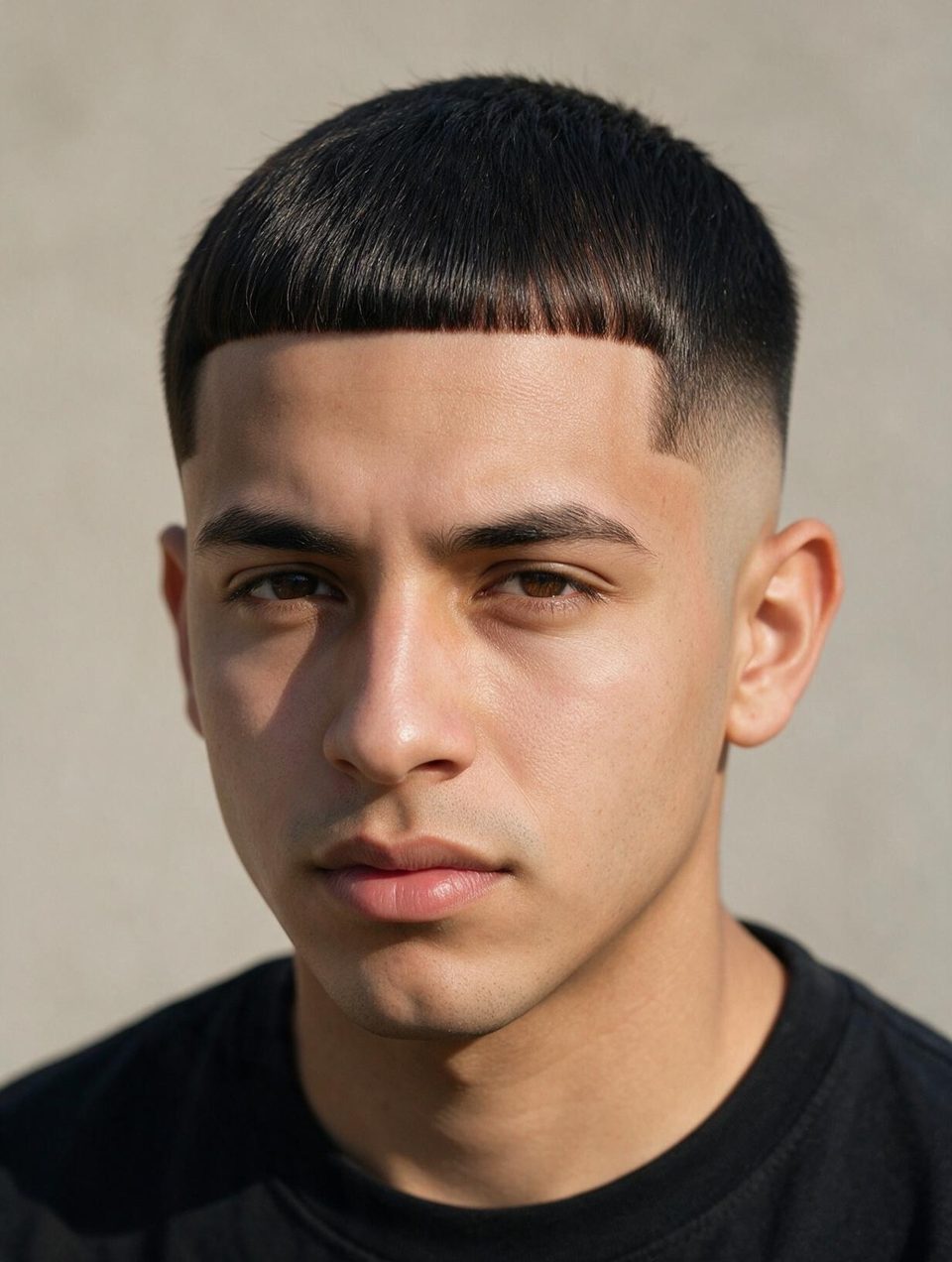
What it is. A blunt, straight fringe cut in a hard line across the forehead, usually over a high skin fade.
Why it usually fails. The whole look depends on a sharp, straight line across the front, which is exactly where a receding hairline is weakest. The bare corners show on either side of the line, and the edge gets redrawn at every visit, which is the hard line-up problem Luxe Digital warns about.
Norwood stages. 1 to 2 only, with a dense, straight front.
Ask your barber instead. If you like the shape, ask for the same fade with a shorter, textured fringe. That is a textured crop, and it ages far better.
Upkeep. High. The line needs redoing often to look intentional.
Classic and structured cuts
Ivy League
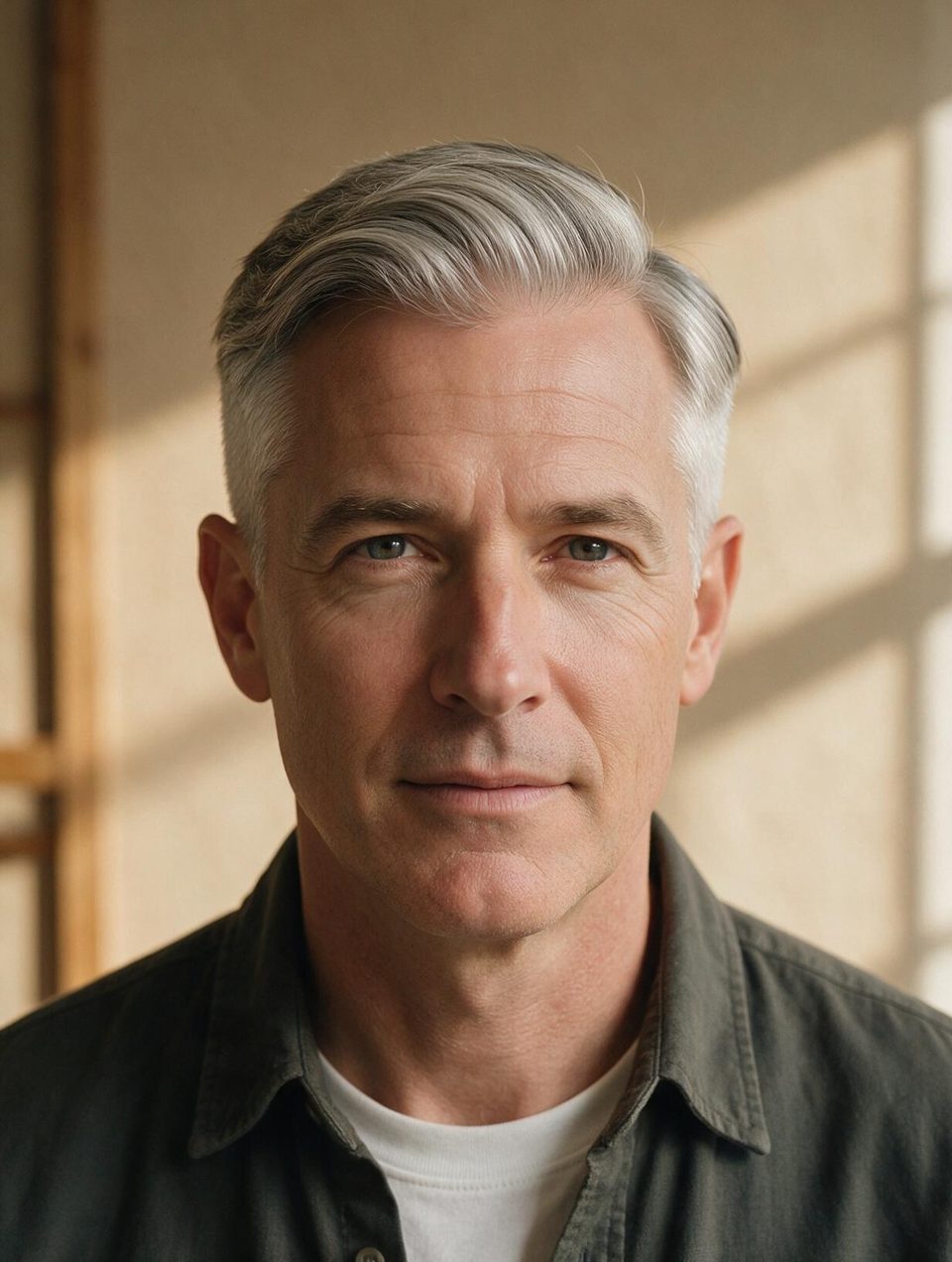
What it is. A crew cut grown out on top, long enough to part to the side, with short tapered sides.
Why it works. It suits men whose hairline has settled at Norwood 2 and stayed there. The side part gives structure and a polished, grown-up look, and it ages well into gray hair.
Where it fails. As the temples deepen. The part line starts at the hairline, so it can open up the recession on that side.
Norwood stages. 2 to 3.
Ask your barber. "An Ivy League: short tapered sides, enough length on top to part, and which side do you think I should part on?" Hairlines are rarely symmetrical, and one side usually hides more than the other.
Upkeep. Medium. A light product to hold the part.
Side part with taper

What it is. A soft side part with the top swept across and slightly forward, over tapered sides.
Why it works. The Hims piece describes a side-swept fringe that covers the temples and softens the shape of the hairline. Swept from the stronger side toward the weaker temple, it covers the deeper corner without looking like a cover.
Where it fails. With a shaved part line. A hard line cut into the skin at the front draws a pointer straight to the hairline. Keep the part natural.
Norwood stages. 2 to 3.
Ask your barber. "A side part with no shaved line, top swept across and a little forward, taper on the sides."
Upkeep. Medium. Daily styling with a matte cream or paste.
Short quiff
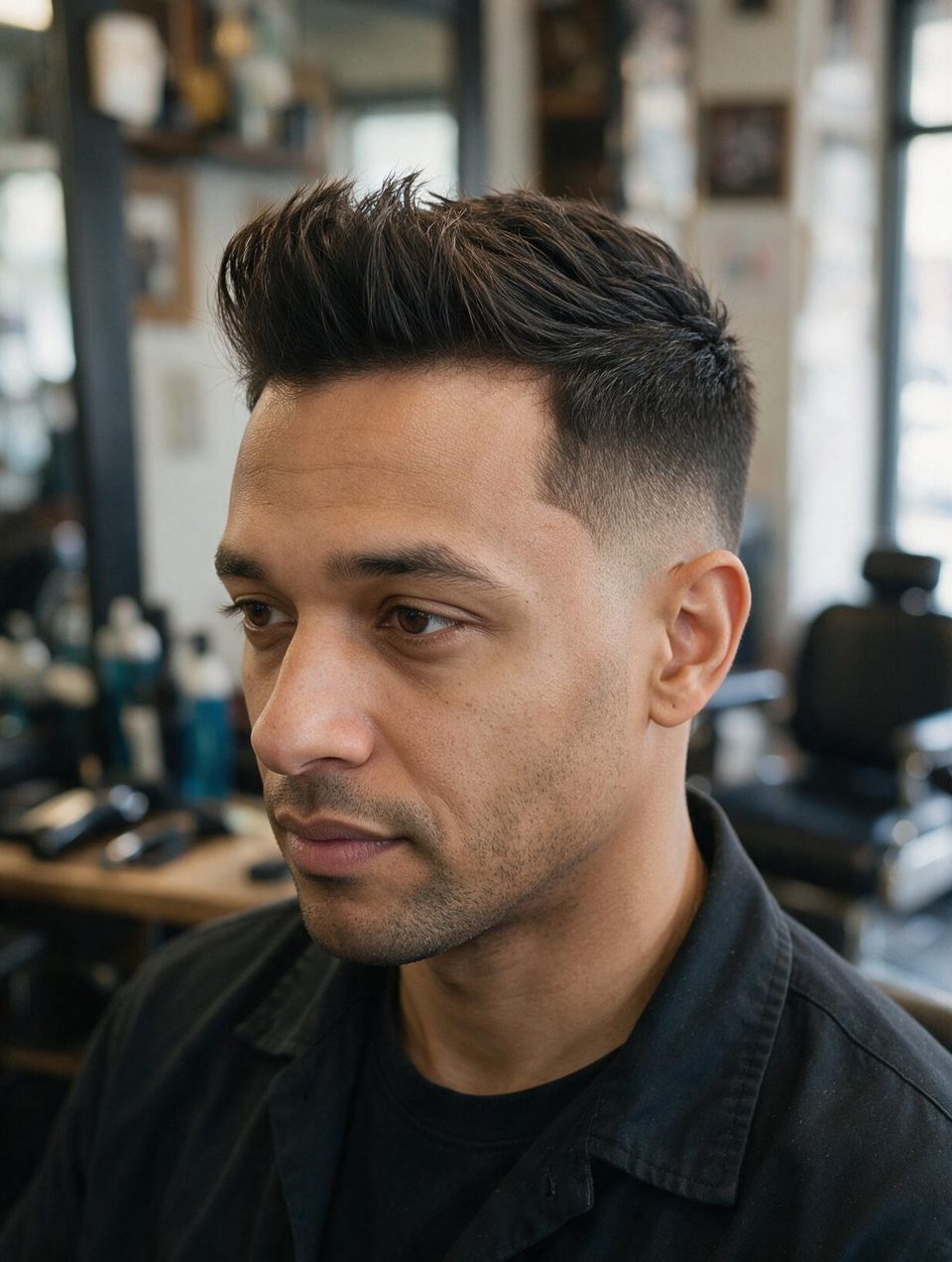
What it is. The front lifted up and slightly back, with short sides.
Why it works. Luxe Digital says a quiff lifts the front to draw the eye up and away from thin areas, and recommends keeping it short and textured rather than tall and glossy, with two to three inches at the front (Luxe Digital, 2026).
Where it fails. As a tall, shiny pompadour. In my experience a big quiff over deep temples looks like it is compensating, and the shine shows the scalp.
Norwood stages. 2 to 3, with a dense front.
Ask your barber. "A short textured quiff, two to three inches at the front, tapered sides, matte finish."
Upkeep. Medium to high. It needs a blow dryer and product most days.
Slicked back undercut, only where it is honest
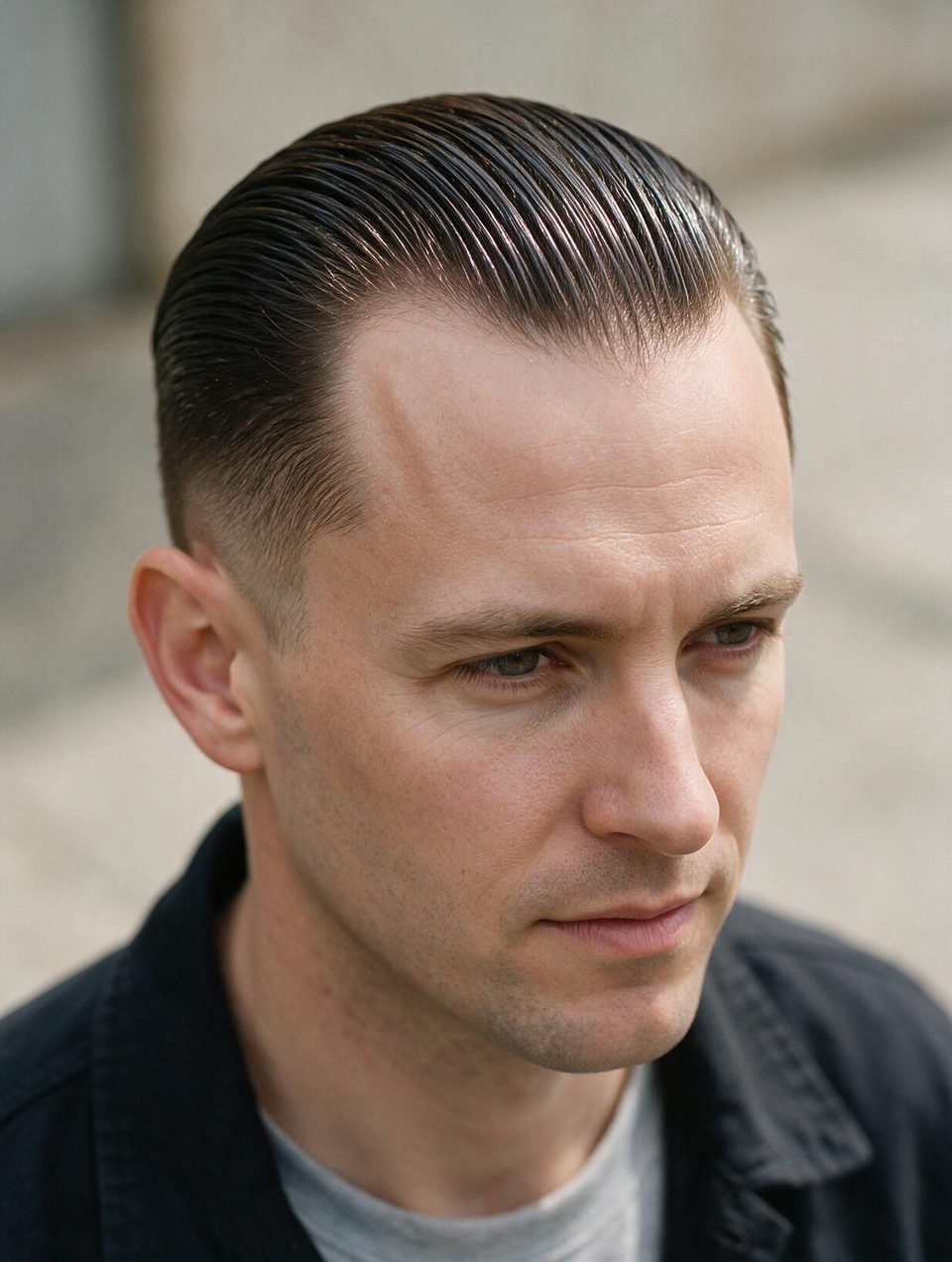
What it is. Short clipped sides and back, disconnected from a longer top combed straight back.
Why it works, when it does. It hides nothing, and that is the point. Luxe Digital argues that slicking the hair back turns a widow's peak into a feature: "the peak becomes the center of the look rather than something to cover." It suggests four to five inches on top and a pomade with some shine.
Where it fails. Anywhere the top is thinning. Combed-back hair separates into lines, and shine shows the scalp between them. It also makes uneven recession obvious.
Norwood stages. 2, and some 3s with a strong, dense widow's peak. Be honest with yourself about the top.
Ask your barber. "An undercut with enough on top to comb back, and recommend a light hold pomade, not a wet-look gel."
Upkeep. High. Daily styling, and the sides need regular clipping.
Long hair with a receding hairline
Long hair with a receding hairline can work, but only on one condition. Luxe Digital puts it best: long hair "can work with a receding hairline as long as you stop trying to cover the temples with it."
Long hair, collar length or longer
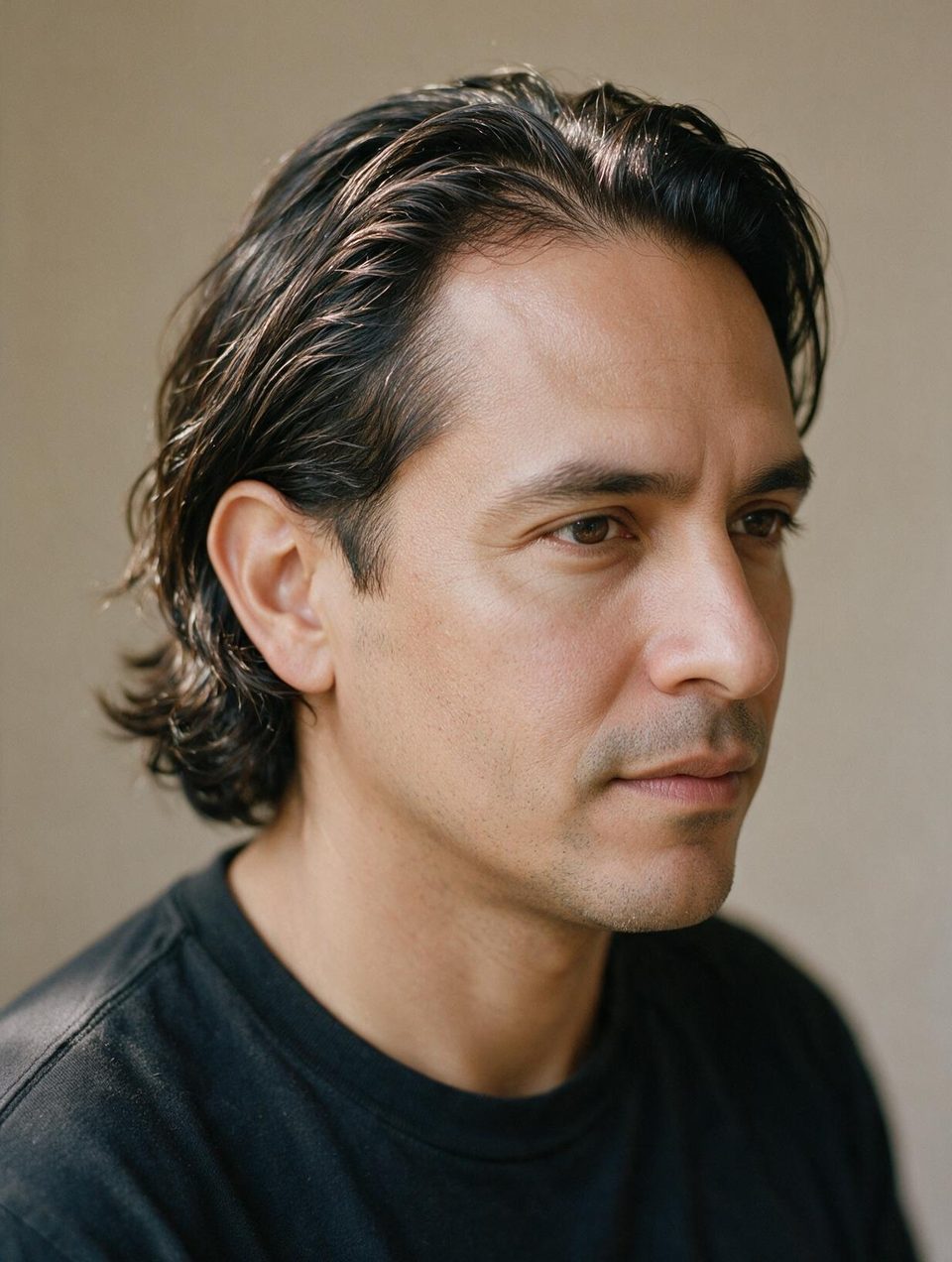
What it is. Hair grown to the collar or beyond, worn back, center parted or loosely off the face. Luxe Digital suggests growing it to the collar with a low taper at the neck to keep it tidy.
Why it works. Length moves attention down and out, to the shape, the wave and the texture, rather than to the front edge. Wavy and curly hair helps, since texture covers the scalp better than straight hair.
Where it fails. In three ways. When you comb it forward to hide the temples. When the top thins, because long fine hair separates and shows the scalp, especially wet or in wind. And in photos taken straight on, where long hair hides the hairline from the side but not from the front.
Norwood stages. 2 to 3, with a dense top and crown.
Ask your barber. "Long layers to keep weight off the top, no heavy blunt fringe, and a low taper at the neck while it grows."
Upkeep. Medium to high. Regular trims for the ends, and more washing and conditioning than a short cut.
Man bun and ponytail: know the limits
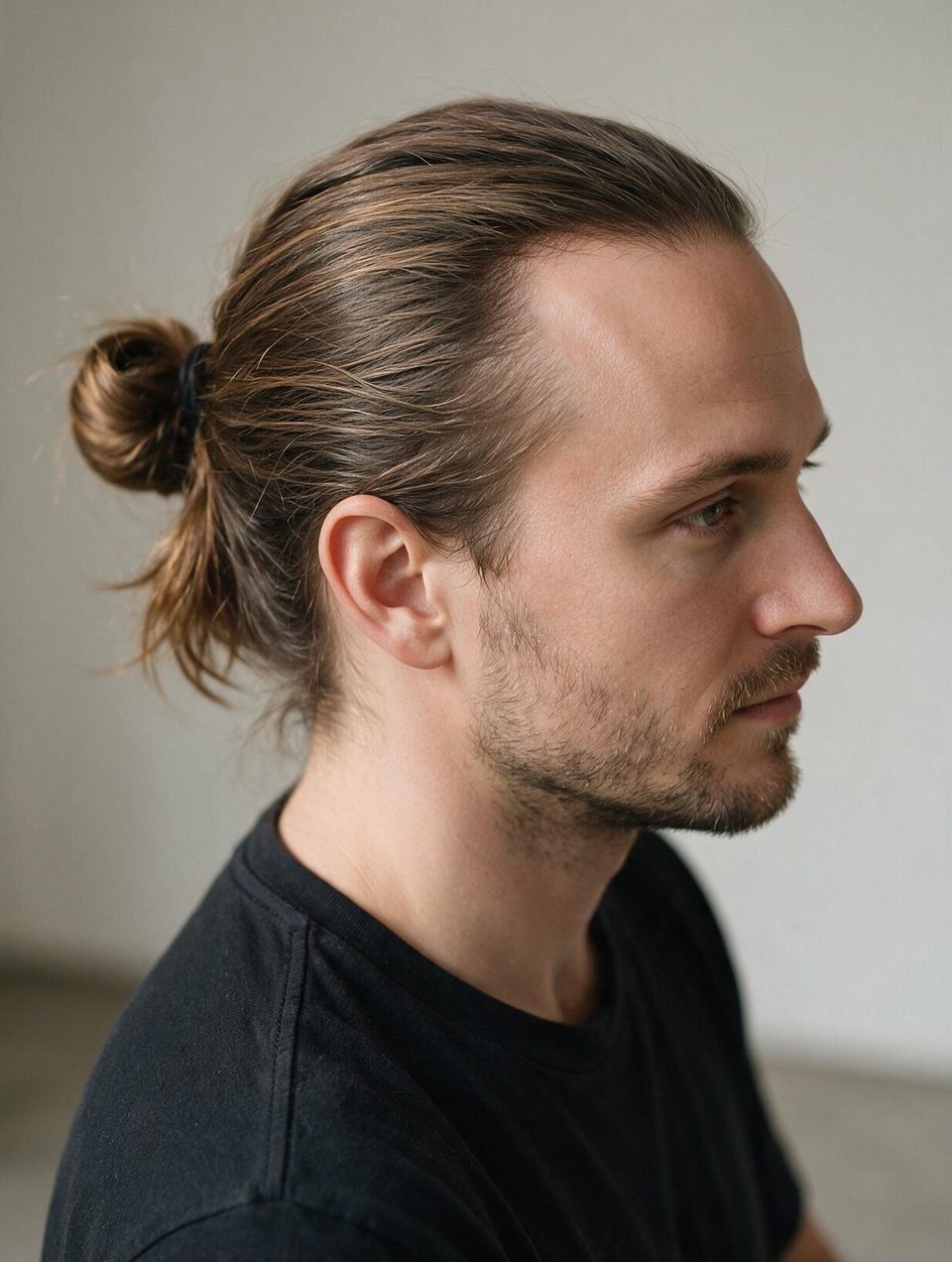
What it is. Long hair tied back into a bun or ponytail.
Why to be careful. Pulled back hair shows the whole hairline, so a bun only flatters a mild Norwood 2. The bigger issue is tension. The American Academy of Dermatology lists tightly pulled buns and ponytails among the styles that can cause traction alopecia, a separate kind of hair loss caused by constant pulling. Early signs include broken hairs around the forehead and a receding hairline, and the AAD warns that it can become permanent the longer it goes untreated. In other words, a tight bun can add a second kind of loss exactly where you are already losing hair.
How to wear it. The AAD says occasional tight styles are fine but pulling styles should not be worn often. Tie it low and loose, change where you tie it, give your hair days off, and stop if it causes pain, stinging or crusts on the scalp.
Norwood stages. 2, worn loose.
Upkeep. Medium. Daily styling and soft ties rather than thin elastic bands.
The shaved head
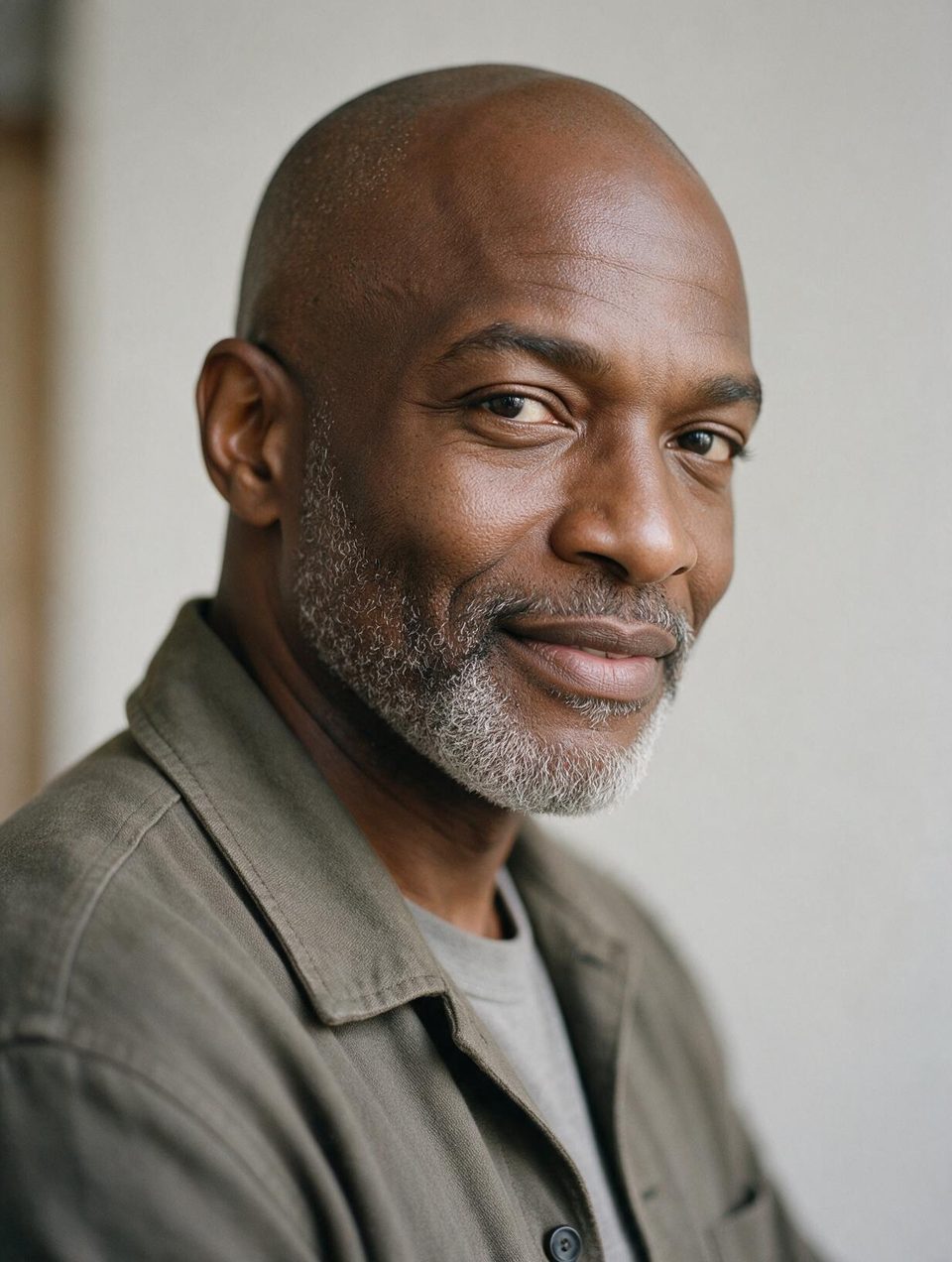
What it is. Hair clipped to zero and then shaved with a razor or foil shaver.
Why it works. There is no hairline left to compare, so there is nothing to hide. Peace recommends it once the receding area is entirely bald, "shaving the entire head for a more debonair appearance" (MediaFeed, via AOL, 2025). Research is mixed but interesting. In a set of studies by Wharton's Albert Mannes, men with shaved heads were rated more dominant and were seen as about an inch taller and stronger than men with hair, though they were also rated less attractive and older (Knowledge at Wharton, 2012).
Where it fails. On men who hate the feeling of exposure, and on heads with bumps or scars they would rather not show. That is a personal call, not a rule.
Norwood stages. 4 to 7, and any stage if you are simply done managing it.
How to do it. Most men shave at home. Harvard Health's routine is to trim to stubble with clippers, soften the scalp with warm water, shave with the grain from the back of the head toward the front, and finish with an alcohol-free balm, touching up daily or every two to three days (Harvard Health Publishing, 2024). A shaved scalp also needs sun protection: the American Academy of Dermatology says to apply broad-spectrum, water-resistant SPF 30 or higher, including to the top of your head.
Our guide to hairstyles for balding men covers the shaved head in depth, including beard pairing, head shape and tools, and famous bald men shows how well it can be worn.
Cuts that make a receding hairline look worse
Some choices reliably make recession more obvious, whatever your stage.
- The comb-forward or comb-over. Growing the front long to cover a gap, Luxe Digital says, "tends to draw attention to the thing it's covering." Wind, rain and swimming undo it.
- A long, heavy fringe over a very high hairline. It creates an obvious curtain with bare corners on either side.
- A hard, squared line-up at every visit. It pushes the hairline back a little each time.
- Wet-look gel on thinning hair. The shine shows the scalp between the strands.
- Tight buns, ponytails and braids. The AAD links them to traction alopecia along the hairline.
- A long top over short sides when the top is thin. The contrast now works against you.
What to tell your barber
A good barber can only work with what you tell them. Before the clippers come out, cover these points.
- Your hairline is receding, and roughly what stage you think you are at.
- Whether it is still moving, or has been stable for a few years.
- Which temple is deeper, so the part and direction favor it.
- That you want a natural line-up, and the front left soft.
- That you want a matte product, not shine.
- A photo of a style on a man with a similar hairline, not on a man with a full head of hair.
- How often you will realistically come back, so the cut fits your life.
When a haircut stops working
At some point many men find they are choosing cuts by what they hide rather than how they look. The signs are a fringe that needs more length every month, scalp showing on top in bright light, and the temples and crown starting to meet. At that stage there are four honest routes, and they can be combined.
Go shorter. A very short buzz or a shaved head costs almost nothing and ends the hiding game.
Medication. The American Academy of Dermatology says topical minoxidil can take six to 12 months to show results and full regrowth is unlikely, while finasteride, a daily prescription tablet, slows further loss in about 80% to 90% of men who take it. Men tend to get better results when they start soon after noticing loss. The NHS is clear that no treatment is 100% effective and suggests seeing a GP before a commercial hair clinic. Medication decisions belong with a doctor.
A transplant. The AAD says a hair transplant can give permanent, natural-looking results, and the ISHRS says only surgery works for areas of complete baldness. The ISHRS also warns that transplanting young men without medical therapy can cause lasting problems, because the loss keeps progressing behind the new hairline. Our SMP vs hair transplant comparison sets out the trade-offs.
Scalp micropigmentation. SMP is a cosmetic tattoo that places tiny dots of pigment to look like shaved hair follicles. The ISHRS describes it as stippling pigment onto the scalp to resemble a shaved head. It does not stop hair loss or grow hair, and it suits men happy to wear a buzz cut for good. Our guide to SMP for a receding hairline covers hairline design, SMP costs covers the price, and how to choose an SMP artist covers what to check in an artist's healed work.