Balding is not one look, and neither is the haircut that suits it. A man with a thinning crown and a full front needs a different cut from a man whose hairline and crown have met, and both need something different again from a man at Norwood 7. I have spent 17 years in scalp micropigmentation and permanent makeup, and I see every one of these patterns every week. I am not a doctor or a barber: where I quote technique or medical facts, I link to the source, and the opinions on what looks right are mine.
If your concern is mainly the front, our haircuts for a receding hairline cover 18 cuts for the temples and the hairline in detail. What follows is about thinning, the crown and baldness.
Start with your pattern
Hairstyles for balding men work by pattern, not by age or face shape alone. Where you are losing hair decides which cuts hide it and which ones advertise it. If you are not sure of your pattern, rate yourself on the Norwood scale, and use a second mirror or a photo for the crown, which you cannot see straight on.
| Pattern | What you see | Styles that work | Avoid |
|---|---|---|---|
| Thinning crown | A widening spot at the whorl, front mostly intact (Norwood 3 vertex) | Crown cut shortest, even clipper cut, forward brush | Longer top that parts at the crown |
| Thinning all over | Scalp visible through the top in bright light | Short layered cut, short curls, brush cut | Length, shine, center parts |
| Receding plus crown | Deep temples and a thin crown with a band between (Norwood 4 to 5) | Burr cut, bald fade with buzzed top | Any style with length on top |
| Advanced | Front and crown joined, horseshoe at the sides (Norwood 5 to 7) | Clipped horseshoe, zero all over | Longer sides framing a bald top |
| Fully shaved | Any stage, by choice | Razor shave, with a full beard, stubble or clean face | Patchy regrowth between shaves |
Hairstyles for a thinning crown
Crown balding, or vertex thinning, is the pattern men most often discover from someone else's photo. The crown is where hair grows out in a whorl, so as it thins the hair tends to fall away from the center and open a visible spot. The answer is almost always to take the crown shorter, not to grow the hair around it longer. Texture helps too: in a MediaFeed piece on short cuts, master barber Darrius Peace of Hayah Beauty says "tight and curly hair and textures can better conceal thinner areas" (MediaFeed, via AOL, 2025).
Short back and sides, crown cut shortest
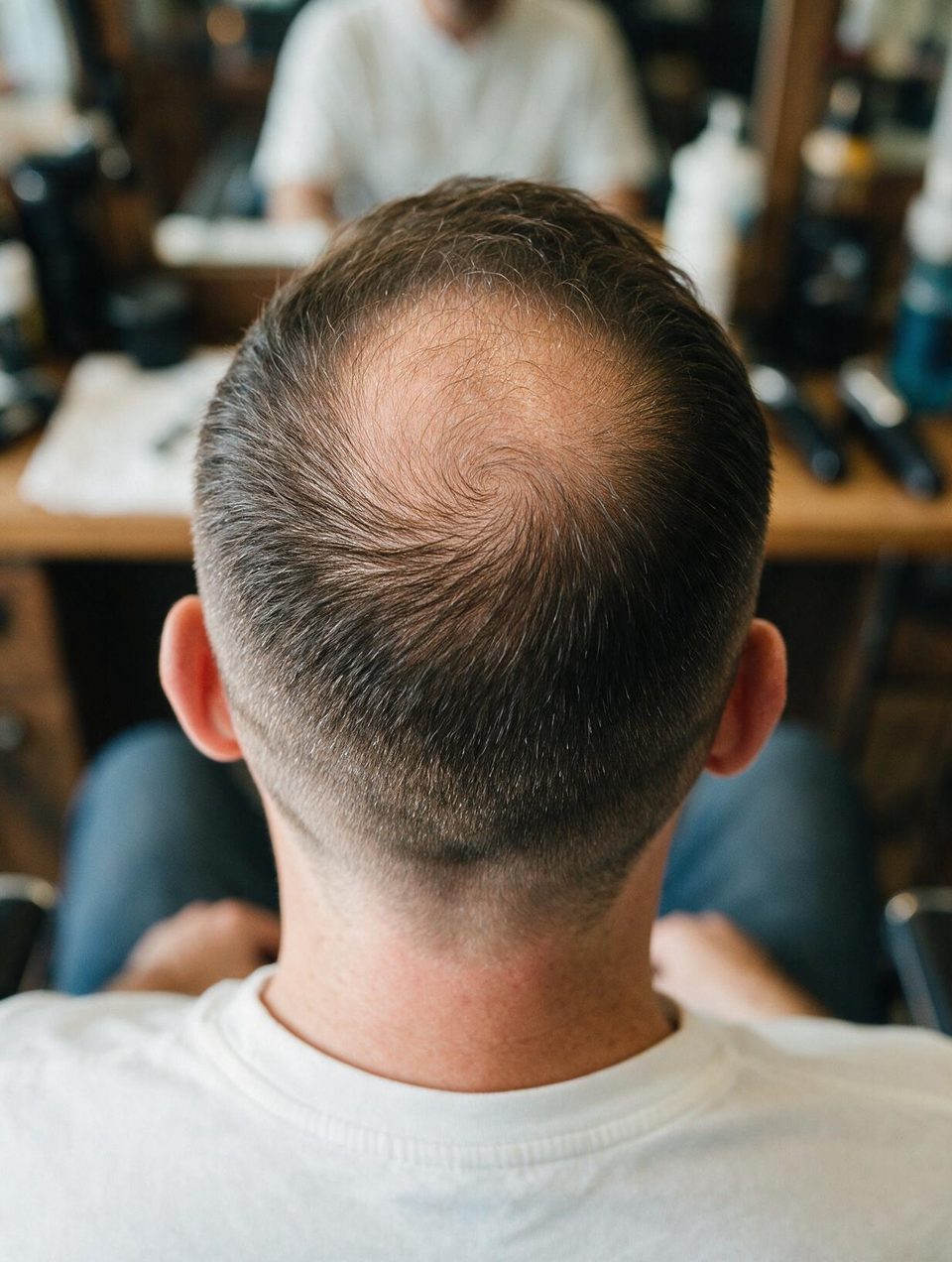
What it is. A classic short back and sides with a slightly longer front, where the barber deliberately takes the crown shorter than the rest of the top.
Why it works. Short hair at the whorl has nothing to fall away from, so the spot stays closed. The longer front draws the eye forward, away from the crown.
Where it fails. When the front also starts to recede, the longer front loses its point. Move on to an even clipper cut.
Ask your barber. "Short back and sides, a bit more length at the front, and please take my crown shorter than the top so it doesn't split."
Upkeep. Medium. Regular trims matter, because the crown opens up as it grows out.
Even clipper cut
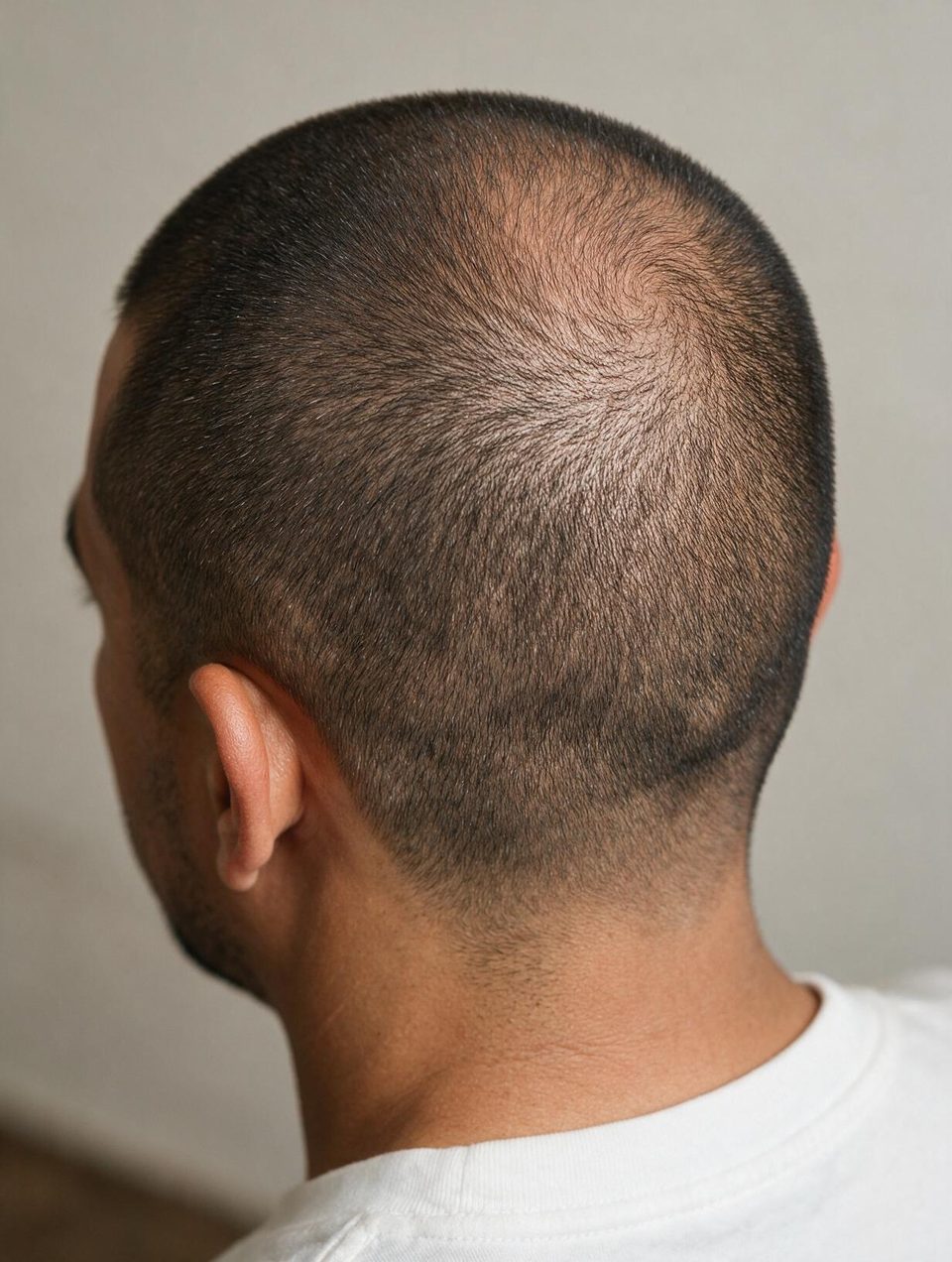
What it is. One clipper length all over, typically somewhere between a number 2 and a number 4.
Why it works. When every hair is the same short length, a thinning crown blends into the hair around it. The barbers quoted by MediaFeed suggest a number 3 or 4 when the crown is still fairly dense, and a 1 or 2 for a near uniform look. In my experience, the more visible the crown, the lower the number you will need.
Where it fails. Under strong overhead light at the longer guards, where the crown still shows as a lighter patch. Go one guard shorter.
Ask your barber. "A number 3 all over, tapered at the neck. If my crown still shows, take it to a 2."
Upkeep. Low. Master barber Christopher McDaniel suggests trims every 2 to 3 weeks to hold an even length, and it is easy to do at home.
Forward brush
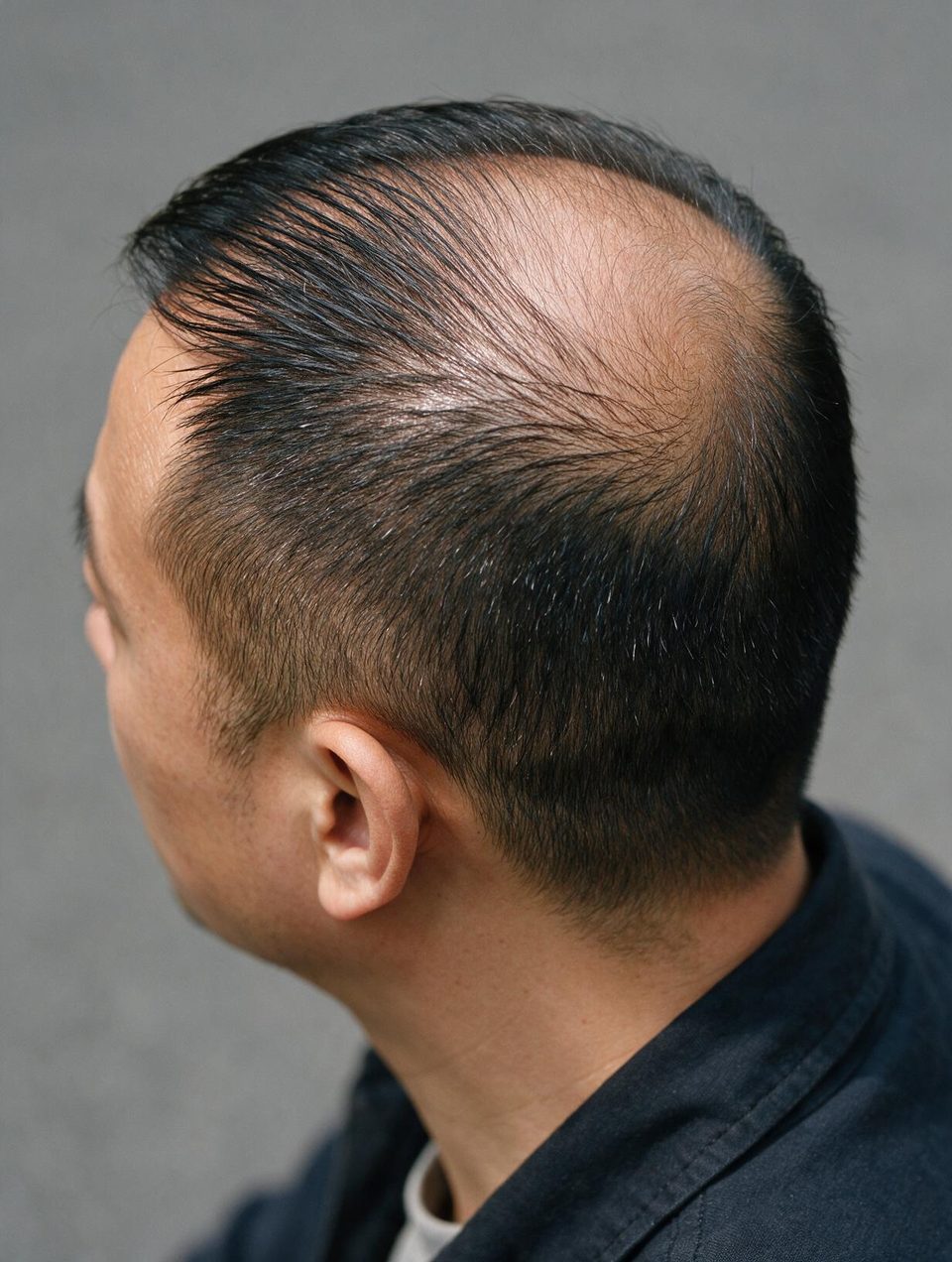
What it is. A short top brushed forward from the crown toward the forehead, with short sides.
Why it works. Hair at the crown naturally radiates outward from the whorl. Brushing it forward means the hair lies over the crown rather than parting away from it.
Where it fails. When the front is also receding, because forward hair then piles toward a weak front edge. It also needs a short top: longer forward-brushed hair is the start of a comb-forward.
Ask your barber. "A short top cut to be brushed forward, the crown kept short, and texture rather than a heavy fringe."
Upkeep. Medium. A few seconds with a brush or fingers and a matte product each morning.
Hairstyles for thinning all over
Diffuse thinning shows as scalp visible through the top, especially under bright light or when hair is wet. Length makes it worse, because longer fine hair separates and clumps. Shine makes it worse too: Luxe Digital warns that heavy gel can make thinning hair more obvious, "because the shine shows the scalp through the strands" (Luxe Digital, 2026).
Short layered cut with a matte finish
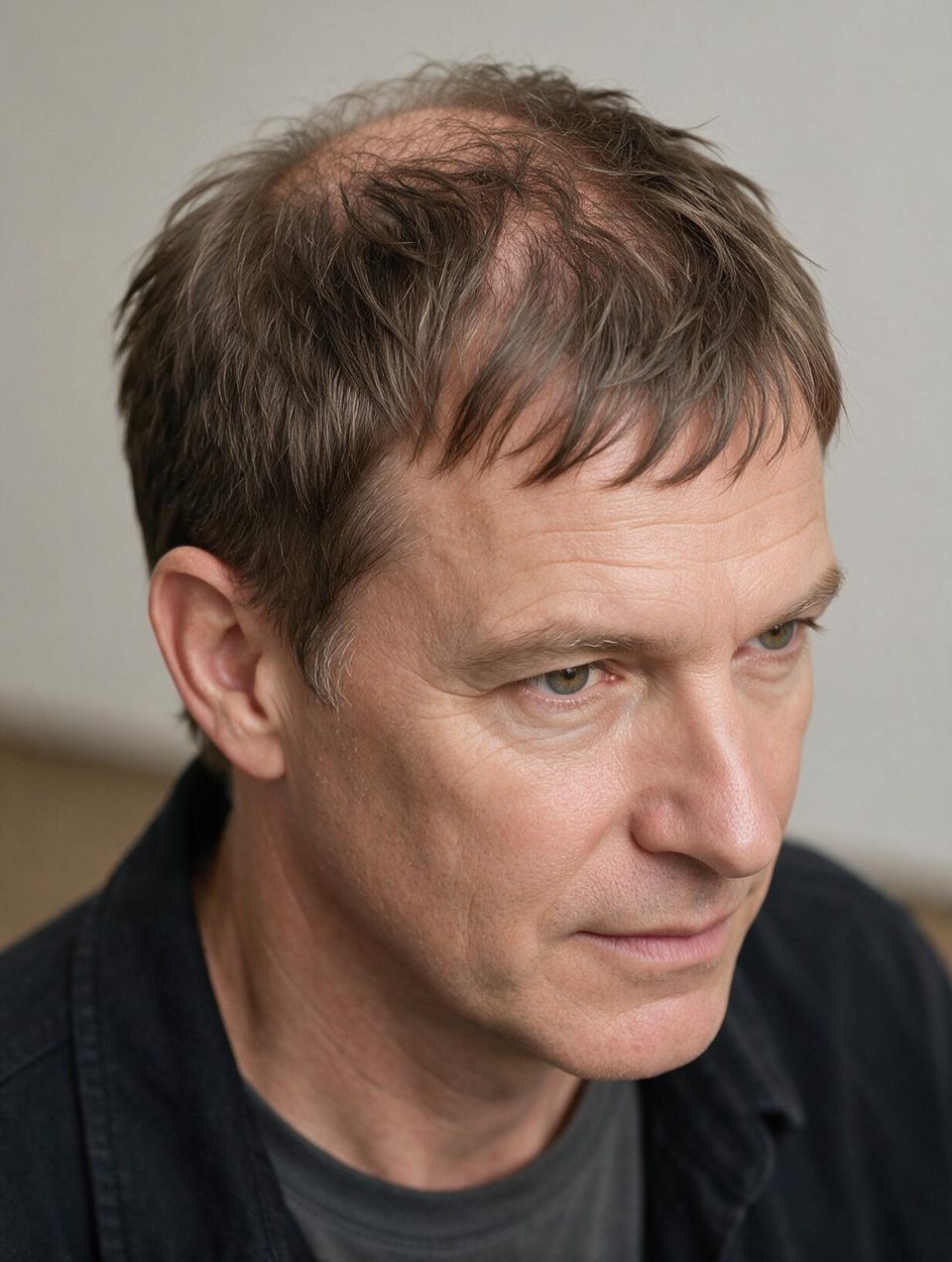
What it is. A short cut with light layers on top, finished with a matte clay or paste rather than gel or wax.
Why it works. Layers add movement so the hair does not lie flat and see-through, and a matte product thickens each strand slightly without reflecting light onto the scalp.
Where it fails. When the layers are left long enough to separate. Keep them short.
Ask your barber. "Short with light layers on top, nothing heavy, and a matte product to finish."
Upkeep. Medium. Regular trims, and a little product most days.
Short curls or coils, kept even
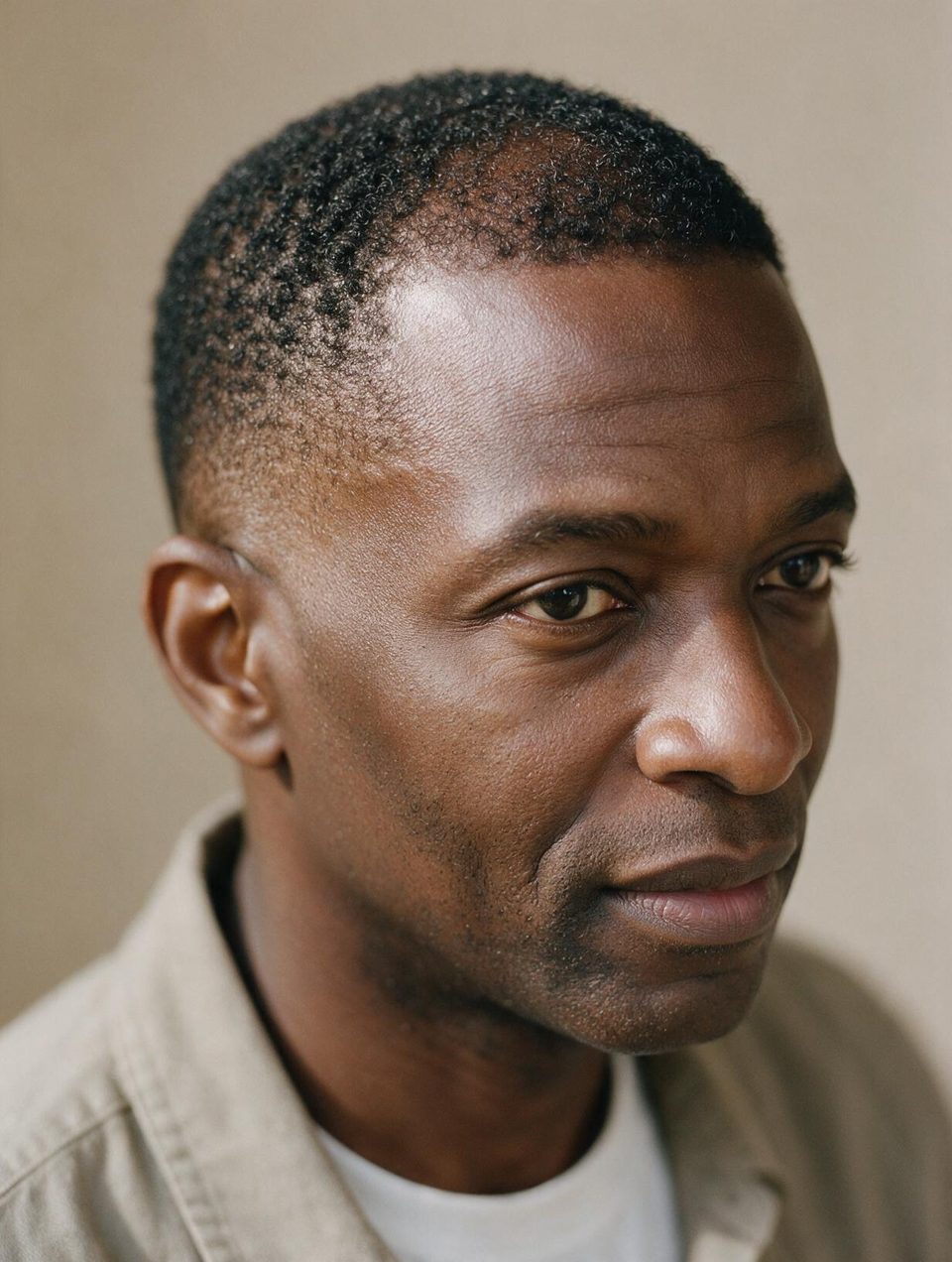
What it is. Curly or afro-textured hair kept short and even all over, often with a low taper at the sides.
Why it works. As Peace points out, curly textures conceal thinner areas better than straight hair, because each curl covers more scalp. Keeping it even stops thinner areas from showing as a dip in the shape.
Where it fails. When the hair is grown out and the thinner zone flattens compared with the rest.
Ask your barber. "Keep it short and even, a low taper on the sides, and shape it so the top looks level."
Upkeep. Medium to high, to keep the shape crisp.
Brush cut
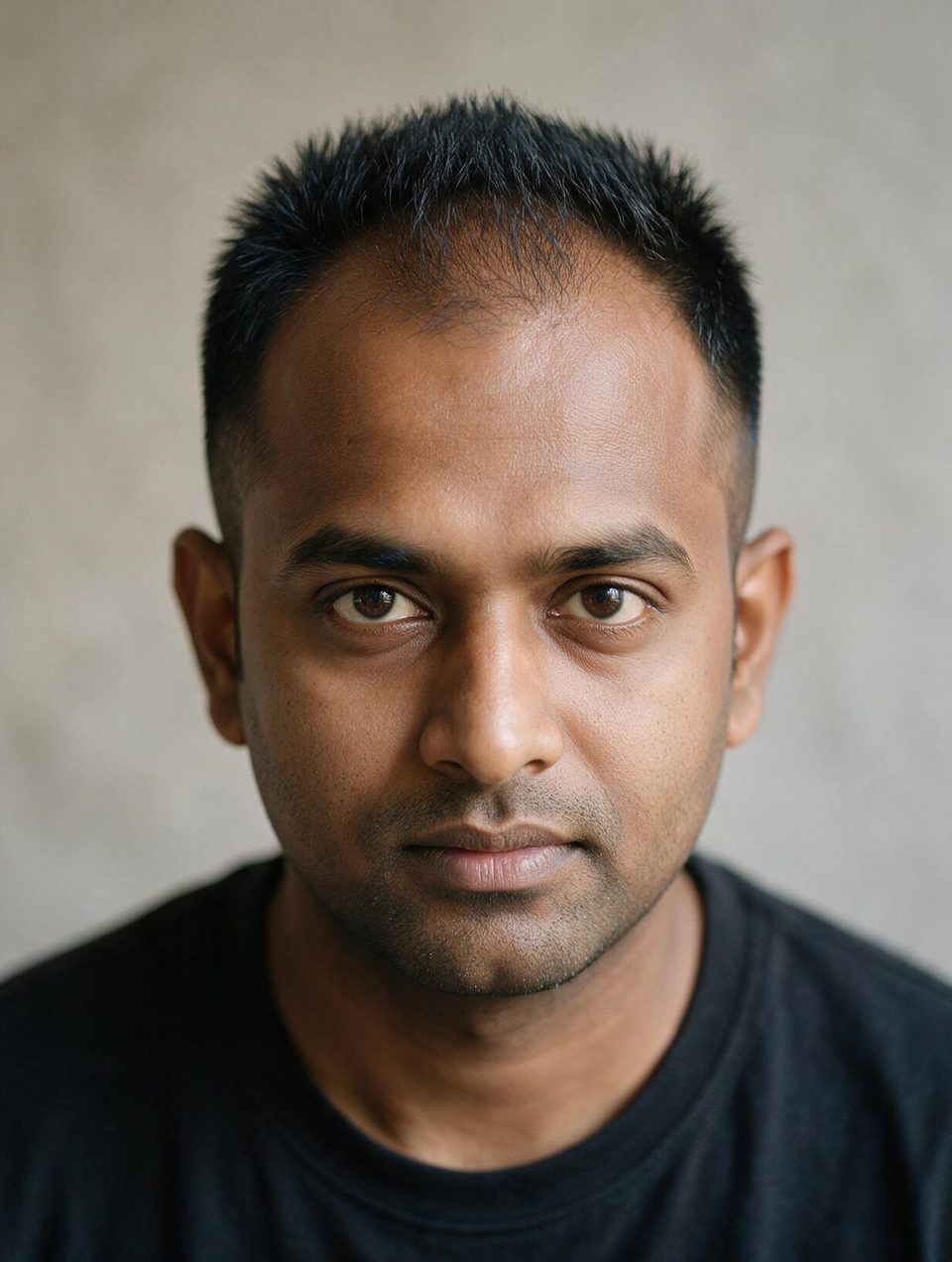
What it is. A short, upright cut where the hair on top stands straight up at an even length, a little longer than a buzz cut.
Why it works. Upright hair at an even length covers more scalp than hair lying flat, where light passes through the gaps. There is nothing long enough to separate.
Where it fails. On very fine, soft hair that will not stand. Go shorter instead.
Ask your barber. "A brush cut: short and upright on top, even length, tapered sides."
Upkeep. Medium. A matte paste to hold the hair upright.
Hairstyles for a receding hairline plus a thinning crown
At Norwood 4 and 5 there are two zones of loss, the temples and the crown, with a band of hair between them. Any style with length on top now has to hide two areas at once, and it usually hides neither. This is the stage where going shorter almost always looks better.
Burr cut
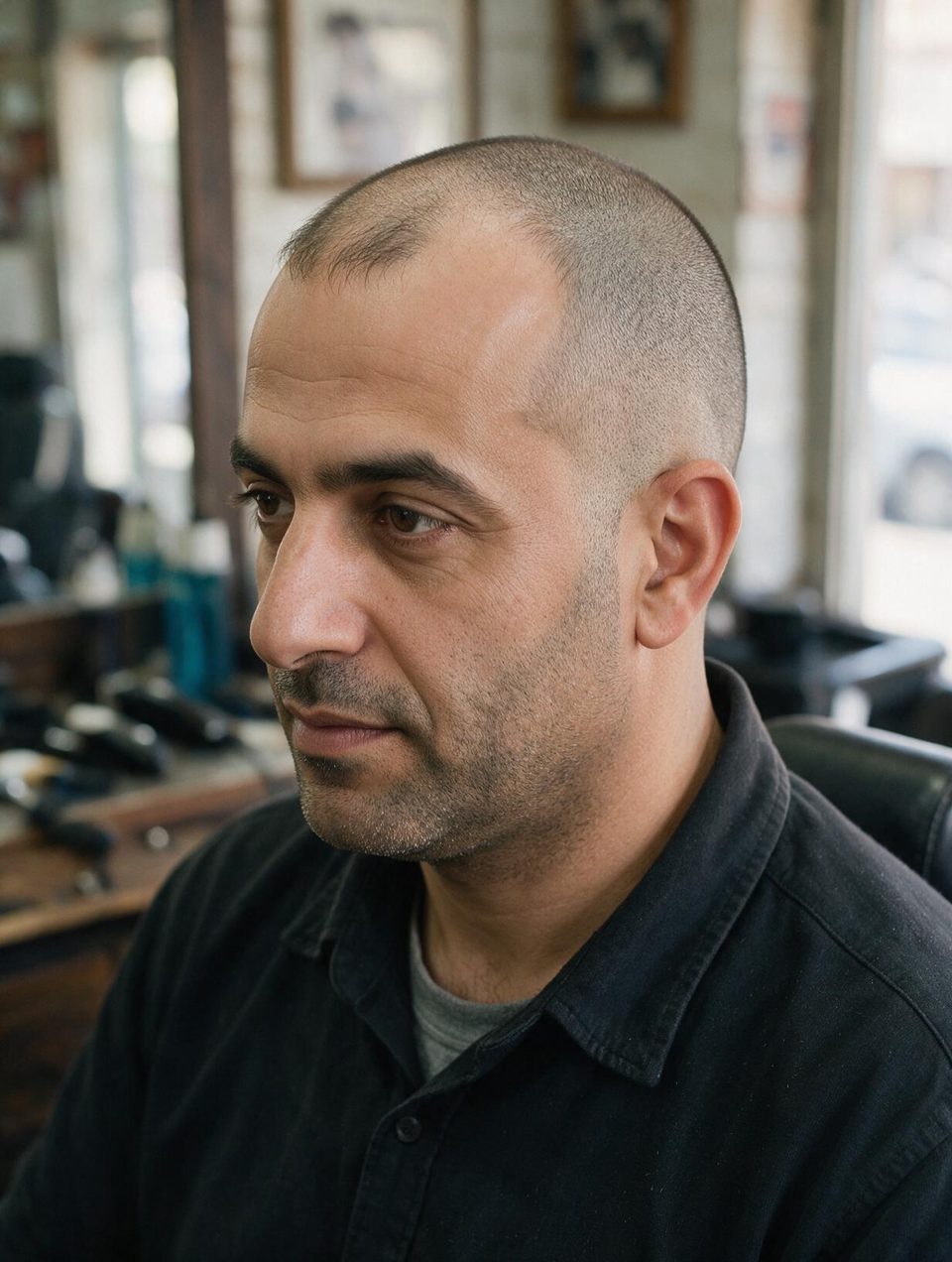
What it is. A number 1 or so all over, shorter than a standard buzz cut.
Why it works. At this length, the difference between the band of remaining hair and the bald areas is small enough that the whole head reads as one even shade. Luxe Digital, describing a number 1 buzz, notes that at that length "it's hard to tell where your hair is and where it used to be."
Where it fails. Rarely, as long as it is kept short. Letting it grow out for a month brings the two zones back.
Ask your barber. "A number 1 all over with a natural, soft front. Don't square off the hairline."
Upkeep. Low. Home clippers every week or two.
Bald fade with a buzzed top
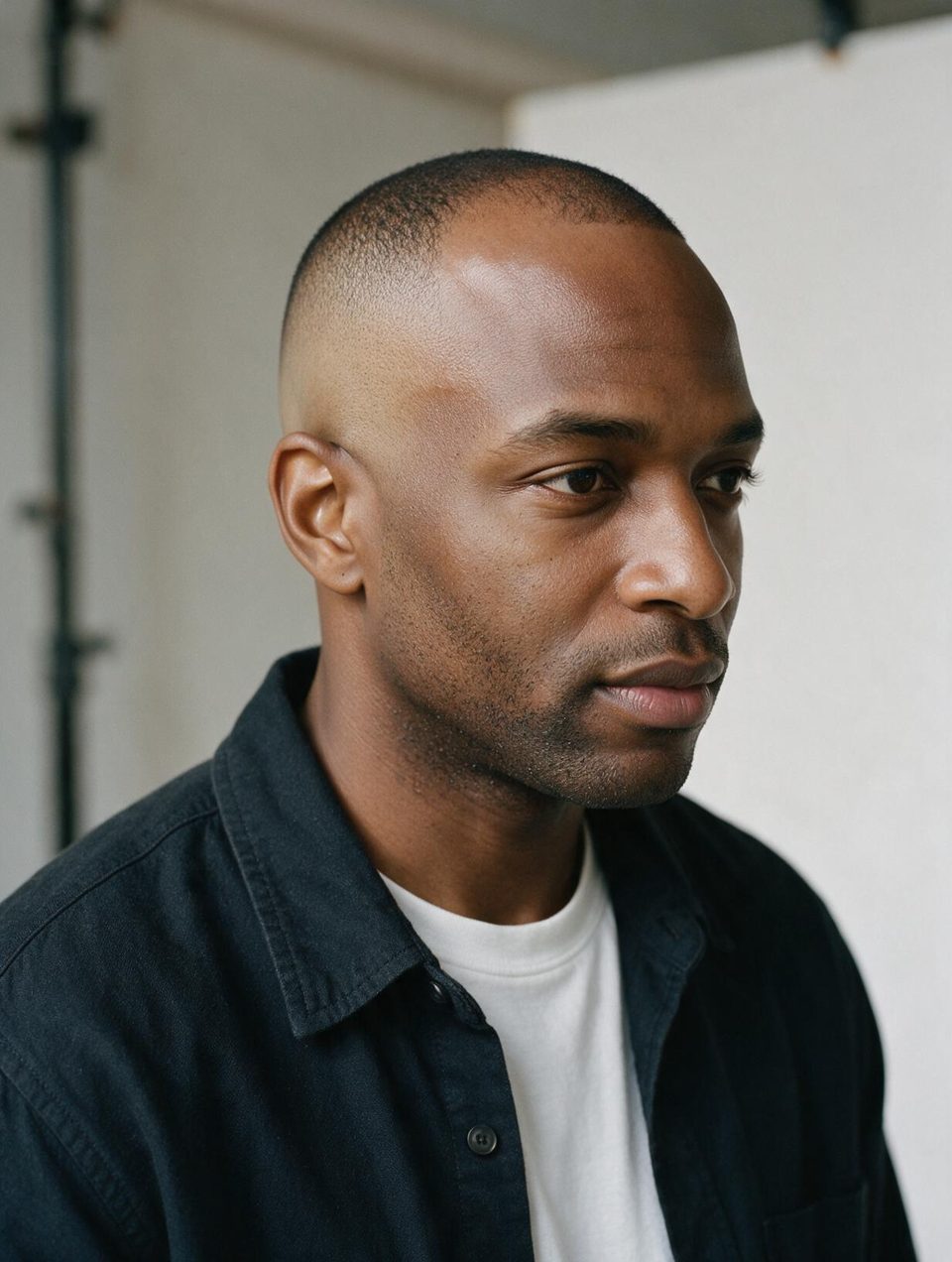
What it is. Sides and back faded down to the skin, blending into a very short buzzed top.
Why it works. The fade takes the sides down to match the thinness of the top, so there is no dense band framing the bald areas. It looks sharp and deliberate rather than like a cover.
Where it fails. When the top is left too long. The fade only works if the top is short enough to match.
Ask your barber. "A bald fade on the sides, blended into a 1 on top, soft at the front."
Upkeep. High. A skin fade loses its sharpness in days, so expect frequent visits or confident home clippers.
Hairstyles for advanced hair loss, Norwood 5 to 7
From Norwood 5 onward, the bridge across the top is failing or gone, and what remains is a horseshoe of hair around the sides and back. The ISHRS explains why that horseshoe survives: the hair at the back of the head is resistant to DHT, the hormone behind pattern loss. The key styling principle at this stage is simple: the sides should never be longer than the top makes sense for.
Clipped horseshoe
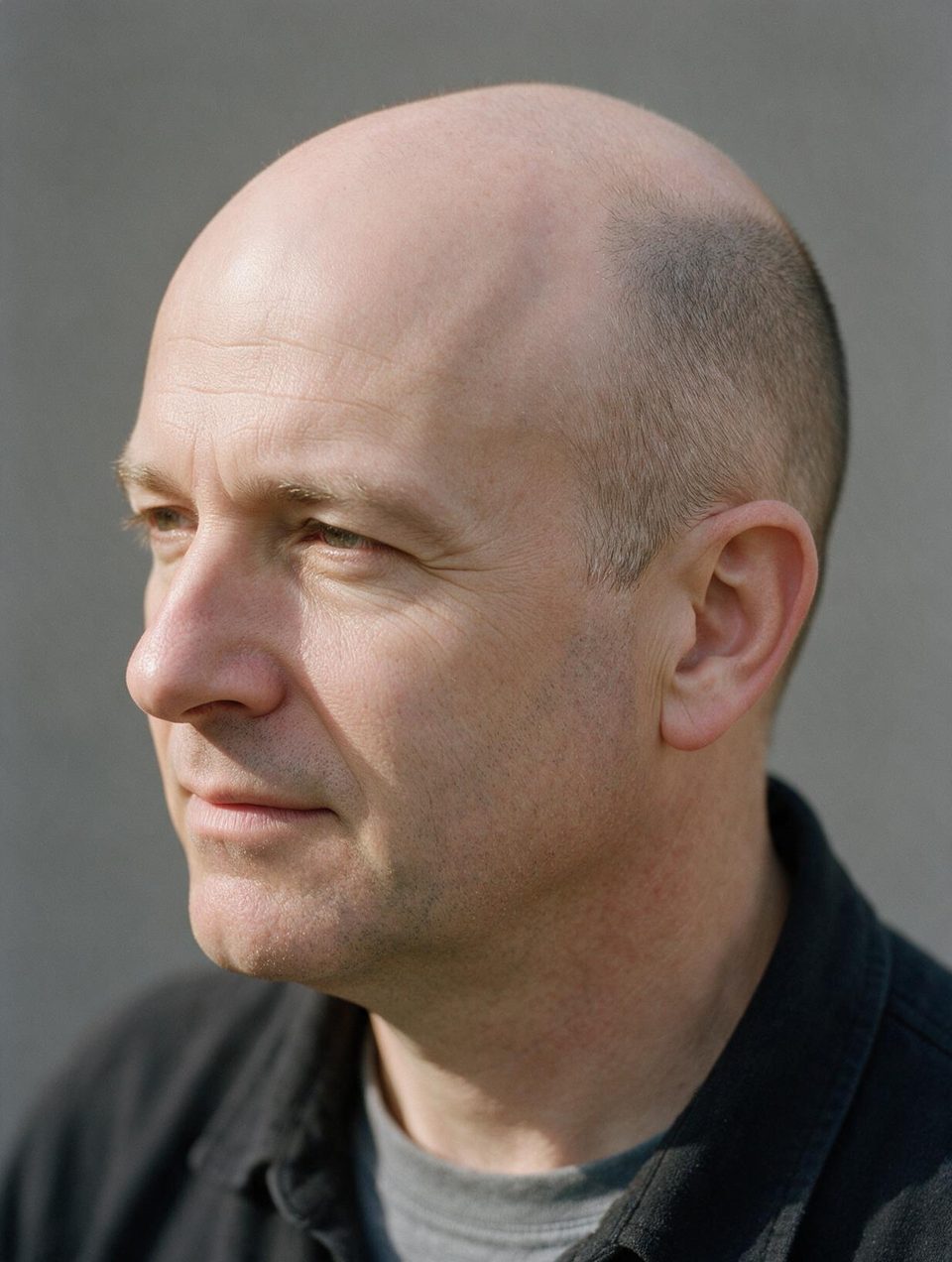
What it is. The remaining hair at the sides and back clipped very short, with the bald top left as it is.
Why it works. Longer side hair frames a bald top and makes it look bigger. Clipped close, the sides fade into the background and the head looks tidy and intentional.
Where it fails. When the sides are allowed to grow, or when wisps on top are left long. Clip or shave any stray hairs on top.
Ask your barber. "Take the sides and back to a 1 or a 0.5, blend it up, and clear any stray hairs on top."
Upkeep. Low. Home clippers weekly.
Zero clipper cut all over
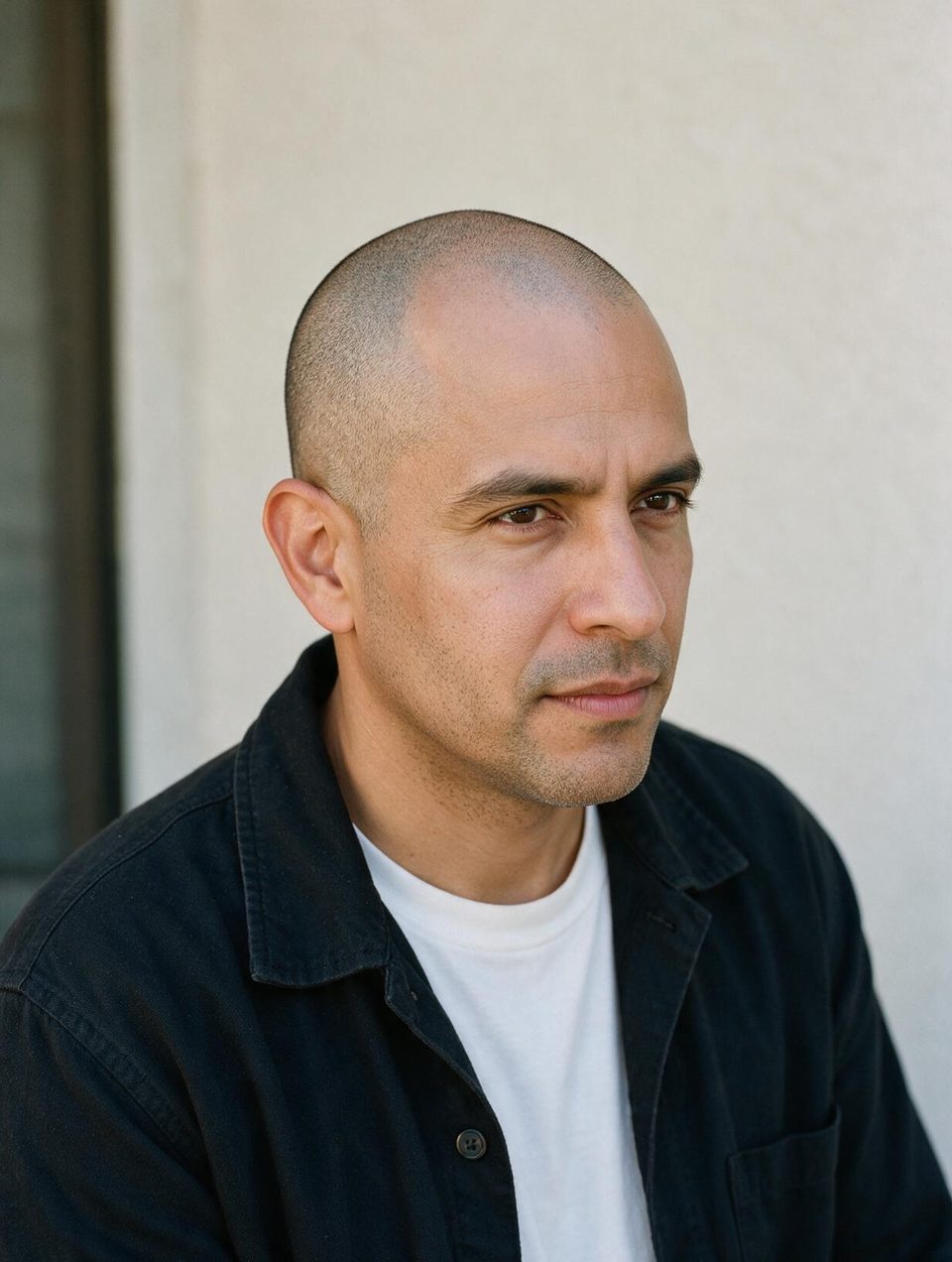
What it is. Clippers with no guard over the whole head, leaving light stubble everywhere.
Why it works. It gives the look of a shaved head with a soft shadow of stubble where hair still grows, and it does not need a razor. For men who get irritation from shaving, it is often the more comfortable choice.
Where it fails. On men whose remaining hair is very dark against a pale bald top, where the contrast still shows. A razor shave evens that out.
Ask your barber. Most men do this at home. If you go to a barber, ask for "clippers with no guard all over, and a clean outline at the neck."
Upkeep. Low. Clippers every few days.
The shaved head
The shaved head is the most popular answer to baldness for a reason. There is no hairline, no crown, no contrast, and nothing to manage except the shave itself. In a set of studies by Albert Mannes at the Wharton School, men with shaved heads were rated more dominant and were seen as about an inch taller and stronger than men with hair, although they were also rated less attractive and older (Knowledge at Wharton, 2012). Mannes said the findings hold particular relevance for men with thinning hair. For a look at how it is worn at the top level, see our list of famous bald men.
Razor shaved head
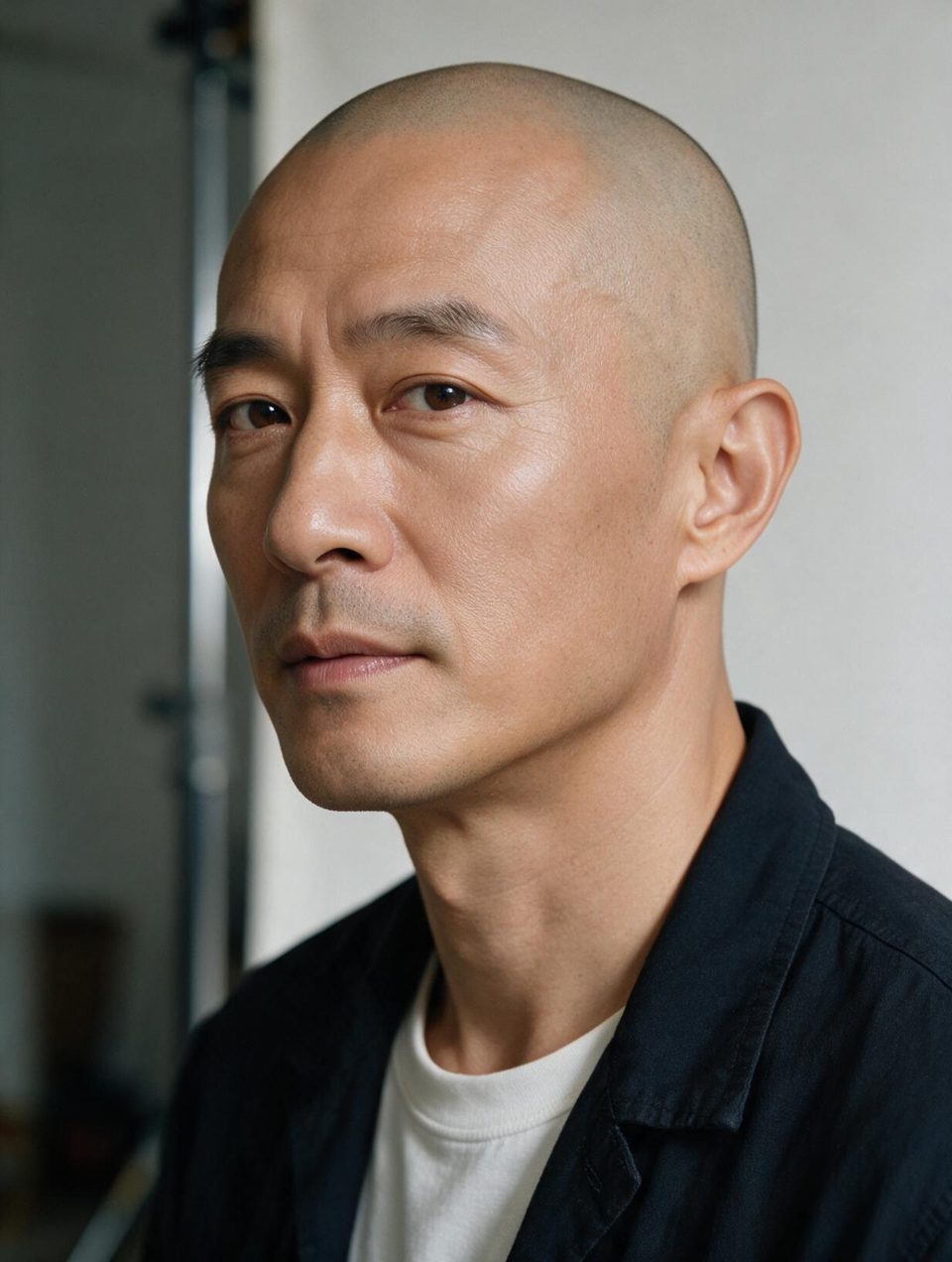
What it is. The head shaved smooth with a blade or foil shaver.
Why it works. It is the cleanest, most deliberate finish, and it makes any remaining horseshoe disappear entirely.
Where it fails. For men who get razor bumps on the scalp, or who do not want the daily routine. A zero clipper cut is the gentler option.
Upkeep. Harvard Health suggests a daily touch-up or a full shave every two to three days (Harvard Health Publishing, 2024).
Shaved head with a full beard
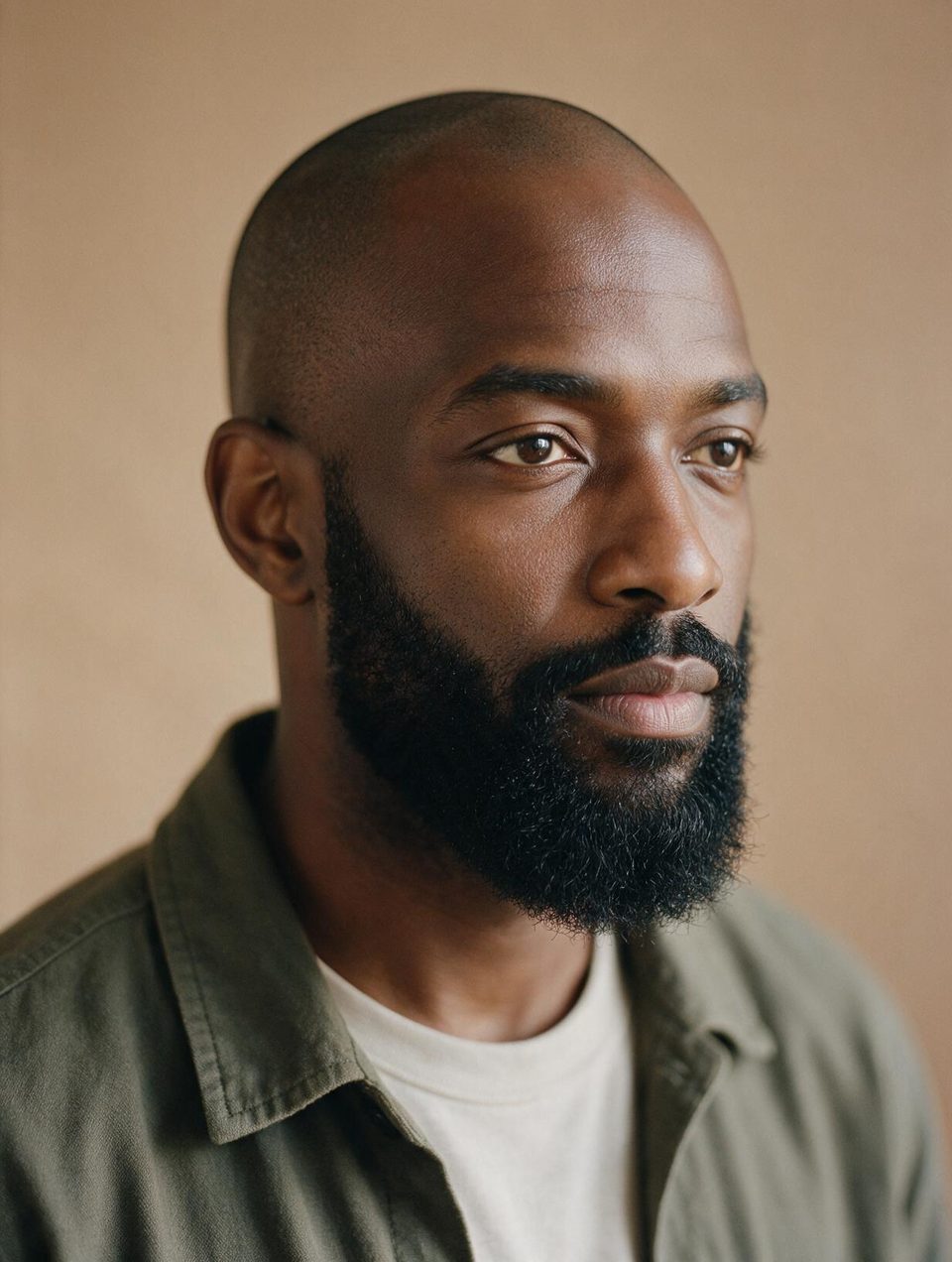
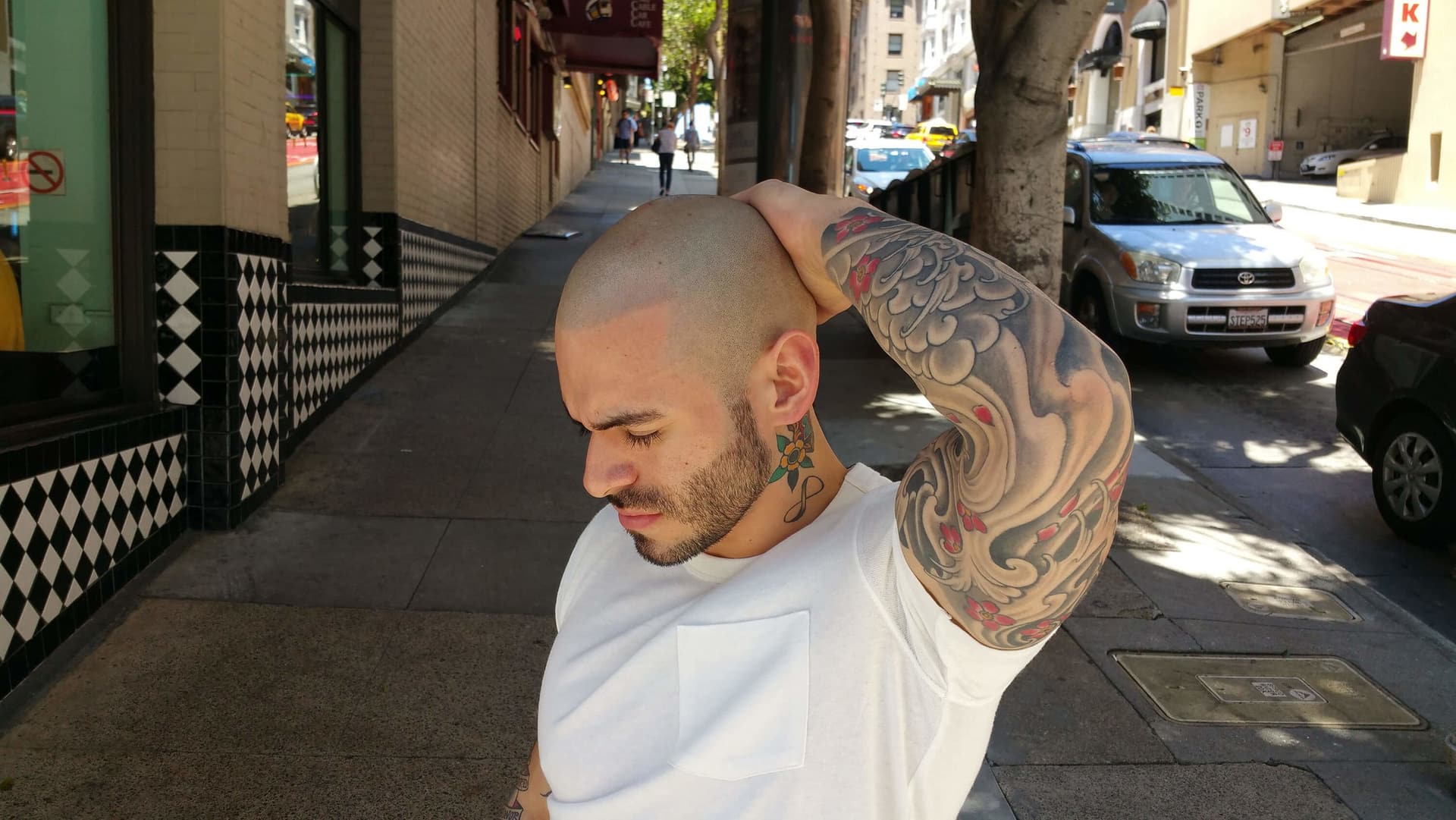
Why it works. In my experience this is the pairing that suits the widest range of faces. When the hair on top goes, the face can look top-light. A beard puts weight and shape back on the lower face and frames the jaw.
Keep it right. Shape the beard so it is fuller at the chin than the cheeks, keep the neckline clean, and keep the head shaved closer than the beard. A gray beard with a shaved head looks deliberate, so there is no need to color it.
Shaved head with stubble
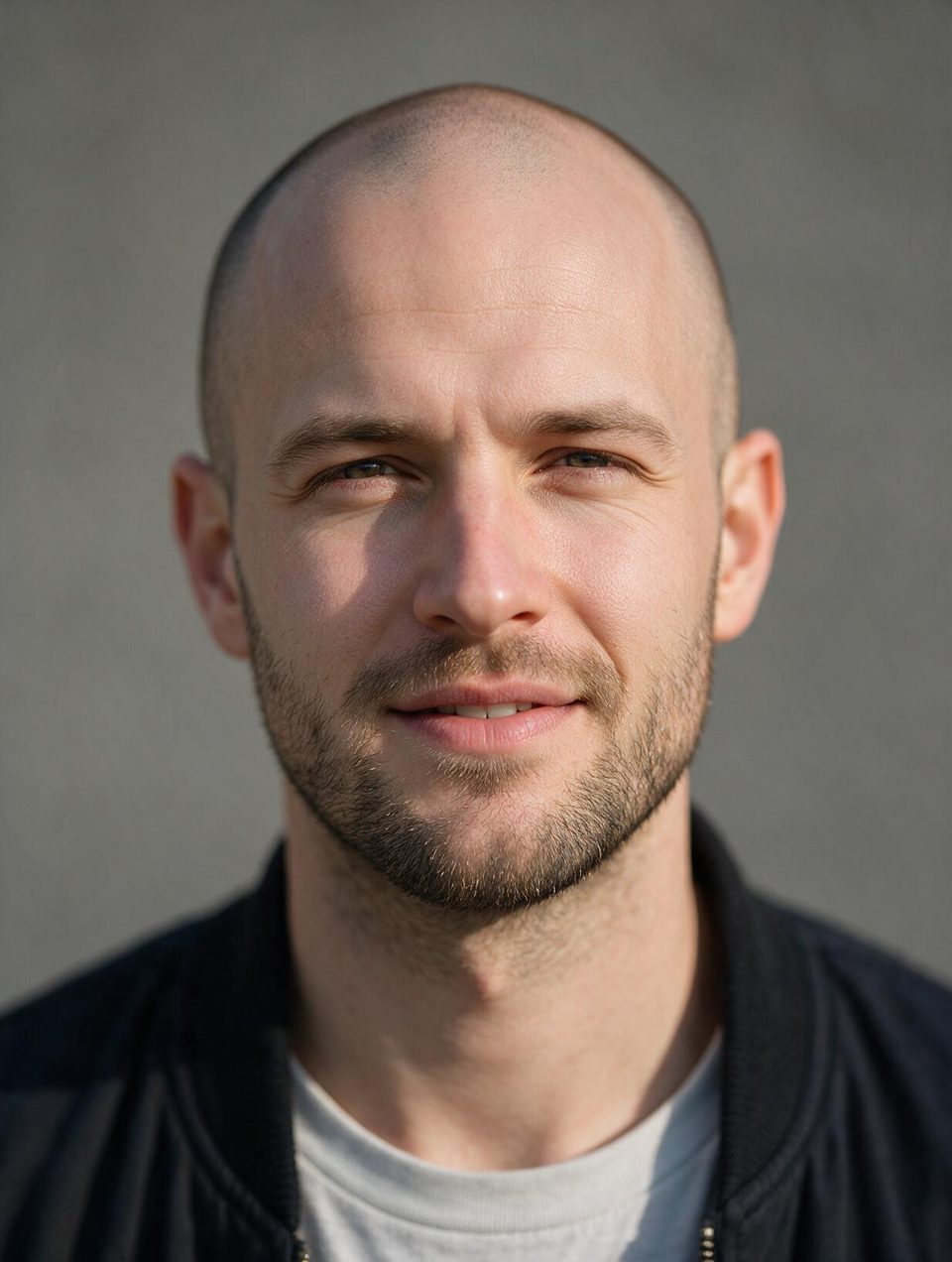
Why it works. A short stubble beard gives some of the framing of a full beard with very little upkeep. Trimming the face and the head with the same clippers keeps the whole look consistent.
Keep it right. Trim to the same length every few days, and clean up the cheek line and neckline so it looks chosen rather than forgotten.
Shaved head with glasses, or clean shaven
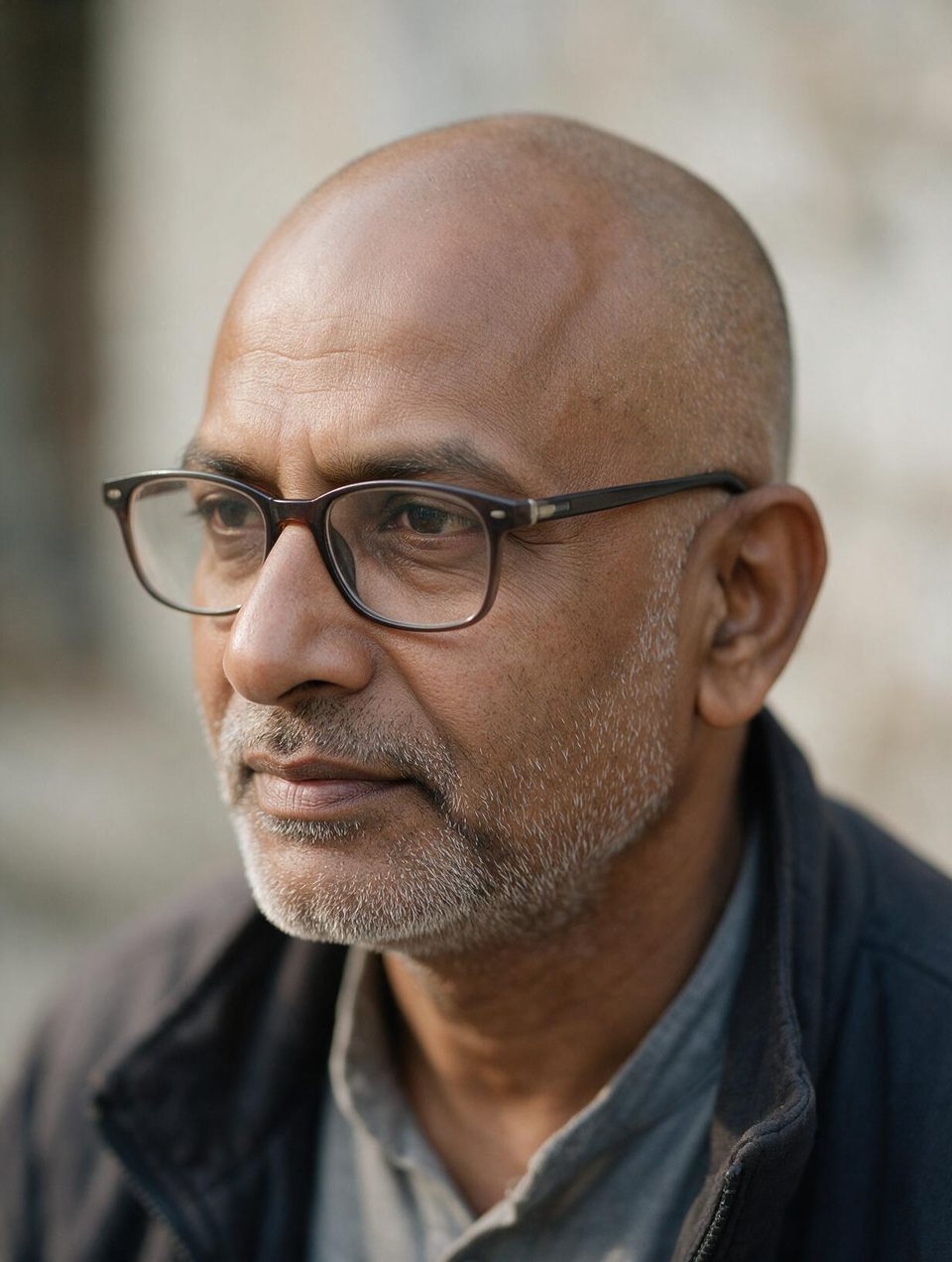
Why it works. Not every face needs a beard. A clean shaven face with a shaved head suits men with a strong jaw and clear skin, and glasses add a strong horizontal line that balances the head. Frames with some weight usually work better than thin rimless ones.
Keep it right. Moisturize both scalp and face daily. A smooth head shows dry, flaky skin more than hair ever did.
Best haircut for bald guys
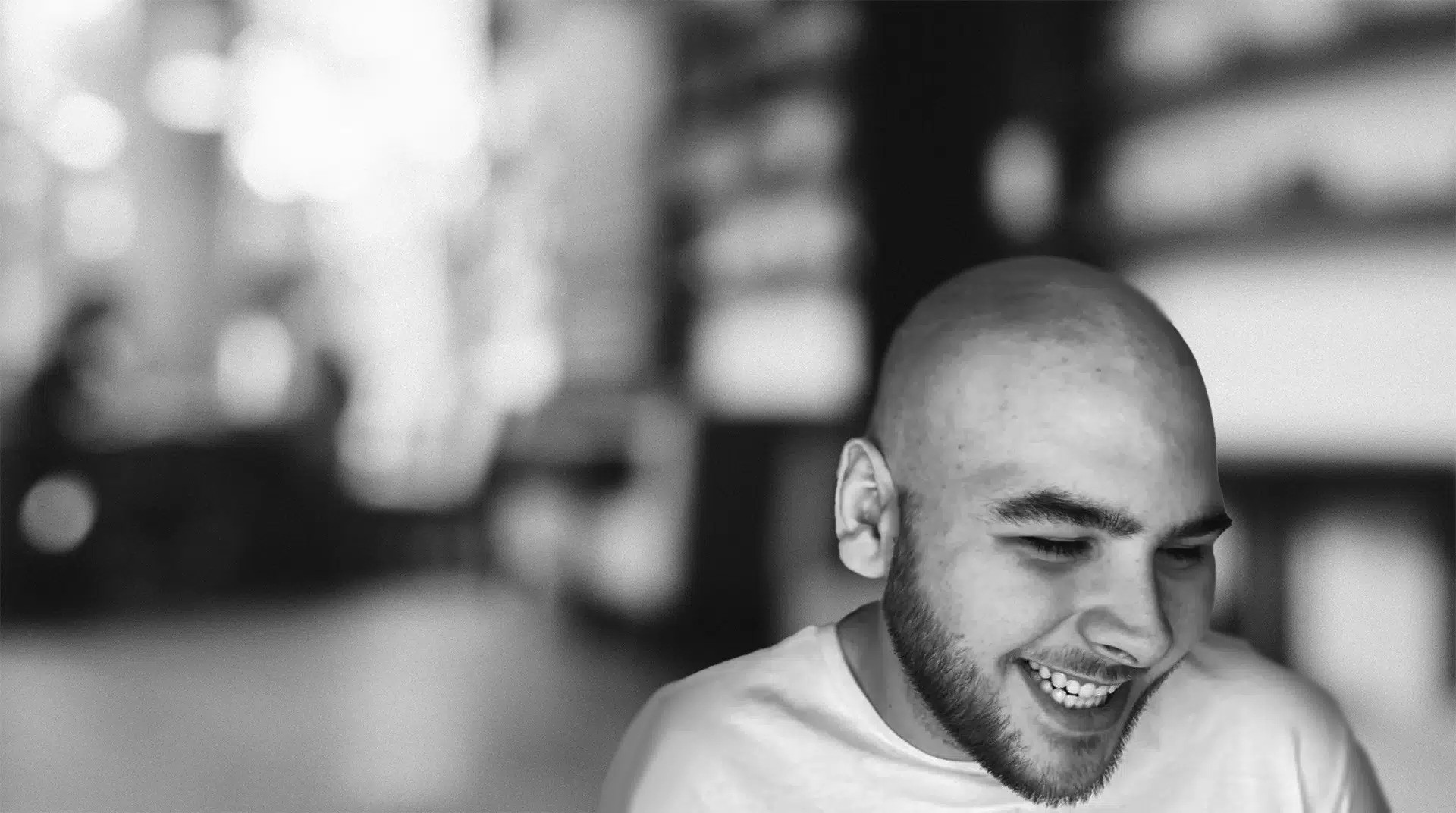
If you are fully bald, or at Norwood 6 or 7, the best haircut for bald guys is the one that removes the contrast entirely: a razor shaved head or a zero clipper cut, with or without a beard. Anything that keeps length on the sides draws a frame around the bald top.
If you are balding but not bald, the best haircut is the shortest one that still looks like you. In practice that means a crown cut shortest for crown thinning, a brush or layered cut for diffuse thinning, and a burr cut or bald fade once the front and crown are both going. The pattern in every case is the same: shorter, even and matte.
How to choose, in order
- Find your pattern on the Norwood scale, including the crown.
- Pick the shortest style in your pattern group that you are comfortable with.
- Live with it for a month before you decide it is not for you.
- If you are still hiding something, go one step shorter.
How to shave your head
Shaving a head is easier than most men expect, and it gets quicker with practice. The routine Harvard Health describes, with input from dermatologist Mathew Avram of Massachusetts General Hospital, goes like this (Harvard Health Publishing, 2024).
The shave, step by step
- Trim the hair to stubble with clippers on the shortest setting, cutting with the direction of growth.
- Soften the scalp with warm water, pat it dry, and apply a thin layer of shaving oil, gel or foam.
- Shave with the grain, starting at the back of the head, then the sides, the crown and finally the front.
- Use the stroke that suits your tool: slow circles with a rotary shaver, steady downward strokes with a foil shaver, short gliding strokes with a blade.
- Shave against the grain only sparingly, on tough spots.
- Rinse with cold water and finish with an alcohol-free balm or cream.
Choosing your tools
- Clippers with a zero setting for the first trim and for anyone who prefers stubble.
- A foil or rotary electric shaver for a close finish with less risk of nicks.
- A cartridge or safety razor for the smoothest result, with more care needed.
- A second mirror or your phone camera to check the back and crown.
Avoiding razor bumps. The American Academy of Dermatology advises shaving when the hair is soft, after a shower, shaving with the grain, using a moisturizing shaving cream, and replacing disposable razors every five to seven shaves. It also suggests shaving more often, so the hair has less time to grow and curl back into the skin. If bumps persist, a zero clipper cut avoids the problem.
Head shape, bumps and scars
Every head has bumps, ridges and flat spots that hair used to hide. Most men worry about this far more than anyone who looks at them. In my experience a shaved head with a beard draws attention away from the back and top of the head, and a zero clipper cut softens the outline more than a razor shave. Harvard Health also notes that shaving can reveal spots, growths or moles, so show a dermatologist anything new.
Look after a shaved scalp: sunburn and skin cancer
A shaved or bald scalp has lost its natural sun protection, and it is one of the most exposed parts of the body. Harvard Health quotes dermatologists noting that a shaved scalp gets full sun exposure, even on short trips outside.
The sun rules for a bald or shaved head
- Sunscreen every day. The American Academy of Dermatology says to use a broad-spectrum, water-resistant sunscreen with SPF 30 or higher, and specifically to remember the top of your head, neck and ears.
- Reapply. The AAD says to reapply every two hours outdoors, or after swimming or sweating.
- Wear the right hat. The Skin Cancer Foundation says hats are often the best way to protect the scalp, recommends a wide brim and tightly woven fabric, and suggests looking for a UPF 50+ label. A baseball cap, it notes, covers only about a quarter of the head.
- Find shade. The AAD notes that the sun's rays are strongest between 10 a.m. and 2 p.m., and that if your shadow is shorter than you are, it is time to find shade.
The Skin Cancer Foundation explains why this matters for men in particular: skin cancer on the scalp is more common in men than women, due to hereditary baldness, and squamous cell carcinoma is the most common type found there. Ask a partner or barber to tell you about any new spot, and ask your dermatologist to check your scalp at skin exams.
If you do get burned. The AAD's sunburn advice is to take cool showers, apply a moisturizer containing aloe vera or soy while the skin is still damp, consider aspirin or ibuprofen for swelling and discomfort, drink extra water, and leave any blisters to heal on their own. Skip shaving the burned area until it has healed.
The comb-over: do not
The comb-over is the one balding hairstyle I would steer every man away from, and the reasons are practical, not just fashion.
- It draws attention to what it covers. Luxe Digital says that growing hair long to cover a gap "tends to draw attention to the thing it's covering," and that matches what I see in consultations.
- It fails in real life. Wind, rain, swimming, a hug or a hat all undo it, which means a constant low level of worry.
- It only gets harder. Pattern loss is progressive, as the ISHRS notes, so the side hair has to grow longer every year to cover a bigger area.
- It reads as thinning. In Mannes's research, men described as having thinning hair were rated lowest on dominance of the groups compared, below both men with full hair and men with shaved heads.
- Shine makes it worse. The products that hold a comb-over in place usually add shine, which shows the scalp.
The same applies to the comb-forward and to growing the crown hair long to sweep over the spot. If you are covering, the answer is almost always to go shorter.
Products and tricks that help
A few additions make short styles look denser. They hide, they do not treat.
- Matte products. Clays and pastes add grip and slight bulk without reflecting light onto the scalp.
- Hair fibers. The ISHRS describes keratin, rayon or plant-based fibers that cling to existing hair to mask thinning. They need some hair to hold on to, they wash out, and over-applying can create caking on the scalp.
- Concealer sprays. The ISHRS says they are quick and relatively water-resistant, but can transfer to pillows and furniture.
- Hairpieces. The ISHRS warns that clips and adhesives can cause traction hair loss, and that hairpieces need ongoing maintenance and cost.
When styling is not enough
Short cuts and a good shave solve the look for most men. If you want to keep or restore hair rather than style around it, the options are medication, a transplant and scalp micropigmentation. Our haircuts for a receding hairline end with a short, sourced comparison of all three, so here are only the points specific to balding and the crown.
The crown responds to medication. The ISHRS notes that the FDA labeling for both finasteride and minoxidil covers crown thinning. The American Academy of Dermatology says men tend to get better results when they start treatment soon after noticing loss, and the NHS reminds you that no treatment is 100% effective. That conversation belongs with a doctor.
Transplants depend on donor hair. The ISHRS explains that as baldness spreads, the area to cover grows while the donor supply shrinks, which limits what surgery can do at Norwood 6 and 7. Our SMP vs hair transplant comparison covers the trade-offs.
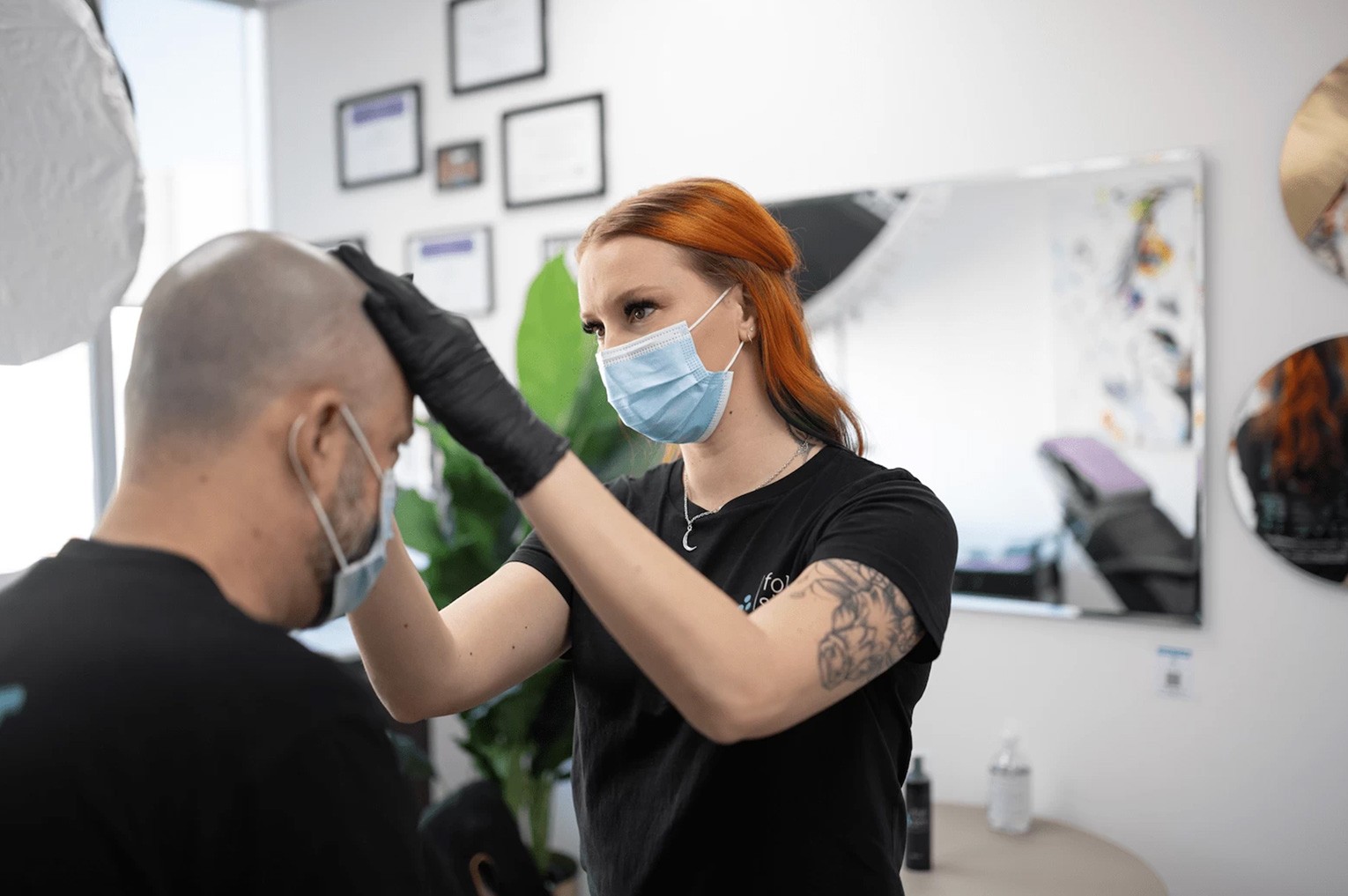
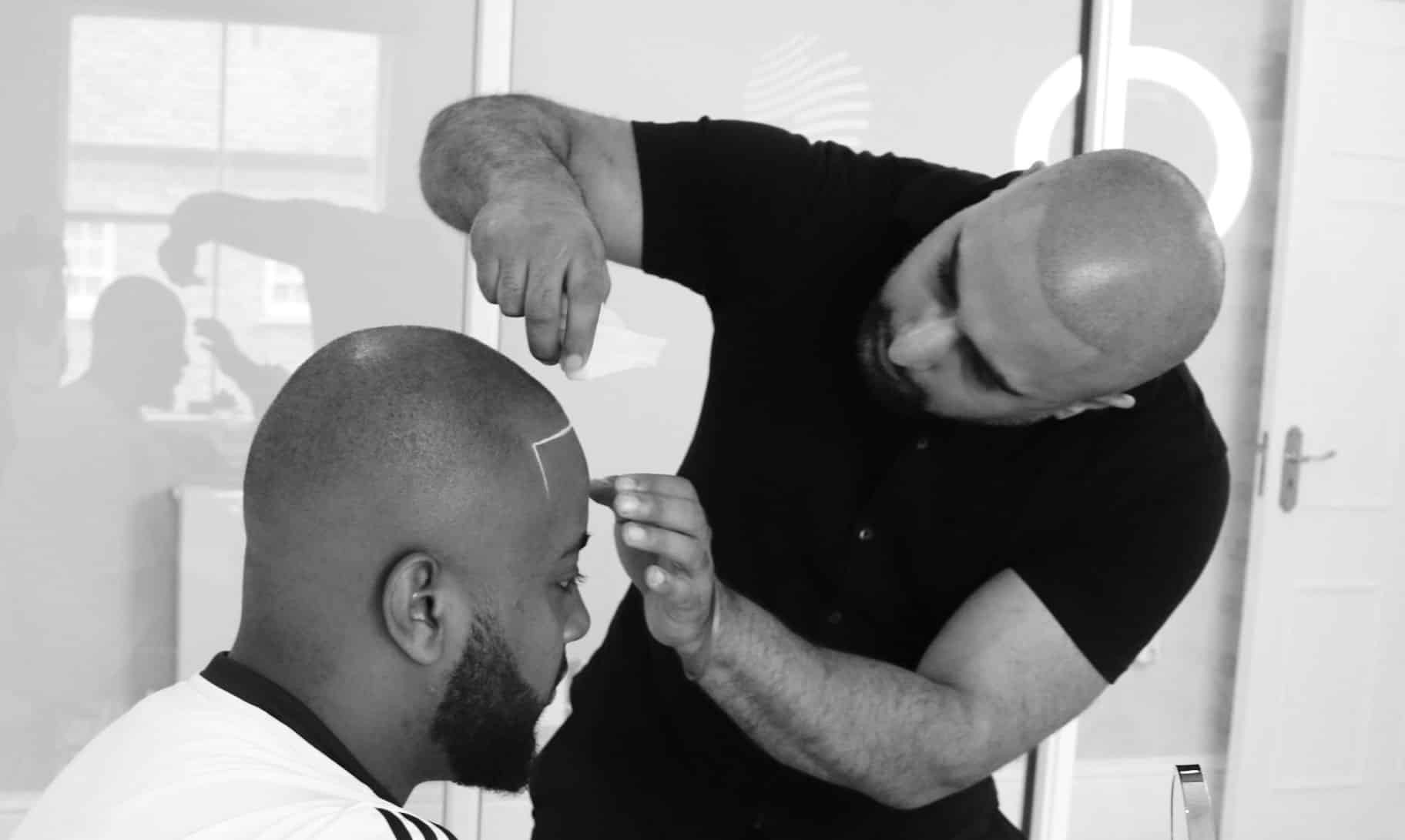
SMP suits the shaved look. Scalp micropigmentation places tiny dots of pigment that look like shaved hair follicles. The ISHRS describes it as stippling pigment onto the scalp to resemble a shaved head. On a balding head it can turn a smooth, shiny dome into the look of a close buzz, or add the look of density under thinning hair on the crown. It does not grow hair or stop loss. Our complete guide to scalp micropigmentation covers the process, before and after results show what it looks like healed, and how to choose an SMP artist covers the questions to ask.