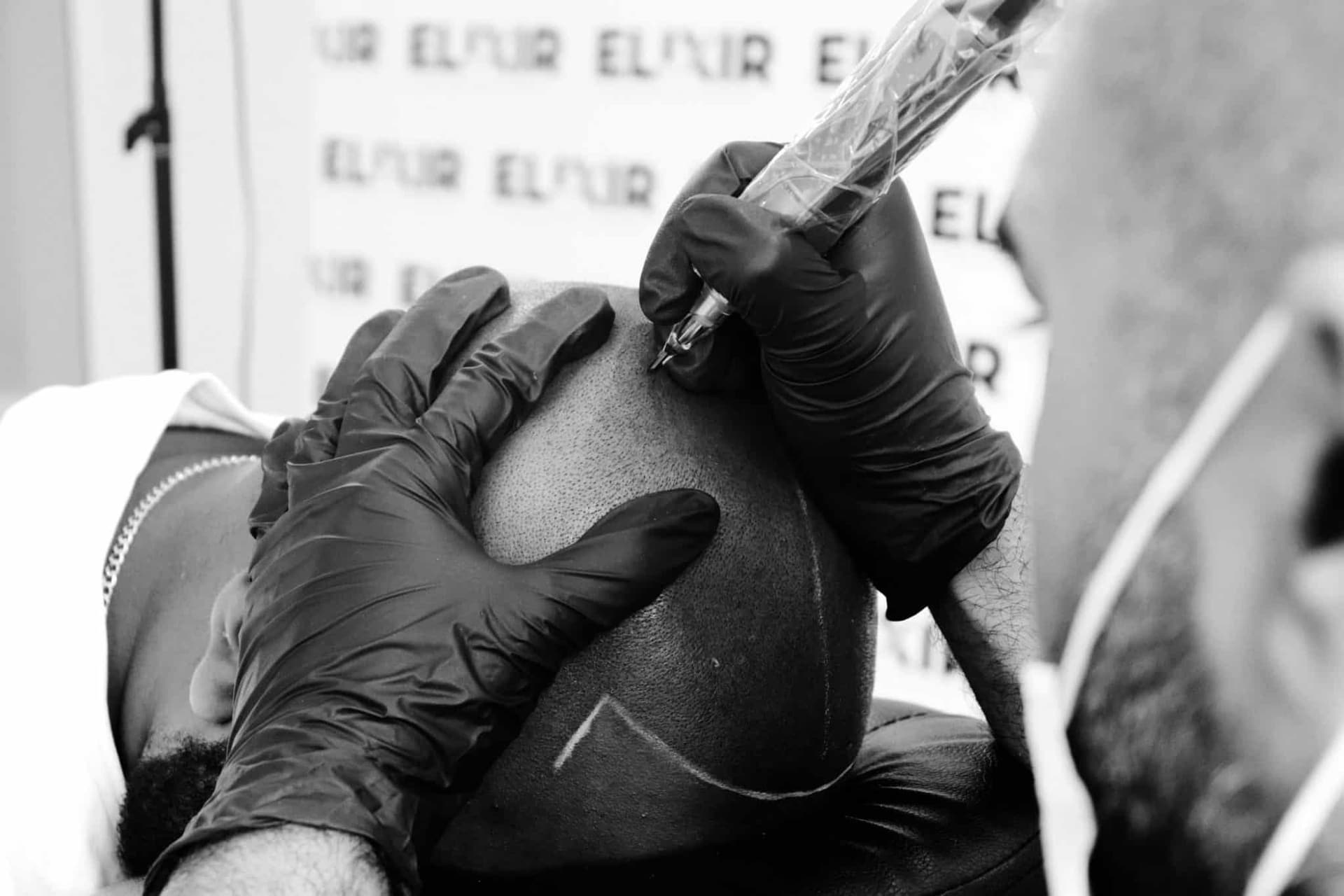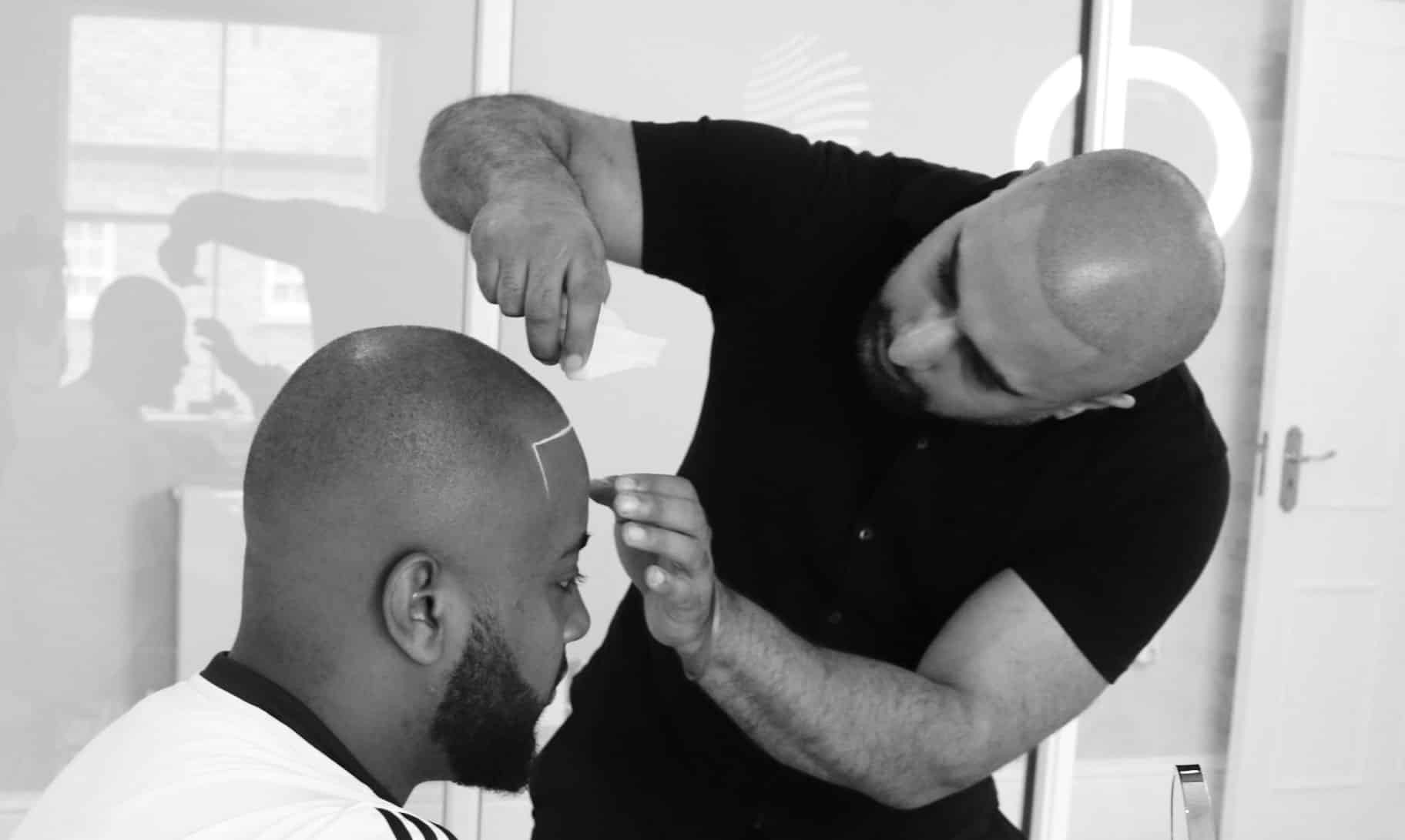
I have spent 17 years in scalp micropigmentation and permanent makeup, and the hairline is the part of the work you never get to hide. It decides whether a result looks natural or drawn on. A receding hairline is where SMP design matters most. This guide covers how to tell what your hairline is doing, when SMP is the right call, and how the line itself should be shaped.
If you are new to SMP, start with the complete guide to scalp micropigmentation and come back here for the hairline detail.
What a receding hairline actually is
In men, a receding hairline is usually the first visible sign of male pattern hair loss, also called androgenetic alopecia. The American Academy of Dermatology describes it as the most common cause of hair loss in men, often starting as a receding hairline or a bald spot on top, and progressing slowly over years (AAD).
The mechanism is miniaturization. The ISHRS explains that thick "terminal" hairs gradually turn into thin, short, see-through hairs, while the follicles stay under the skin (ISHRS). That is why a receding hairline often looks fuzzy before it looks bare.
It is common, and it can start early. Cleveland Clinic says about 25% of men notice the first signs before age 21, and by age 50 about half have some hair loss (Cleveland Clinic). The ISHRS puts it at up to 50% of men by 50 and up to 80% by 80.
The typical pattern
Cleveland Clinic describes the classic look as recession at the temples, often forming an "M" shape, with thinning at the crown that can eventually meet the front in a "U" shape. That is the progression the Norwood scale tracks, from stage 1 (little or no loss) to stage 7 (only a band of hair around the sides). If you have not placed yourself on it yet, read our Norwood scale guide first, because almost every hairline decision below depends on your stage.
Mature hairline or progressing loss?
Almost every man's hairline changes shape after his teens. "Mature hairline" is a term you hear far more from salons and clinics than in medical guidance, so treat it as a description rather than a diagnosis. A 2005 review of hair transplant practice in Dermatologic Clinics noted that temple recession varies a lot between normal adults, which is why a bit of corner recession on its own tells you little (Bernstein and Rassman, 2005).
What separates the two is movement and miniaturization. A study of 122 young Japanese men found that 82.8% had a hairless temple recess (an inverted triangle or rounded notch at the corners), so a recess by itself is normal anatomy, not a warning sign (Kashiyama et al., 2021).
| Sign | Usually mature | Usually progressing |
|---|---|---|
| Movement | A small shift, then stable | Keeps moving over months |
| Shape | Even, keeps its outline | Deepening M at the temples |
| Hair at the edge | Same thickness as behind | Finer, shorter, see-through hairs |
| Crown | No change | Thinning on top or at the crown |
| Norwood stage | Around stage 2 | Stage 3 and beyond |
Checks you can run at home
- Take front and top photos every three months in the same spot, same light, hair the same length. Compare them side by side rather than relying on the mirror.
- Look closely at the front edge. Short, wispy hairs mixed in with normal ones are a sign of miniaturization.
- Check your crown in a second mirror or ask someone to photograph it. Crown thinning alongside recession is the pattern Cleveland Clinic describes.
- Note your family history on both sides. Cleveland Clinic lists genetics among the main risk factors.
- If anything is changing fast, see a dermatologist. A scalp exam is how the cause is confirmed.
When SMP suits early recession, and when to wait
This is the section where I am most careful, because a hairline is permanent and your hair loss may not be finished. I am not a doctor, and nothing here is medical advice. What I can tell you is how the timing affects the design.
The key fact: a tattooed hairline does not move, but your natural hair can keep receding behind and beside it. If the loss is still active, the gap between your SMP line and your real hair can open up, and the sides and temples may need reworking later. A 2005 hair transplant review made the same point for surgery: balding is progressive, its final extent cannot be known, and predictions are least reliable in young patients (Bernstein and Rassman, 2005). The authors suggested surgery is generally best delayed until about age 25. SMP is not surgery, but the logic about unpredictable loss applies to any permanent hairline.
What medical treatment can do first
The AAD says men tend to get better results when they start treatment soon after noticing hair loss.
What the AAD says about the two main medicines
- Finasteride, a daily prescription pill, slows further loss in about 80% to 90% of men who take it, with results typically showing around six months. If you stop, the loss returns.
- Minoxidil, applied to the scalp, can take six to 12 months to show results, and full regrowth is unlikely. When you stop, the benefit ends.
- Finasteride can cause side effects, including sexual side effects that in some men continue after stopping, which is why a dermatologist reviews your health history before prescribing it.
The ISHRS adds that young men in particular should be cautious about surgery without medical therapy. Whether medication is right for you is a conversation with a doctor, not an artist.
| Your situation | What I would suggest |
|---|---|
| Slight even recession, stable for a year or more | Probably a mature hairline. SMP rarely needed; light density at most |
| Active recession, early 20s | See a dermatologist first. If you go ahead, very conservative design only |
| Recession stable on medication | Good candidate for density work or a soft rebuilt line |
| Norwood 4 or beyond, happy to keep it short | Strong candidate for a full shaved-look SMP hairline |
| Unexplained, sudden or patchy loss | Medical diagnosis first, no SMP until the cause is known |
SMP and medication together
Plenty of people use both. Medication works on the hair, SMP works on the appearance, and they do not get in each other's way. If you are on treatment, tell your artist. If your hair thickens, the design may need less density, and if treatment stops and loss resumes, your plan for the sides and crown changes.
Keeping some length or going short
The 2015 SMP review in the Journal of Clinical and Aesthetic Dermatology notes that SMP can be done with the hair left long or on a shaved scalp (Rassman et al., 2015). Both are real options, but they do different jobs, and only one of them gives you a new hairline.
A rebuilt hairline works because the dots imitate the stubble of shaved hair. Up close, a freshly clipped head shows thousands of tiny dark points, and SMP copies that. Grow your hair out and real hairs lie over the front edge while the tattooed edge stays flat, so the illusion weakens.
| Length | What SMP does well | Trade-off |
|---|---|---|
| Shaved or very close clipper | Full rebuilt hairline and density | You need to keep it short, often every few days |
| Short crop | Density behind your own hairline, softer front | A new line in front of real hair is harder to blend |
| Medium or long | Reduces scalp shine through thinning areas | Does not create a hairline; works only as shading |
If you want to keep length, I would steer you toward density work behind their existing hairline rather than a new line in front of it. If you are already at Norwood 4 or 5 and are happy with a buzz cut, a full rebuilt hairline is where SMP is strongest.
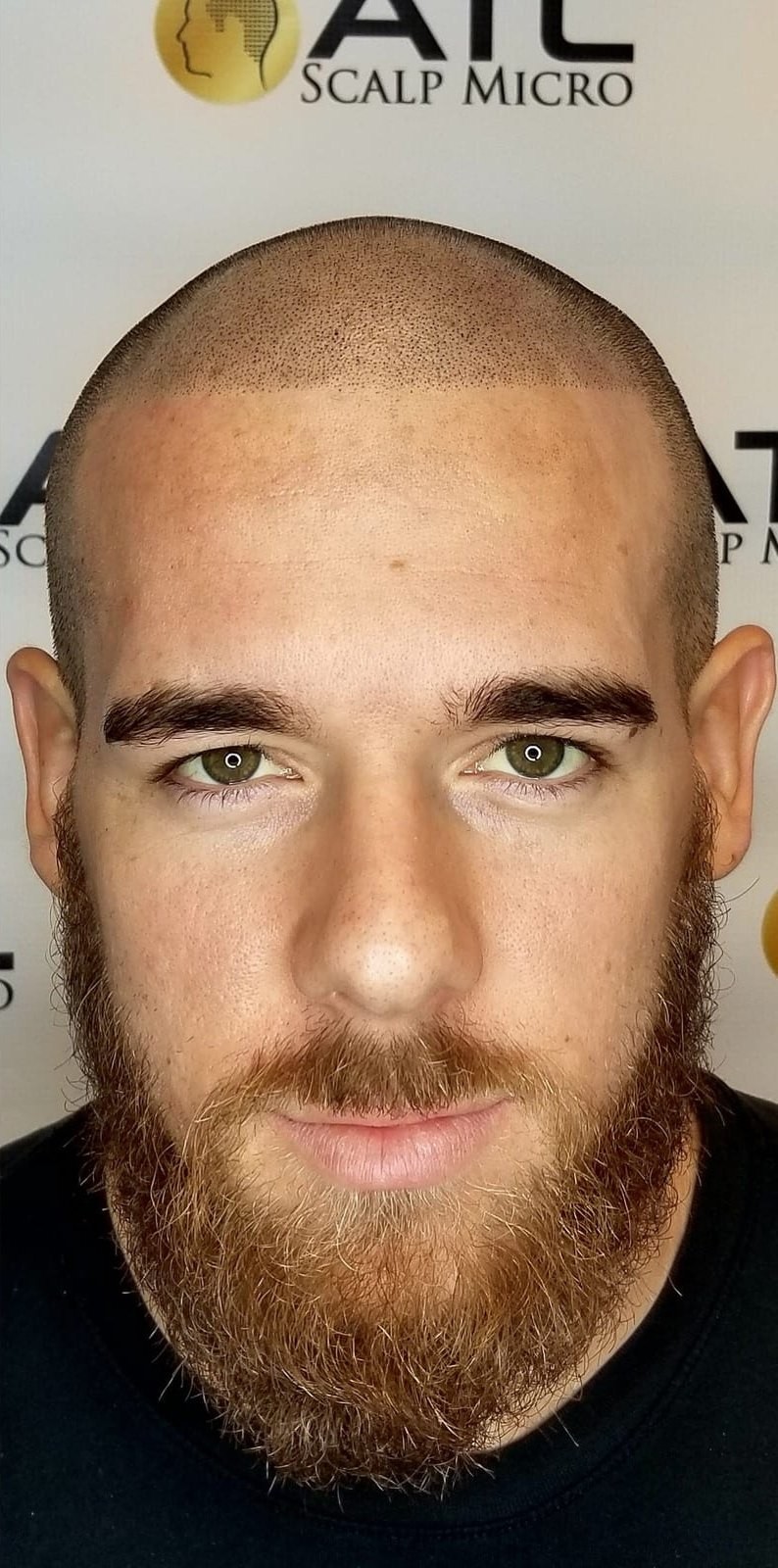
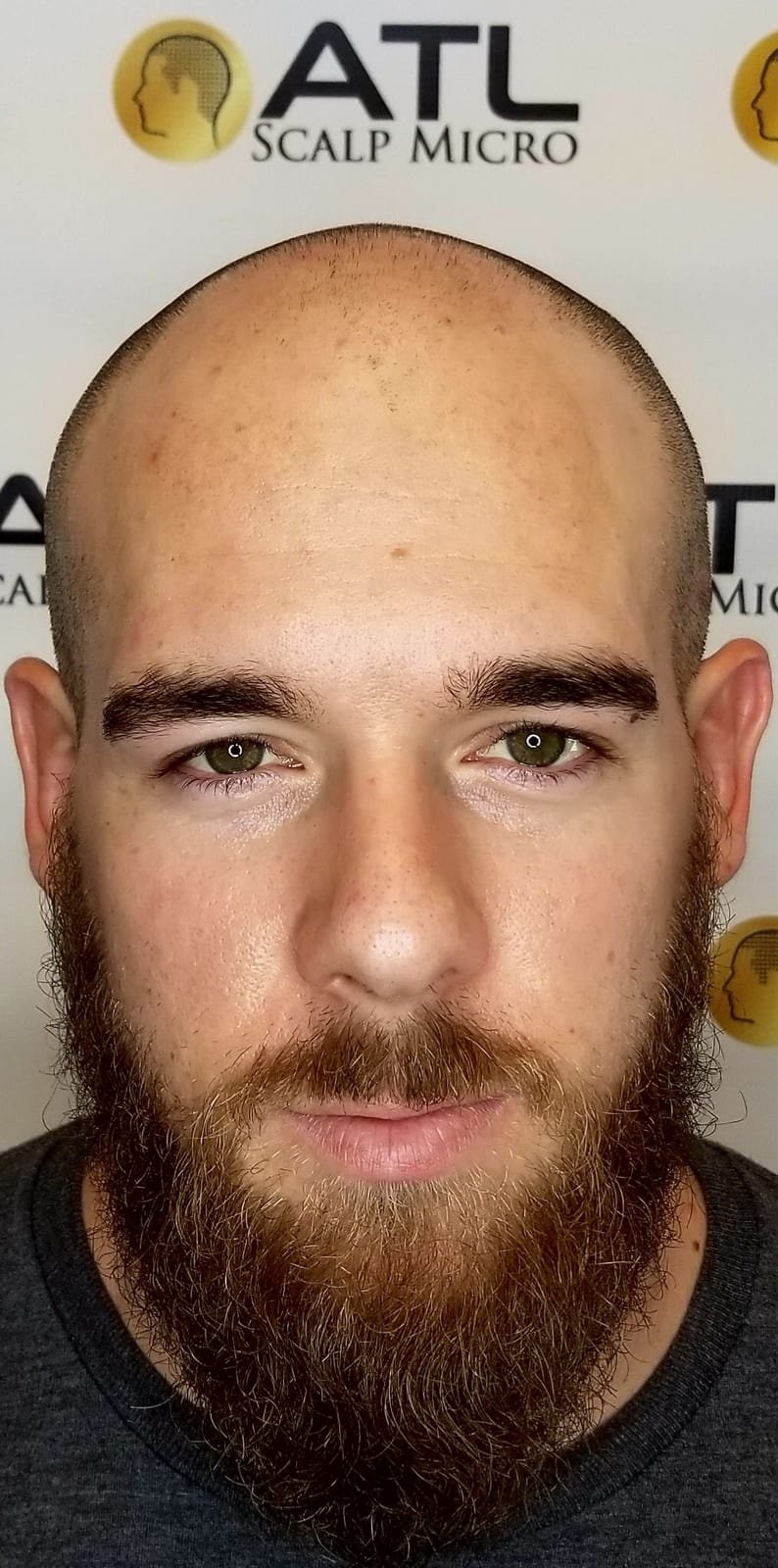
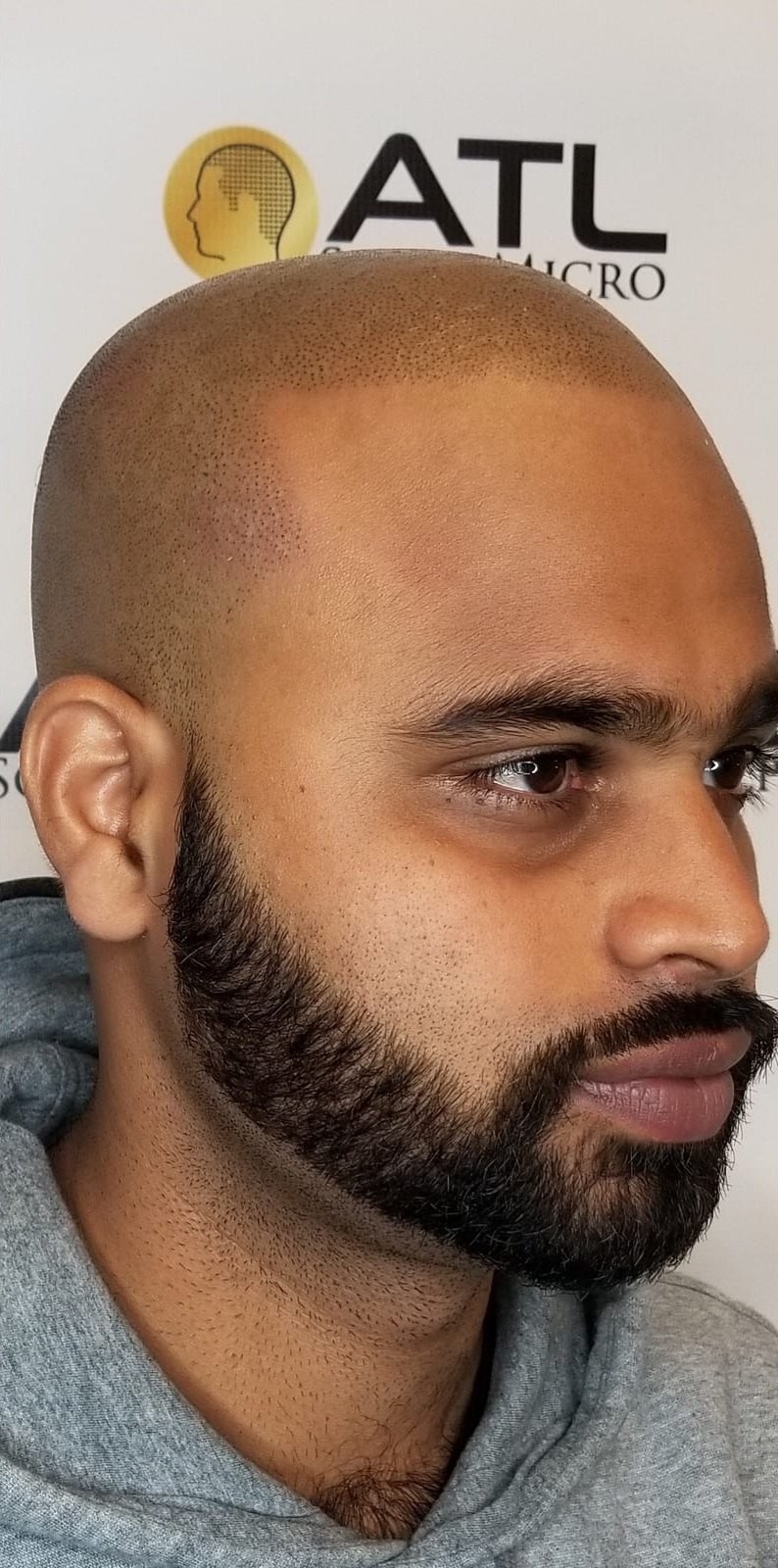
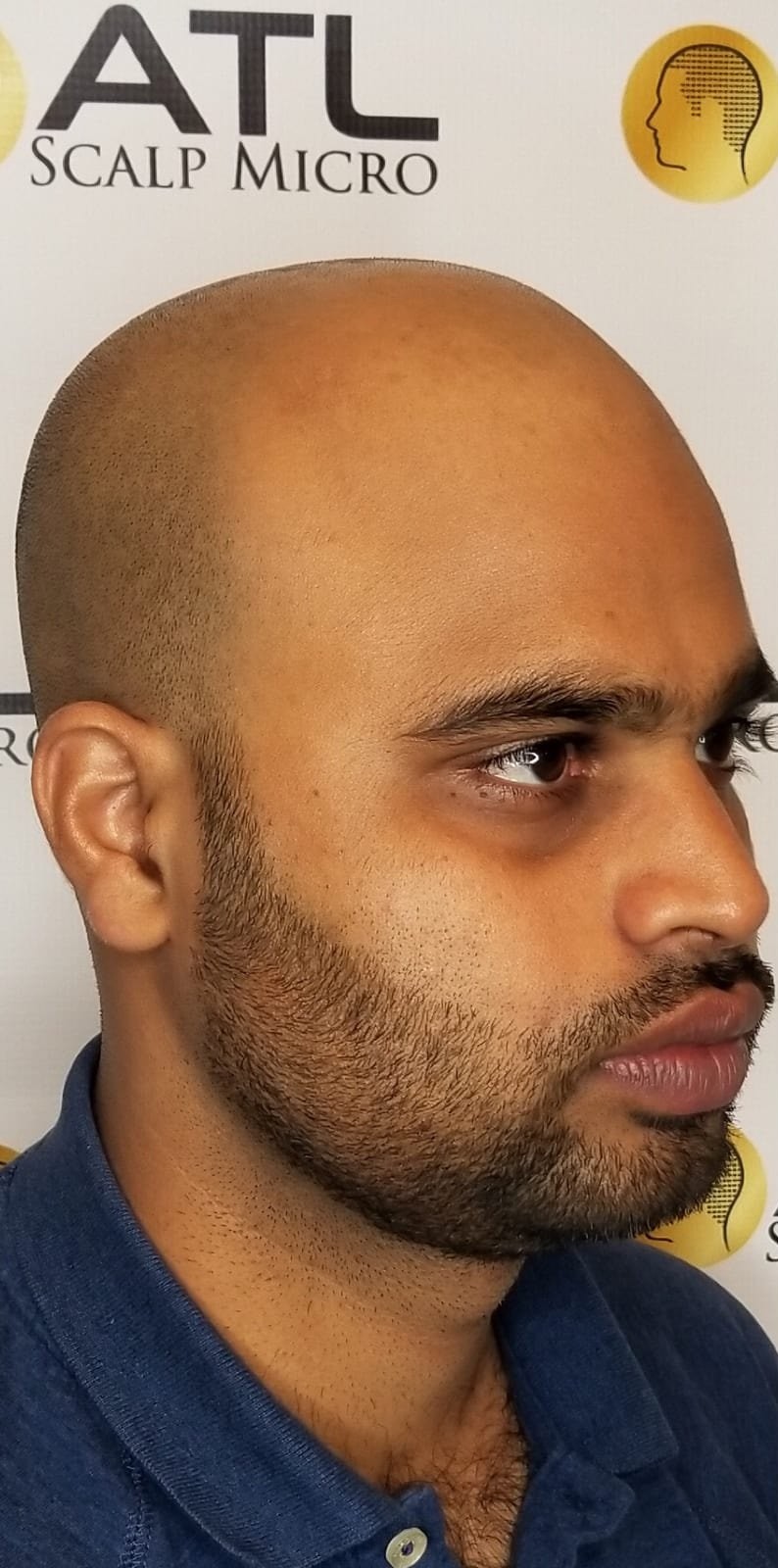
The hairline shape guide: by face and by Norwood stage
This is the part people care about most and the part bad SMP gets most wrong. A hairline is not a line drawn across the forehead. It has a height, a shape, a soft edge and two corners, and all four have to suit your face and your stage.
How height is measured
Hair surgeons work from fixed points. In a 2017 study of 431 transplant patients, the mid-frontal point (the center front of the hairline) was placed about 8 cm above the glabella, the smooth spot between the eyebrows, with an average of 7.9 cm (Garg and Garg, 2017). The paper cites a wider normal range of 7 to 11 cm, and notes that no patient accepted a point higher than 9 cm.
The same authors found forehead curvature shapes the line: a flat forehead suits a flatter hairline, while a more curved forehead suits an oval or round one. They also placed the temple corners so they recede more than the center, at an acute angle, and never lower than the center point.
Hairline shapes people are born with
There is no single "correct" shape. In a study of 200 young Turkish adults, the M shape was the most common male hairline contour at 46%, followed by rectangular at 31% and round at 27% (Sirinturk et al., 2016). In the Japanese study, linear and M-shaped lines made up 88.5% of men, and 32.8% of men had a widow's peak. A gentle M with recessed corners is normal male anatomy, which is why a perfectly flat line rarely suits anyone.
By face shape
Treat this table as a starting point, not a formula. Height ranges are relative to your own face, measured from the glabella, and always adjusted for age and forehead curve.
| Face shape | Height and shape | Edge softness | Temple points |
|---|---|---|---|
| Oval | Mid range; gently rounded front | Medium soft | Natural recess, acute angle |
| Round | Mid range; flatter front with defined corners to add structure | Medium soft | Keep the recess so the face does not look wider |
| Square | Mid range; straighter front that matches the jaw | Extra soft so it does not look boxy | Clear, slightly deeper recess |
| Long or oblong | Lower end of your age-appropriate range to shorten the face | Soft | Shallower recess |
| Heart or wide forehead | Mid range; rounded, can carry a slight peak | Soft | Moderate recess, not too deep |
| Diamond or narrow forehead | Mid range; gently rounded | Medium soft | Slightly fuller corners to widen the top |
By Norwood stage
Your stage changes the job. At early stages SMP sits behind real hair; at later stages the line has to frame a large bald area and still look like it belongs to an adult. The transplant study above found surgeons set the center point at 8 cm or less for Norwood 3 to 5 and higher than 8 cm for Norwood 6 and 7, partly because of donor hair limits. SMP has no donor limit, but the age logic still holds: a large bald scalp with a teenage hairline looks wrong.
| Stage | Height | Shape and edge | Temple points |
|---|---|---|---|
| 2 | Keep your own line; SMP rarely needed | Density only, behind real hair | Leave natural recess alone |
| 3 | Mid range, close to your current center | Gentle M, soft edge | Rebuild partly; keep an acute angle |
| 4 | Mid range | Gentle M or rounded, wide soft zone | Moderate recess; plan crown work too |
| 5 | Mid to slightly higher | Rounded, conservative, very soft edge | Clear recess, frames the face |
| 6 and 7 | Higher end of your range | Mature, softly rounded, broad transition | Recessed corners joined smoothly to the sides |
Hairline design principles
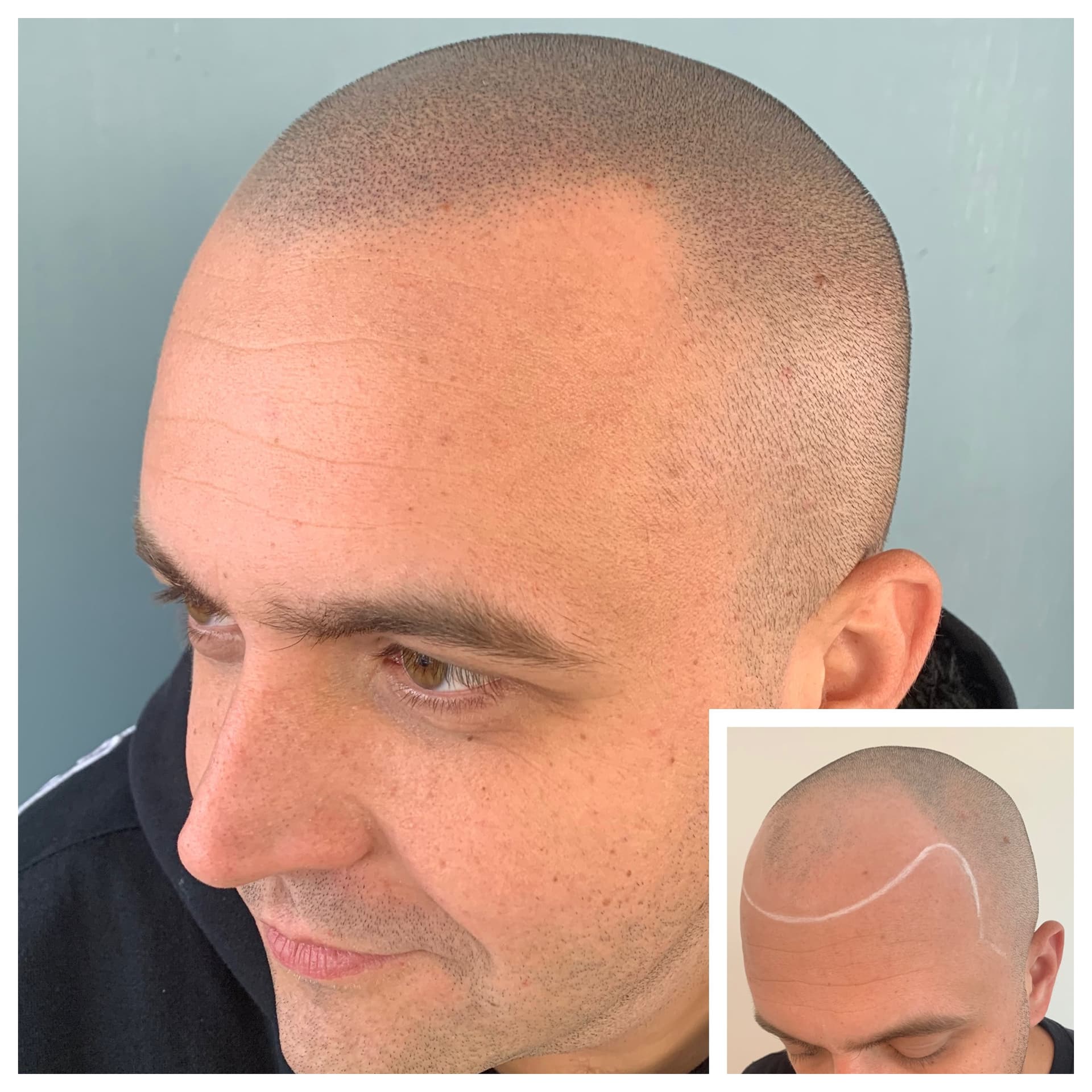
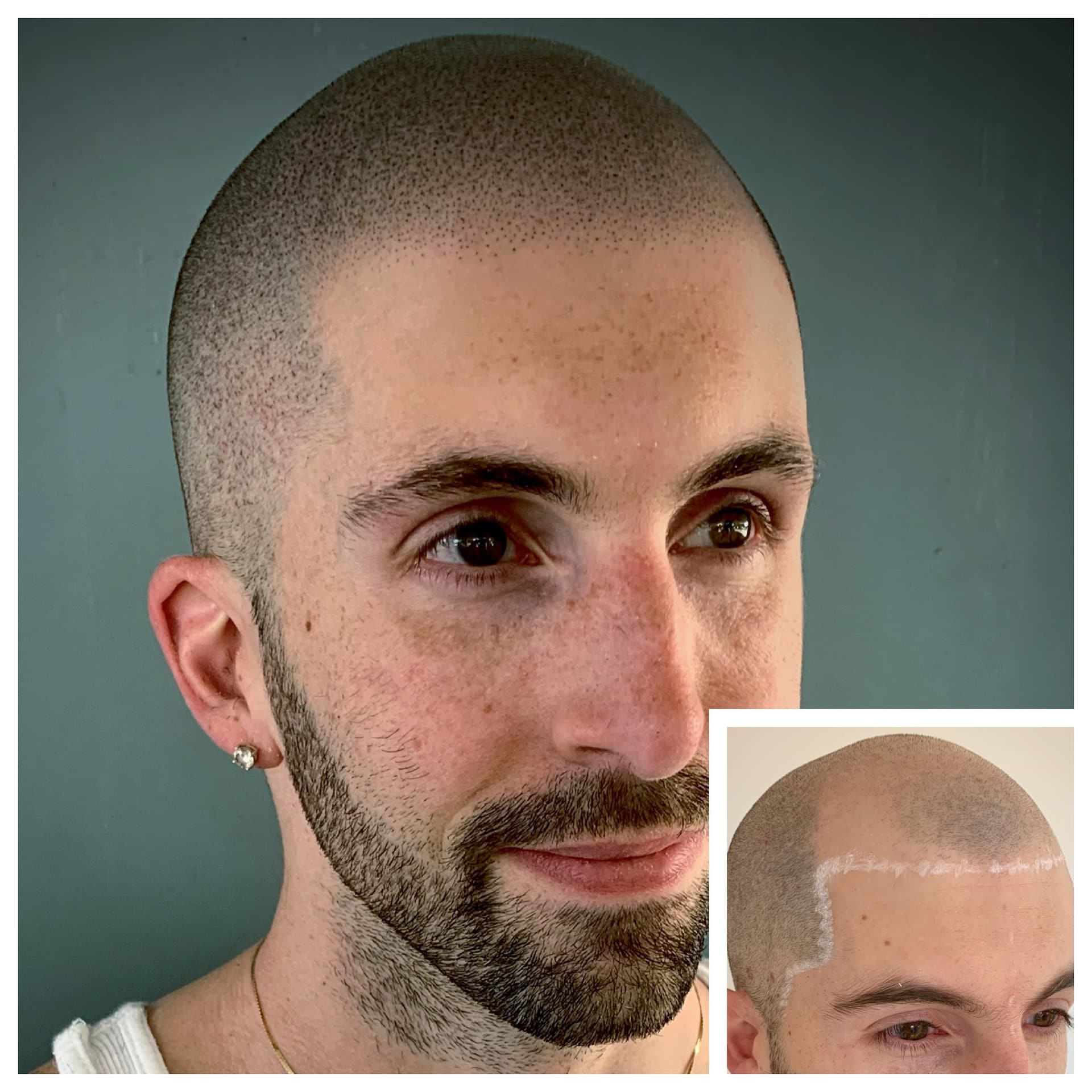
Most of what is written about hairline design comes from hair transplant surgery, and it transfers well to SMP because the goal is the same: a line nobody looks at twice. A 2013 review in Facial Plastic Surgery Clinics of North America framed it as two skills: finding the right borders, and copying the visual features of the different hairline zones (Shapiro and Shapiro, 2013).
Age appropriateness
The 2005 transplant review warned that restoring a young patient's original hairline "will look unnatural as the patient ages," and that a hairline should be placed in a position appropriate for a mature adult. Garg and Garg reported that about 5% of patients wanted a lower hairline "as it was when they were young."
That is the pull every artist feels at consultation. I would rather you leave slightly disappointed that the line is not lower than live with a hairline that looks borrowed from a 19-year-old.
A soft transition zone
Real hairlines do not start with a solid edge. The front few millimeters are sparse, fine and scattered, and density builds behind them. The 2005 review described using single-hair grafts at the very front, with larger groupings further back, to create that softness.
In SMP the equivalent is smaller, lighter, more widely spaced dots at the leading edge, building to full density behind. A 2025 case series on SMP technique built density in steps, to 30%, then 70%, then 100% of natural follicle spacing (Liu et al., 2025), and chose needles by zone with randomized dot placement. That layering is how a soft edge is made.
Irregularity
The 2005 review said the leading edge should form an irregular, zigzag pattern, and that it is more common to make a hairline "too uniform" than "too irregular." It also suggested the hairline be slightly asymmetric.
Real hairlines are not mirror images. A 2025 study of 125 men found hair at the hairline grew at an average angle of 55 degrees on the right and 33 degrees on the left, and only 8.8% leaned the other way (Kim et al., 2025). The authors concluded that perfectly symmetrical designs may look artificial. SMP dots have no direction, but the same lesson applies to the line: small differences side to side read as real.
Temple angles
The corners are where most bad SMP gives itself away. Garg and Garg describe the frontotemporal angle as receding more than the center, always acute, never obtuse. Fill the corners in with a squared-off line and you get the drawn-on look straight away.
Five principles every hairline should follow
- Set the height for the face you will have at 50 or 60, measured from fixed points, not by eye.
- Follow the forehead curve, so the line sits flatter on a flat forehead and rounder on a curved one.
- Build a soft transition zone of smaller, lighter, spaced dots before full density.
- Break the edge with micro irregularity and a little asymmetry, never a clean stencil line.
- Keep temple recession with an acute angle, and join the corners smoothly into the sides.
Mistakes to avoid
Poor SMP is fixable, but not cheaply or quickly. A 2024 study of 120 people who needed revision after unsatisfactory SMP found 89.2% had been treated at beauty salons or cosmetic tattoo facilities. Hair transplant surgery was part of the correction for 61.7%, including 20.8% who also had new SMP, and 13.3% had laser removal followed by new SMP (Park et al., 2024).
The hairline mistakes that give SMP away
- Too low. It looks youthful on day one and wrong within a few years. Lowering later is easy; raising a line means removal.
- Too straight. A ruler-straight front edge looks like a helmet. Real lines have small waves and gaps.
- Too sharp. Full density right at the edge with no transition creates a hard band. The front should fade in.
- Filled-in temples. Squaring off the corners removes the recess almost every adult male has.
- Perfect symmetry. Mirror-image sides look designed, not grown.
- Too dark. Dots darker than your stubble shade read as a tattoo rather than hair, especially on lighter skin.
- Ignoring the sides. A great front that does not blend into the natural hair at the temples and sides still looks fake.
If you are worried about any of these after treatment, our guides on SMP regrets and botched SMP cover what can be done.
How the hairline should age with you
Your SMP line will stay where it is put, and everything around it will keep changing. That is the reason for every conservative choice above.
Think about three things over time. First, your natural hair: with up to 80% of men having pattern loss by 80 according to the ISHRS, the hair at your sides and crown may thin further, and the design may need extending. Second, your face: skin, brow position and forehead lines change, and a line set for a mature adult keeps fitting. Third, the pigment itself.
SMP fades. In the 2025 case series, a visual density score fell from 8.7 straight after treatment to 7.7 at six months. The 2015 review noted that UV exposure can speed up color change and called touch-ups an important part of follow-up care. A proper carbon SMP pigment does not turn blue or green on its own; that look comes from the wrong product, such as tattoo ink, or from pigment placed too deep.
A hairline that fades slightly softer over time can actually look more natural. A hairline set too low or too dark does not improve with age. Read more in how long SMP lasts and SMP touch-ups.
Sessions: what the first session looks like vs the final result
The hairline is built in layers, never in one go. The 2015 review reported that patients often need two to four sessions, with sessions sometimes running up to eight hours. A 2021 study treated patients with three sessions followed by a touch-up one month after the last session, and reported minimal fading over an average 20 months of follow-up (Seyhan and Kapi, 2021).
What each stage of treatment is for
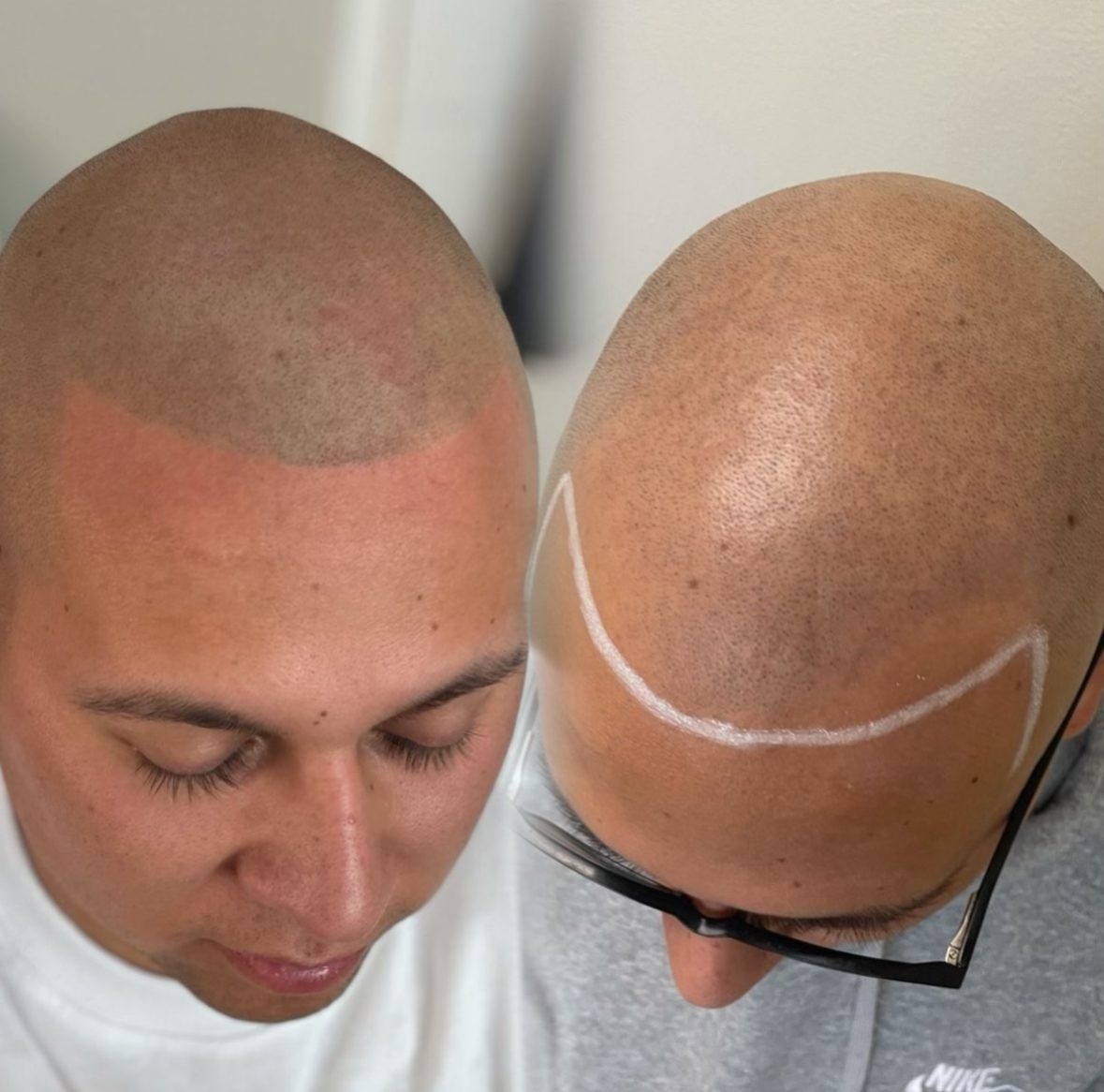
- Consultation and drawing. The line is measured and drawn on, and you see it in the mirror before any needle work. This is the moment to push back on height or shape.
- First session. A light, spaced framework: the hairline position, the temple corners and a low density base. It will look sparse, and that is deliberate.
- Healing. Dots soften and some lighten as the skin settles. The 2015 review notes surface pigment can wash out while deeper pigment can spread, which is why layers go in over time.
- Second and third sessions. Density builds and gaps are filled. The transition zone gets its gradient and the edge is refined.
- Touch-up. Any dots that faded unevenly are corrected once everything has healed.
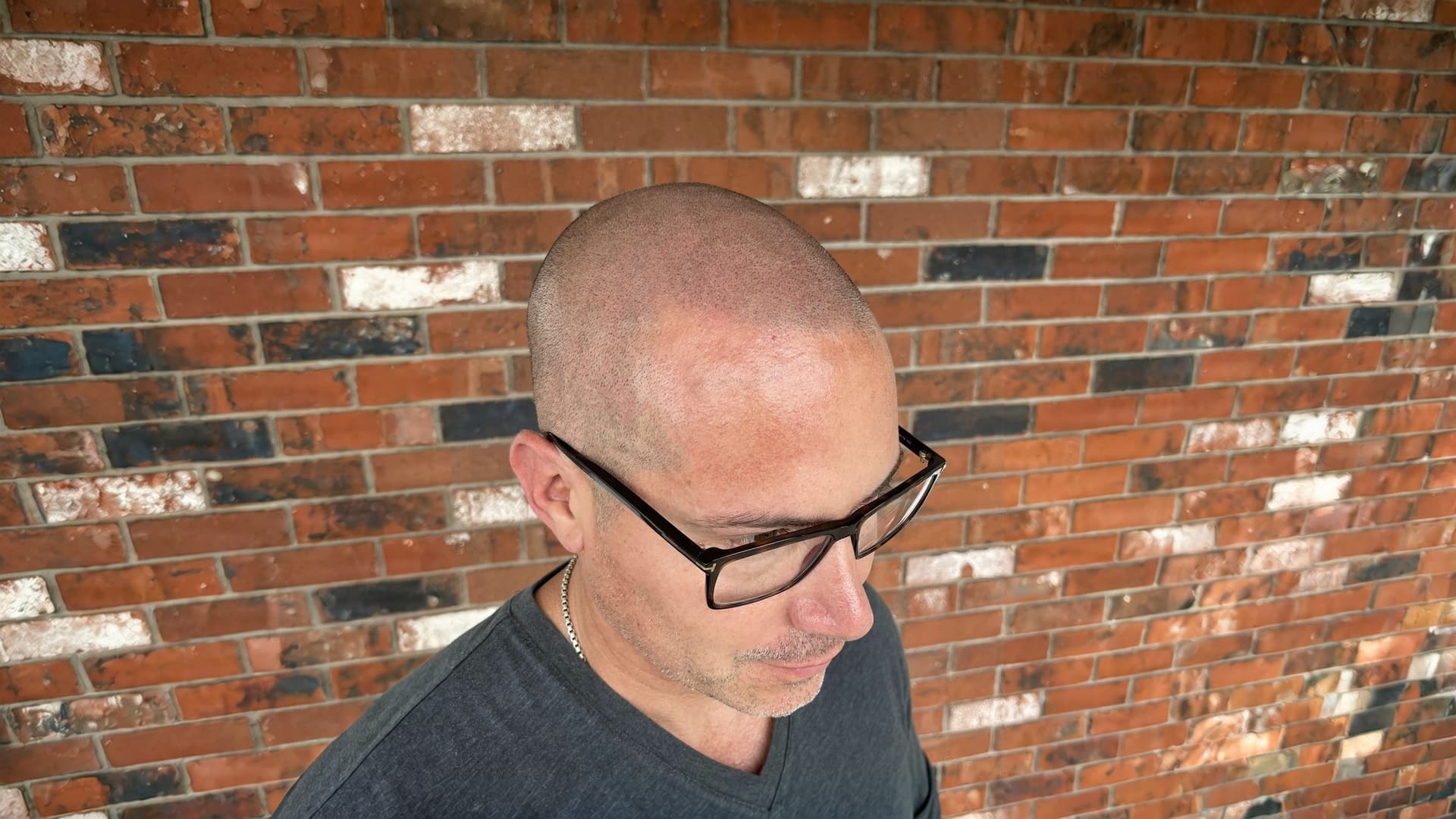
The first result is not the final result. People who judge the line after session one often panic, because a correctly cautious start looks thin. See real healed examples in our before and after guide, and read does SMP hurt and SMP aftercare for the practical side.
Maintenance once the hairline is done
A rebuilt hairline needs the surrounding hair kept short so the stubble effect matches. How often you clip depends on how fast your hair grows, but most people settle into a routine of every few days.
The other maintenance is about the pigment. Because the 2015 review links UV exposure to faster color change, protecting your scalp from the sun with a hat or sunscreen is one of the simplest ways to keep the line looking right. Plan for occasional touch-ups as dots soften over the years, and keep an eye on whether your natural hair at the sides is still blending with the design.
If you want a different look altogether, or are weighing SMP against other options, compare it with a hair transplant and read our explainer on the hair tattoo wording you will see in ads.
What an SMP hairline costs
Hairline work is priced as part of the overall treatment, and it varies by city, artist and how much of the scalp you need covered. A hairline-only job at Norwood 3 is a different scope from a full head at Norwood 6, and touch-ups may or may not be included.
I do not quote figures here because they change by market. Our SMP cost guide has sourced price ranges as of 2026 and explains what drives them. When you compare quotes, check what each includes: number of sessions, touch-ups, and whether the person who designs the line also does the work.
Questions to ask about hairline design at consultation
Most consultations spend too long on price and too little on the line. These are the questions that tell you whether an artist designs hairlines or just fills them in.
Questions for your hairline consultation
- How do you decide where my hairline sits, and what do you measure from?
- How would this line look on me at 50 or 60?
- How do you handle my temples, and why that angle?
- How do you build the soft front edge? How many sessions until it has full density?
- Will you draw it on before we start, and can I see it from the side and in daylight?
- What shade do you plan to use for my skin tone and stubble color?
- Can you show me healed hairlines, at least six months old, on people at my Norwood stage?
- What happens if my hair keeps receding behind the line?
- If I want the line lower later, can we do that? If it is too low, what are the options?
- Are touch-ups included, and when would you expect the first one?
A good artist answers all of these without hesitation and is happy to tell you to wait if your loss is still active. For the wider checklist, read how to choose an SMP artist.