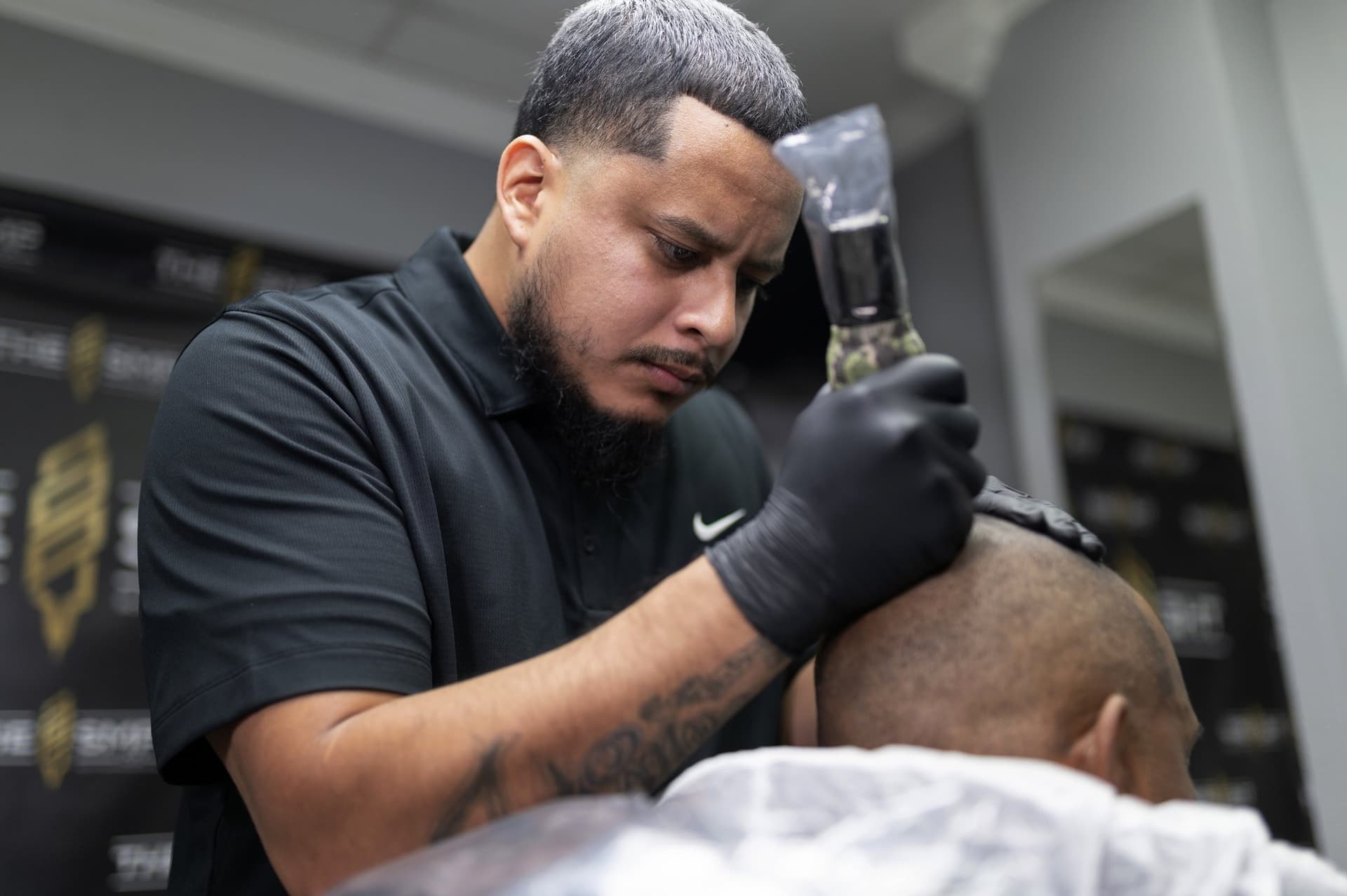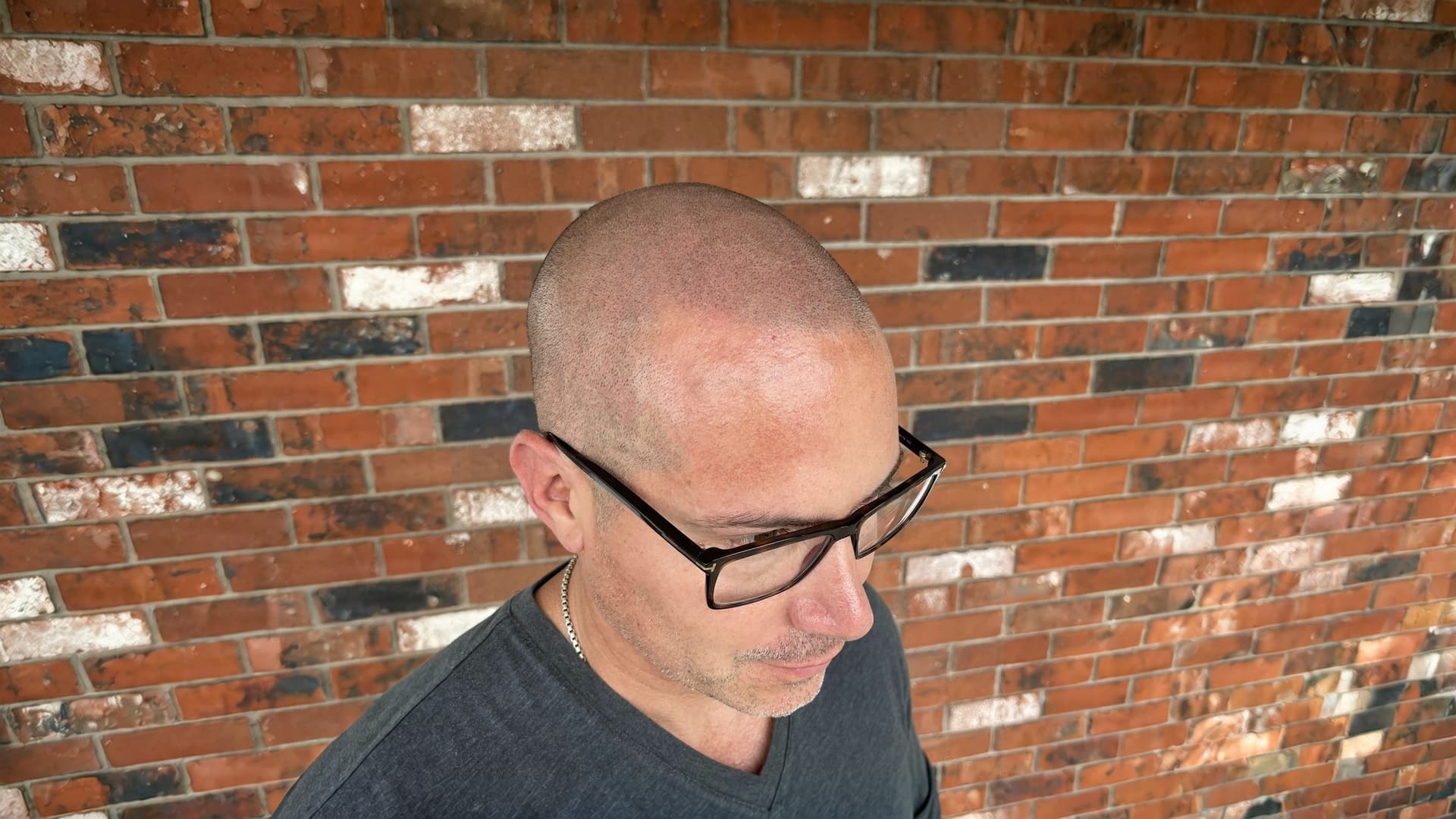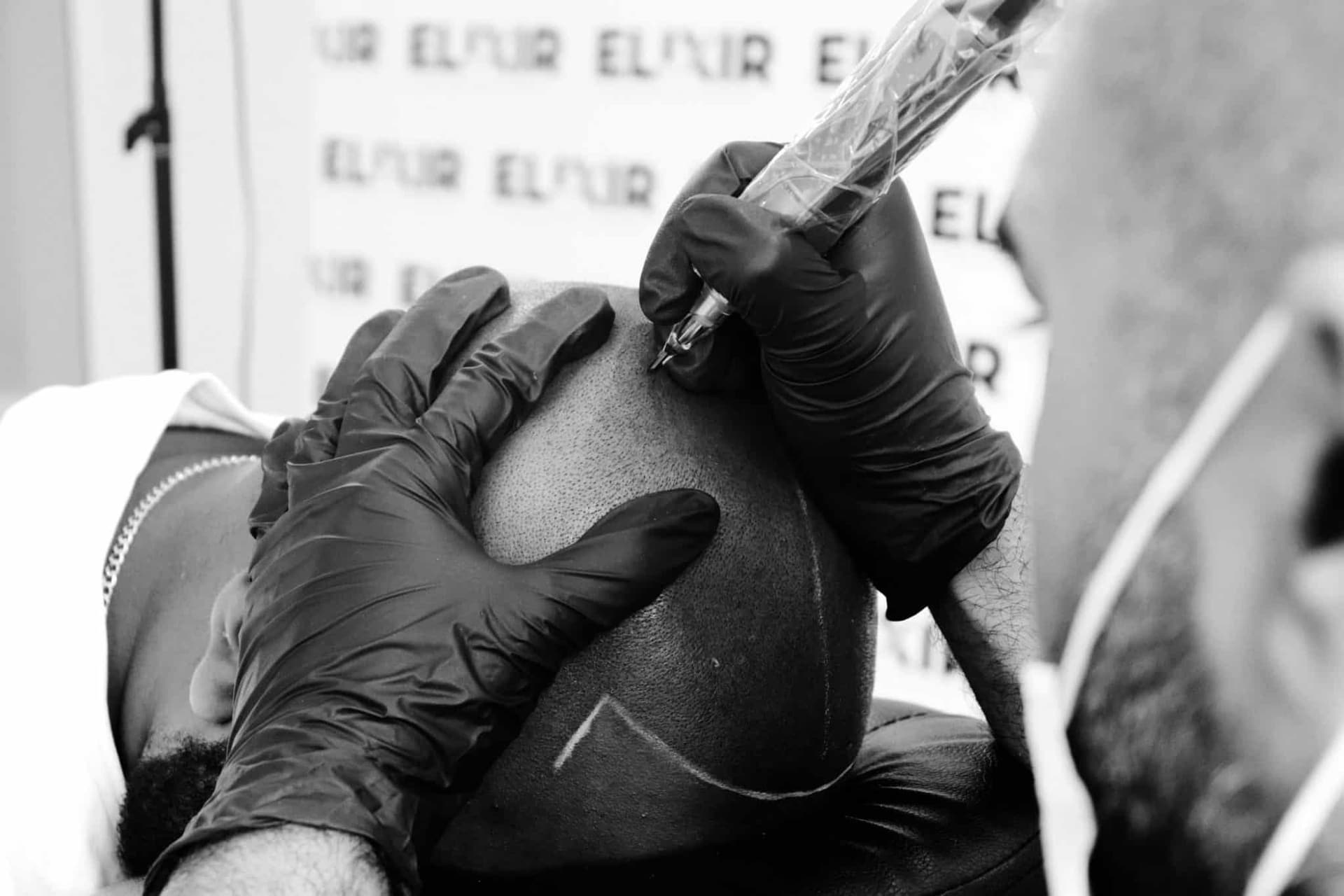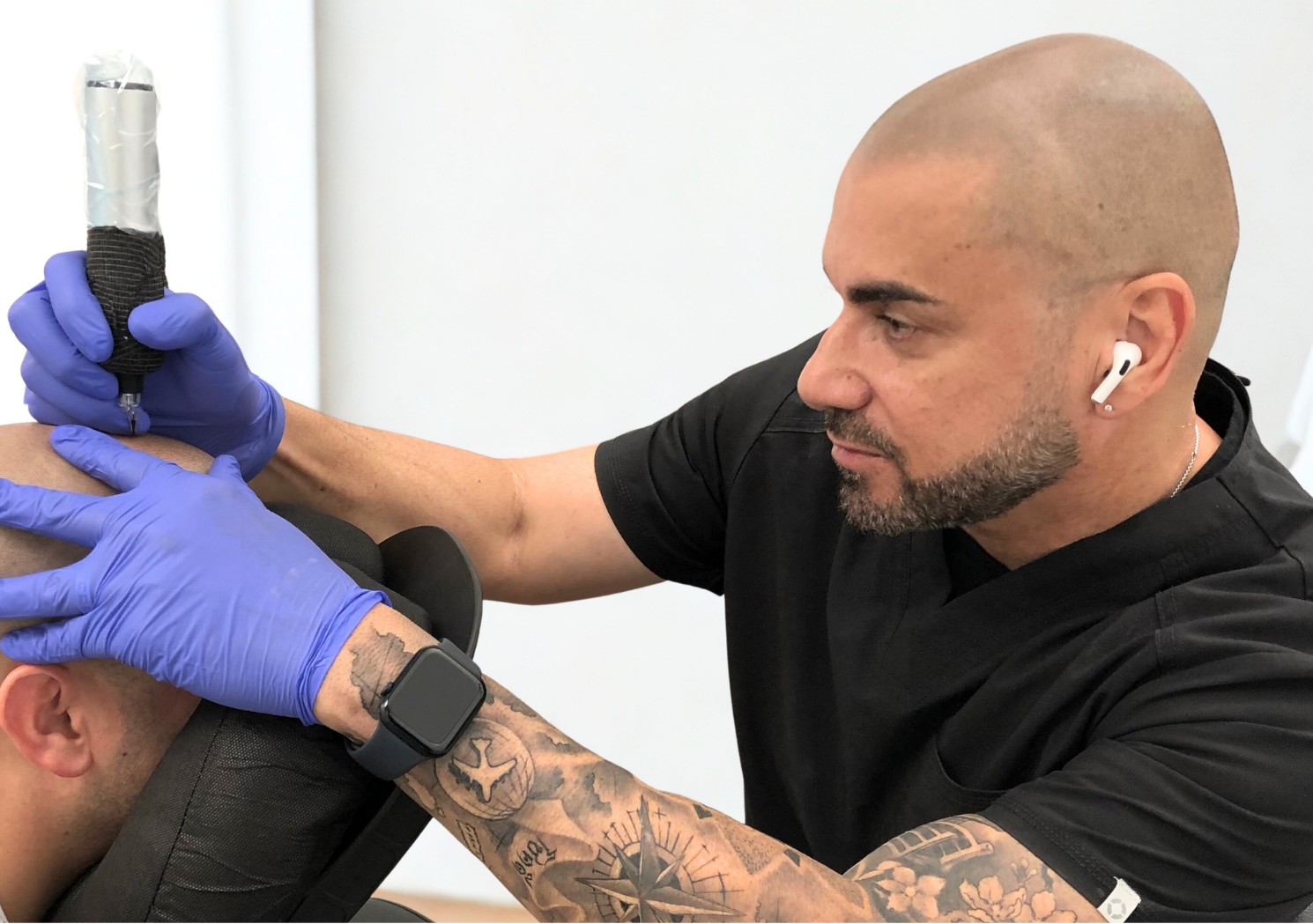
Scalp micropigmentation is a tattoo. A good one looks like a fresh buzz cut for years, and a bad one can follow you around until a laser or a surgeon deals with it. I have spent 17 years in SMP and permanent makeup, and I can tell you that the artist decides your result far more than the machine, the pigment brand or the price. This guide gives you the 15 questions I would ask in any consultation, what a good answer sounds like, and the answers that should send you straight back to your car.
Why the artist matters more than anything else
SMP looks simple from the outside: dots of pigment placed in the upper skin to mimic hair follicles. The hard part is everything that decides whether those dots still look like hair in five years. Depth, dot size, spacing, pigment choice and hairline shape are all judgment calls made by one person holding a needle.
The authors of a 2015 review of SMP in the Journal of Clinical and Aesthetic Dermatology said results depend on the technical and artistic skills of experienced providers, and they noted that pigment bleeding is common, as are color changes from poor pigment choices (Rassman et al., Journal of Clinical and Aesthetic Dermatology, 2015). Those are artist problems, not product problems.
Fixing bad work is not easy either. A Korean study looked at 120 people who needed corrective treatment after unsatisfactory SMP: 74 had hair transplant surgery to hide it, and 16 had laser tattoo removal before starting SMP again (Park et al., International Journal of Dermatology, 2024). The authors described poorly performed SMP as exceedingly challenging to rectify. If you want to see what that looks like in practice, read our guide to botched SMP and the one on SMP regrets.
If you are still deciding whether SMP is for you at all, start with the complete guide to scalp micropigmentation and come back here when you are ready to shortlist artists.
The 15 questions to ask at your consultation
I have spent 17 years around SMP studios, so I know which questions are easy to bluff and which ones are not. The questions below are built so a vague answer stands out. A skilled artist will enjoy them, because they give a good artist room to show what they know.
Ask every artist on your shortlist the same questions, in the same order, and write the answers down. You are not trying to catch anyone out. You are building a fair comparison.
| Question | A good answer sounds like | A red-flag answer sounds like |
|---|---|---|
| 1. How long have you done SMP specifically? | A clear number of years in SMP, with healed work to back it up | "I've tattooed for years, SMP is easy" |
| 2. Can I see healed photos of clients like me? | Results months after the last session, same light and angle as the before shot | Only fresh, same-day photos |
| 3. Is your license or registration current, and where is it? | Names the state or county body and shows it | "You don't need one for this" |
| 4. What bloodborne pathogens training have you done, and when? | Names the course and date, renewed as local rules require | Vague, or "a while ago" |
| 5. Which pigment do you use, and can I see the bottle? | Names the brand, shows a labeled bottle with a lot number | "My own mix" with no label |
| 6. What needle setup will you use, and why? | Explains the choice for your skin and hair | Same setup for everyone, no reason given |
| 7. How will you design my hairline? | Draws it on you and talks about age, face shape and future loss | A low, straight line with no discussion |
| 8. How many sessions, and how far apart? | Several sessions with the spacing explained | "One session and you're done" |
| 9. What happens if my hair loss keeps going? | A plan for future loss, and advice to see a doctor | Never comes up |
| 10. What aftercare do I get, and who do I call? | Written instructions and a direct contact | "Just look it up online" |
| 11. What is your touch-up policy? | In writing: what is included, when and at what price | "We'll sort it out later" |
| 12. What is the total price, and what does it cover? | One written quote for the full treatment | A per-session price with extras added later |
| 13. When would you turn someone down? | Names real cases, such as active scalp conditions or undiagnosed loss | "Everyone is a candidate" |
| 14. Who will actually do my sessions? | The named artist, every session | Unclear, or a junior you have not met |
| 15. What happens if I'm not happy? | An honest explanation of how corrections work | Promises perfection, or blames the client |
Notice that most red-flag answers are not lies. They are shortcuts. An artist who skips the hairline conversation, or who has never thought about what your scalp looks like in ten years, is telling you how they work.
The questions people forget to ask
Questions 13 and 14 are the ones people most often forget. Question 13 tells you whether the artist will put your result ahead of a sale. Question 14 matters because some businesses sell under one well-known name and hand sessions to whoever is free.
Question 9 deserves extra time if you are young or your loss is recent. SMP is long-lasting, and your hair loss may not be finished. A good artist designs for the head you will have later, not only the one you have today.
Your printable consultation checklist
Print this, screenshot it or copy it into your phone notes. Tick each one off as the artist answers, and write a word or two next to anything that felt evasive.
Take this to your consultation
- How long have you done SMP specifically?
- Can I see healed photos of clients with my skin tone and pattern of loss?
- Is your license or registration current, and can I see it?
- What bloodborne pathogens training have you completed, and when?
- Which pigment do you use, and can I see the bottle and lot number?
- What needle setup will you use for me, and why?
- Can you draw my hairline on me now and explain it?
- How many sessions will I need, and how far apart?
- What is your plan if my hair loss progresses?
- What aftercare do I get, and who do I contact with questions?
- What is your touch-up policy, in writing?
- What is the total price, and what exactly does it include?
- When would you turn a client down?
- Who will carry out every one of my sessions?
- What happens if I'm not happy with the result?
How to judge an SMP portfolio
A portfolio is a sales tool, and I say that as someone who runs a marketing agency for SMP and aesthetics businesses. Everyone shows their best work. Your job is to work out whether the best work is typical, and whether it has healed well.
Healed photos versus fresh photos
Fresh SMP photos are taken minutes after a session, when the dots are dark, crisp and sitting partly in the surface skin. That is not what you will live with. In the 2015 paper on SMP, the authors described surface ink washing away around the first hair wash, and pigment settling in the skin over the following weeks, with changes in appearance expected during the first weeks and months (Rassman et al., 2015).
A 2025 case series makes the same point with numbers. Ten patients were scored for visual density right after treatment and again six months later, and the average score dropped from 8.7 to 7.7 out of 10, with scarring cases fading more than standard hair loss cases (Liu et al., Journal of Cosmetic Dermatology, 2025). Small study, but it shows why a same-day photo is the most flattering one an artist can post.
So ask for healed results, ideally six months or more after the final session. If an artist only has fresh photos, either they are new or they are choosing not to show you what happens next. Our before and after guide explains how to read these photos in more depth.
Lighting, angles and filters
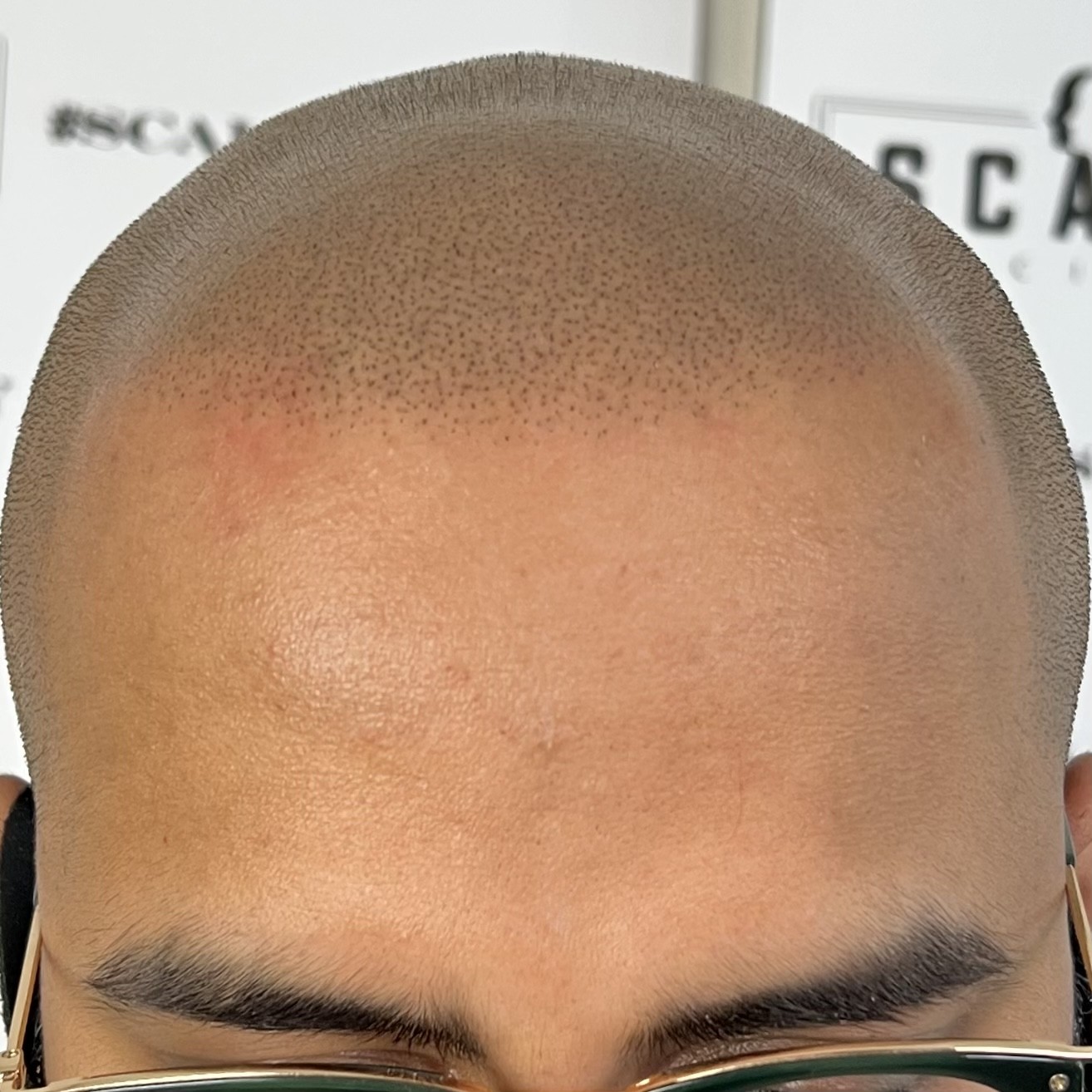
Harsh overhead light, heavy contrast and dark backgrounds can hide blurred dots and patchy density. So can a very slight blur filter. Good before and after pairs use the same light, the same distance and the same angle, so the only thing that changes is the scalp.
Ask to see photos zoomed in close. Real hair follicles vary in size and spacing, and a strong SMP result copies that randomness. Rows, clusters or dots that all look identical are signs of rushed or mechanical work.
Consistency and cases like yours
One stunning result proves the artist got it right once. Twenty solid results prove they get it right most of the time. Scroll back through months of work, not just the pinned posts.
Then look for your own situation. Results on very fair skin, on darker skin, on diffuse thinning, on a full Norwood 6, on a transplant scar or on a woman with thinning are all different jobs. If your case is a scar or a specific pattern of loss on the Norwood scale, ask to see that exact kind of result.
Portfolio checks I run
- Are there healed photos, with a rough time since the last session?
- Do before and after shots use the same lighting and angle?
- Do the dots vary naturally in size and spacing when zoomed in?
- Are there results on skin tones and hair loss patterns like mine?
- Do hairlines look age-appropriate, or is every hairline low and straight?
- Is the work consistent across months, not just in a few showcase posts?
Licensing and health rules in the US
There is no single national SMP license in the United States. The FDA regulates tattoo inks as cosmetics, while state and local authorities oversee the practice of tattooing itself (FDA, Think Before You Ink, updated December 2024). In practice that means your artist's obligations depend on the state, and sometimes the county, where they work.
The details vary a lot, so the useful question is not "are you licensed?" but "which body licenses you here, and can I see it?" Here is how three sets of rules compare, as of 2026.
| Rule set | Bloodborne pathogens training | Other points |
|---|---|---|
| Florida (tattoo artist license) | Approved course plus an exam, pass mark 70%, at first licensure | No continuing education required to renew the artist license |
| Minnesota (body art technician) | At least 5 hours, taken in the year before each new or renewal application | Certificates must be sent with the application |
| NEHA Body Art Model Code | OSHA bloodborne pathogens training or equivalent, plus first aid training | Code exam at 70% or higher; license posted where easily seen |
The Florida details come from the Florida Department of Health, the Minnesota details from the Minnesota Department of Health, and the model code from the National Environmental Health Association. The model code is a template that health departments can adopt or adapt, not law in itself.
What the federal safety standard covers
The model code points to the OSHA bloodborne pathogens standard. That standard applies to employers whose staff face exposure to blood, and it requires a written exposure control plan reviewed at least once a year, training when a worker starts and at least annually after that, and the hepatitis B vaccine offered at no cost to exposed staff (OSHA, 29 CFR 1910.1030).
You do not need to read the regulation. What matters is that a professional artist should be able to talk about this training without hesitating, tell you roughly when they last did it, and explain how they would handle a needle injury.
Hygiene you can see for yourself
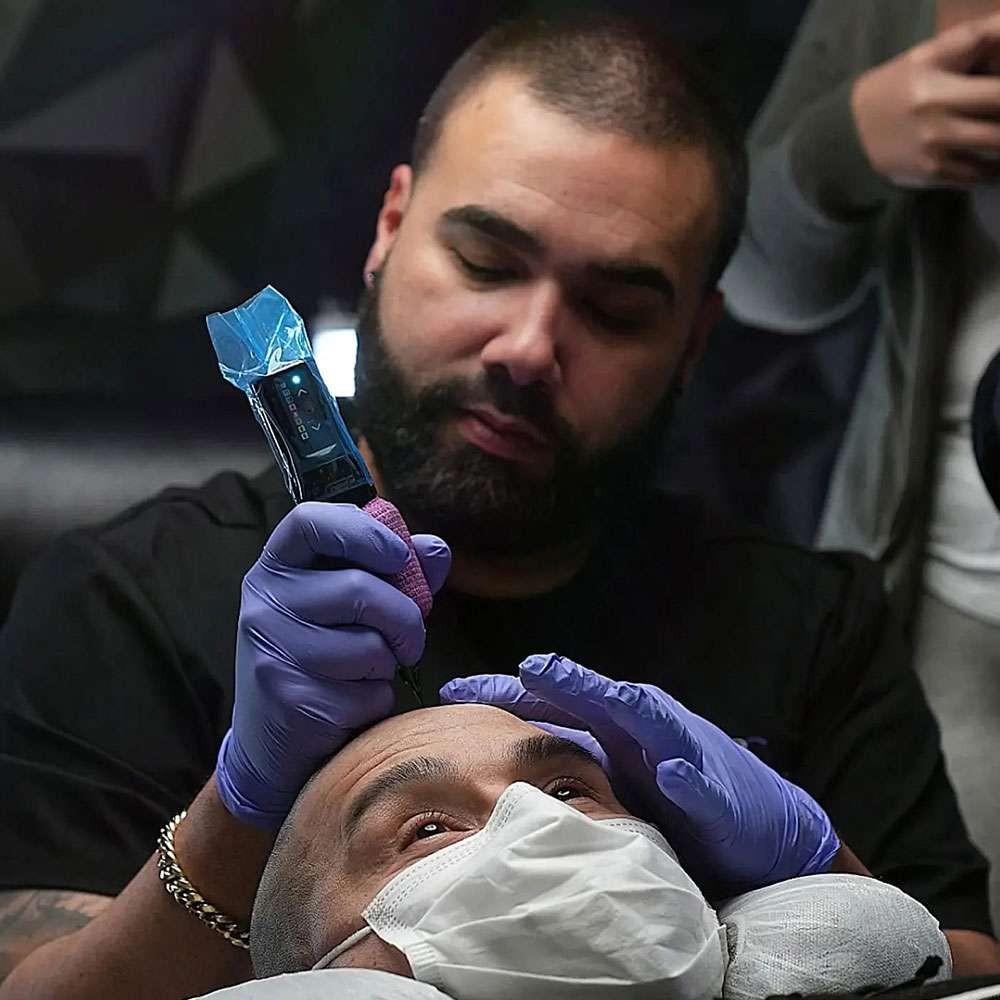
You cannot inspect a studio like a health officer, but you can notice a lot in a ten-minute consultation. The OSHA standard sets out several practices that are easy to spot. Used sharps go straight into containers that are closable, puncture resistant, leakproof and labeled, kept upright and close to where the work happens. Contaminated needles are not bent or recapped by hand, and disposable gloves are replaced when contaminated and never washed for reuse (OSHA, 29 CFR 1910.1030).
What you should see in the treatment room
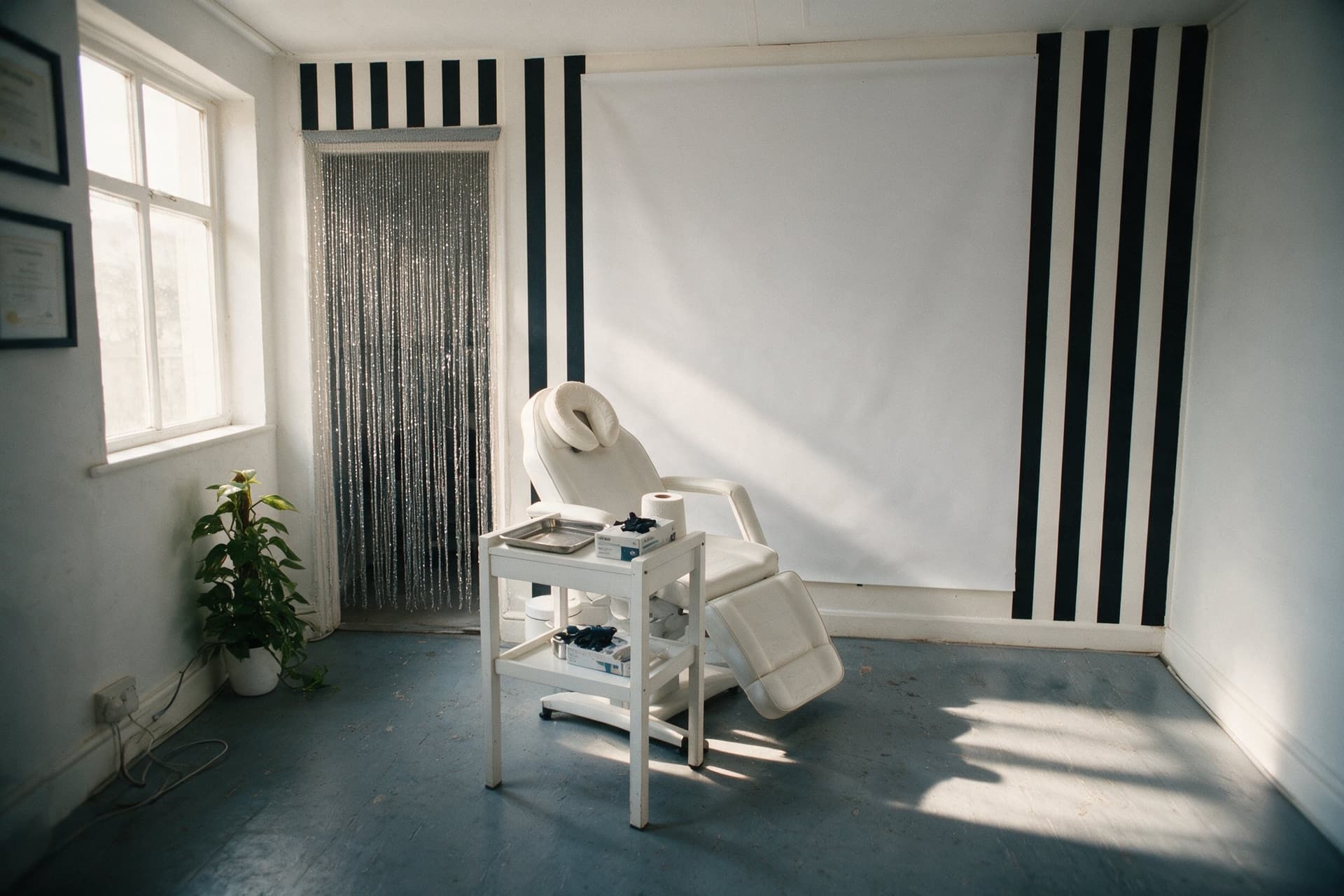
- A labeled sharps container within reach of the chair, upright and not overfilled
- Fresh disposable gloves put on in front of you, and changed if the artist touches anything else
- Needle cartridges opened from sealed packaging in front of you
- Surfaces, machine and cables covered with barrier film that is replaced between clients
- Pigment poured into single-use caps, not dipped into straight from the bottle
- A clean, uncluttered room that is not also used for food, storage or other services
Ask if you can see the treatment room during the consultation. A confident artist will show you without being asked twice. If the room is off limits, ask why.
What a good consultation and hairline design look like
The consultation itself is the best preview of the treatment. If it feels rushed, scripted or pushy, that is how the artist works.
The consultation should be about you
A good consultation includes questions about your health, your hair loss history and your expectations. The artist should ask whether your loss has been looked at by a doctor, especially if it is recent, patchy or fast, because some causes of hair loss are medical and should be checked first. Expect them to ask about skin conditions, allergies and any medication that affects healing.
They should also explain what SMP can and cannot do. SMP gives the look of a close shave or adds density behind thinning hair. It does not grow hair, and the 2015 SMP paper stressed setting realistic expectations from the first consultation (Rassman et al., 2015).
Hairline design is where skill shows
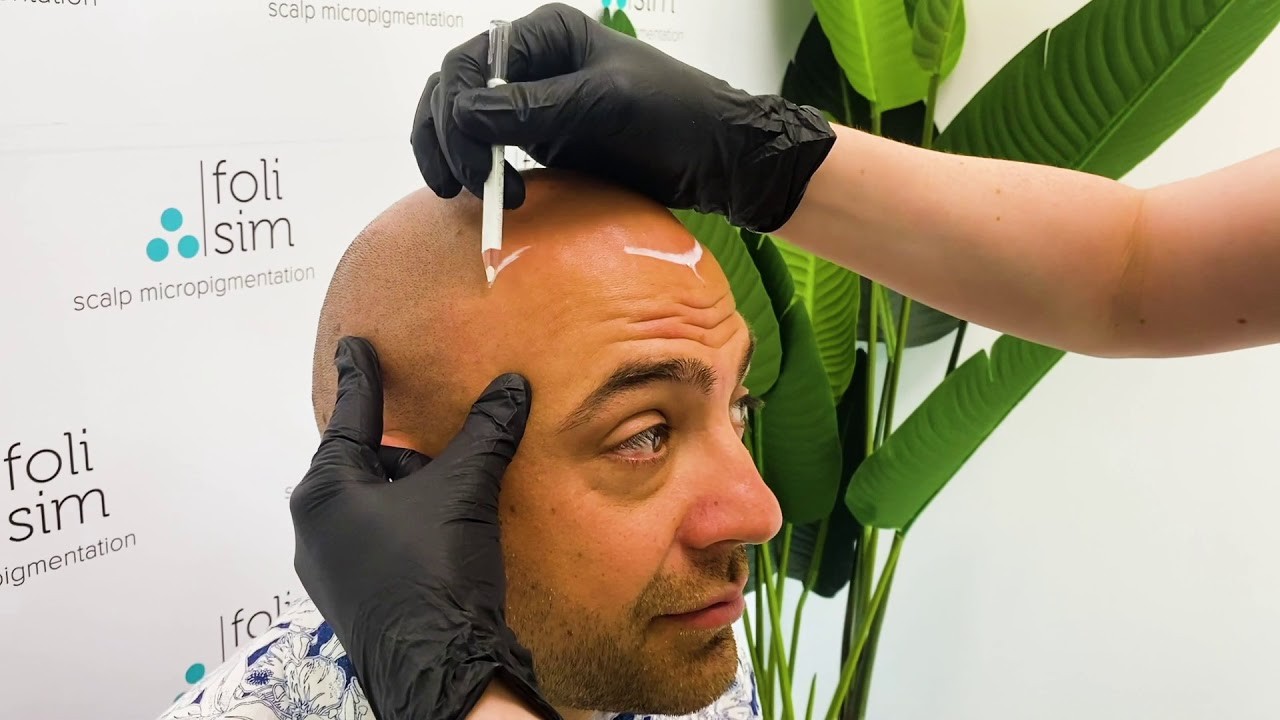
I tell people to judge an artist by how they draw a hairline. The best ones draw it on your head, step back, check it from the side and from above, and explain why it sits where it does. They talk about your age, the shape of your face and where your hair would naturally have receded over time.
A hairline that is too low, too straight or too sharp is one of the fastest ways to make SMP look fake. A soft, slightly irregular front edge that fades into the density behind it reads as real hair. If you are dealing with a receding hairline rather than full loss, ask how the artist blends dots into your existing hair.
Pigment and needle questions worth asking
You do not need to become an expert in inks or cartridges. You need to hear an artist explain their choices clearly, because clear explanations come from people who made those choices on purpose.
Pigment
The FDA warns that tattoo ink can be contaminated even in a sealed container or one labeled sterile, and says there is no surefire way to tell if ink is safe without testing (FDA, Think Before You Ink). That is why question 5 matters. A professional artist uses a named product, knows where it was bought and can show you a labeled bottle with a lot number.
Color is the other half of the pigment question. The 2015 SMP paper warned that patients should be told the dots may take on a blue or green tint (Rassman et al., 2015). That look comes from the wrong product, such as tattoo ink or a permanent makeup pigment, or from carbon placed too deep, not from a proper SMP pigment changing color. The ISHRS says the preferred SMP pigment is carbon only. Ask the artist which pigment they use, how they choose a shade for your skin tone, and how they control depth.
Needles and depth
SMP pigment is meant to sit in the upper dermis. The same paper explains that pigment placed too shallow leaks out within days, while pigment placed too deep can spread beyond where it was placed (Rassman et al., 2015). Spread dots are what turn a crisp follicle pattern into a gray smudge.
| Topic | Reassuring answer | Worrying answer |
|---|---|---|
| Pigment brand | Named product, labeled bottle, lot number | Unlabeled, homemade or "secret" |
| Shade choice | Tested against your skin tone and hair color | One shade for every client |
| Color shift | Uses a carbon SMP pigment and explains how depth and sun affect the look | Uses tattoo ink or a permanent makeup color |
| Needle choice | Matches dot size to your hair and skin | Same cartridge for every scalp |
| Depth | Talks about placing dots in the upper dermis and building density over sessions | Goes deep "so it lasts" |
If you ever have a reaction, the FDA advises asking the artist for the ink's brand, color and lot or batch number. An artist who keeps those records is one who expects to be accountable.
Aftercare support and the touch-up policy
Your result is not finished when you leave the chair. SMP is usually built over several sessions, and the 2015 review's authors wrote that many of their patients have two to four sessions before the process is complete, and that touch-ups are an important part of the follow-up service (Rassman et al., 2015).
That makes the aftercare and touch-up policy part of what you are buying. Before you book, get these things in writing: how many sessions are included, how far apart they are, what happens if a patch fades early, and how much a touch-up costs after the included period ends.
Good aftercare means written instructions, a named person to contact and a quick reply when you send a photo of something that worries you. Our SMP aftercare guide covers the healing weeks, and the touch-ups guide explains how often people typically return and why. For how long results hold, see how long SMP lasts.
Pricing signals worth reading
I will not quote prices here, because they vary by city, artist and the size of the job. Our SMP costs guide covers current ranges and where they come from. What I can tell you is how to read the way a price is presented, because that says a lot about the business.
A strong quote is one written document that covers the whole treatment: number of sessions, what each one is for, touch-up terms and the total. It does not change when you show interest, and nobody pushes you to pay a deposit before you leave the room.
Weaker signals include a low headline price per session that grows once you need more sessions, discounts that expire today, and quotes that stay verbal. None of these proves the artist is bad, but each one makes it harder to compare like with like.
Remember the cost of getting it wrong. The study of 120 revision patients found that corrections included laser removal followed by new SMP, and hair transplant surgery to cover the original work (Park et al., 2024). Both are major commitments of time and money compared with choosing carefully the first time.
How to read reviews without being fooled
Reviews help, but they are easier to game than most people think. I run a marketing agency for SMP and aesthetics businesses, so I know how review requests are timed and how review pages are presented.
There are rules on your side. In August 2024 the Federal Trade Commission announced a final rule that bans fake reviews and testimonials, including AI-generated ones, bans paying for reviews that must be positive or negative, requires insider reviews to disclose the connection, and bans using threats to remove negative reviews (FTC, August 2024). Rules do not stop every fake, so you still need to read carefully.
How I read SMP reviews
- Check more than one platform, and compare what each one says.
- Look at the dates. The FTC notes that a burst of reviews in a short window can be a sign of fakes (FTC Consumer Advice).
- Open the reviewer's profile. An account that has only ever posted one review is weaker evidence.
- Read the detailed ones. Real reviews mention the hairline, the number of sessions, healing or a touch-up.
- Look for reviews written months after treatment, because those describe healed results.
- Read how the artist responds to criticism. Calm, specific replies are a good sign.
The FTC also warns that you cannot always tell a fake from a real review just by looking, and that some fake reviews give less than the top rating to seem believable. Treat reviews as one input alongside healed photos and the consultation, not as the deciding vote.
Training and certification claims: what they prove
Walls covered in certificates look impressive. Most SMP certificates come from private training courses, and they prove the artist attended that course. That is worth something, but it is not the same as a license, and it is not proof of skill.
When that 2015 review was written, its authors noted there were no formalized training programs for SMP (Rassman et al., 2015). Courses have grown since, but there is still no single national standard for SMP training in the US. That is why I put healed results ahead of any piece of paper.
| Claim | What it proves | What it does not prove |
|---|---|---|
| State or local license | Met local health rules where they work | Artistic skill or natural hairlines |
| Bloodborne pathogens certificate | Completed infection control training | That the studio follows it every day |
| SMP course certificate | Attended a training course | Healed results or experience |
| "Master" or "expert" title | Often a course or brand level | Any independent standard |
| Years in tattooing or PMU | Needle and hygiene experience | SMP-specific hairline and density skill |
My own background is 17 years across SMP and permanent makeup, and I founded Team Micro. I mention that only so you know I have seen training from the inside. Even so, my advice is the same for every artist: judge them on what has healed, not on the frames on the wall.
Is it worth traveling for the right artist?
Often, yes. SMP is long-lasting and visible every day, so a few hours on a train or a plane can be a small price for a result you are happy with. The catch is that SMP is a series, not a single appointment.
Plan for the full treatment before you book. If the artist expects several sessions spaced apart, you need to travel several times or stay for longer, and you need to know how touch-ups will work once you are home. Ask how they support out-of-town clients: photo check-ins, phone support and what happens if something needs attention between visits.
Add travel and accommodation to the quote when you compare a distant artist with a local one. A slightly higher total for a clearly better artist is usually the better deal, but only if you can actually make every session.
Red flags that mean walk away
Some answers are worth a follow-up question. These are the ones where I would thank the artist for their time and leave.
Walk away if you see any of these
- No healed photos at all, only fresh results
- No license or registration where one is required, or a refusal to show it
- Pigment with no label, no brand name or no lot number
- A hairline proposed without drawing it, or one that is the same for every client
- A promise that one session is all you will ever need
- No questions about your health or the cause of your hair loss
- Pressure to pay a deposit on the day, or a price that changes when you hesitate
- A treatment room you are not allowed to see, or one without a sharps container
- Uncertainty about who will actually do your sessions
- Criticism of every other artist, with no clear explanation of their own method
Choosing an SMP artist is mostly about patience. Book two or three consultations, take the checklist, compare written quotes and give healed photos more weight than anything else. The right artist will still be there next month. A rushed decision can stay on your scalp for years.