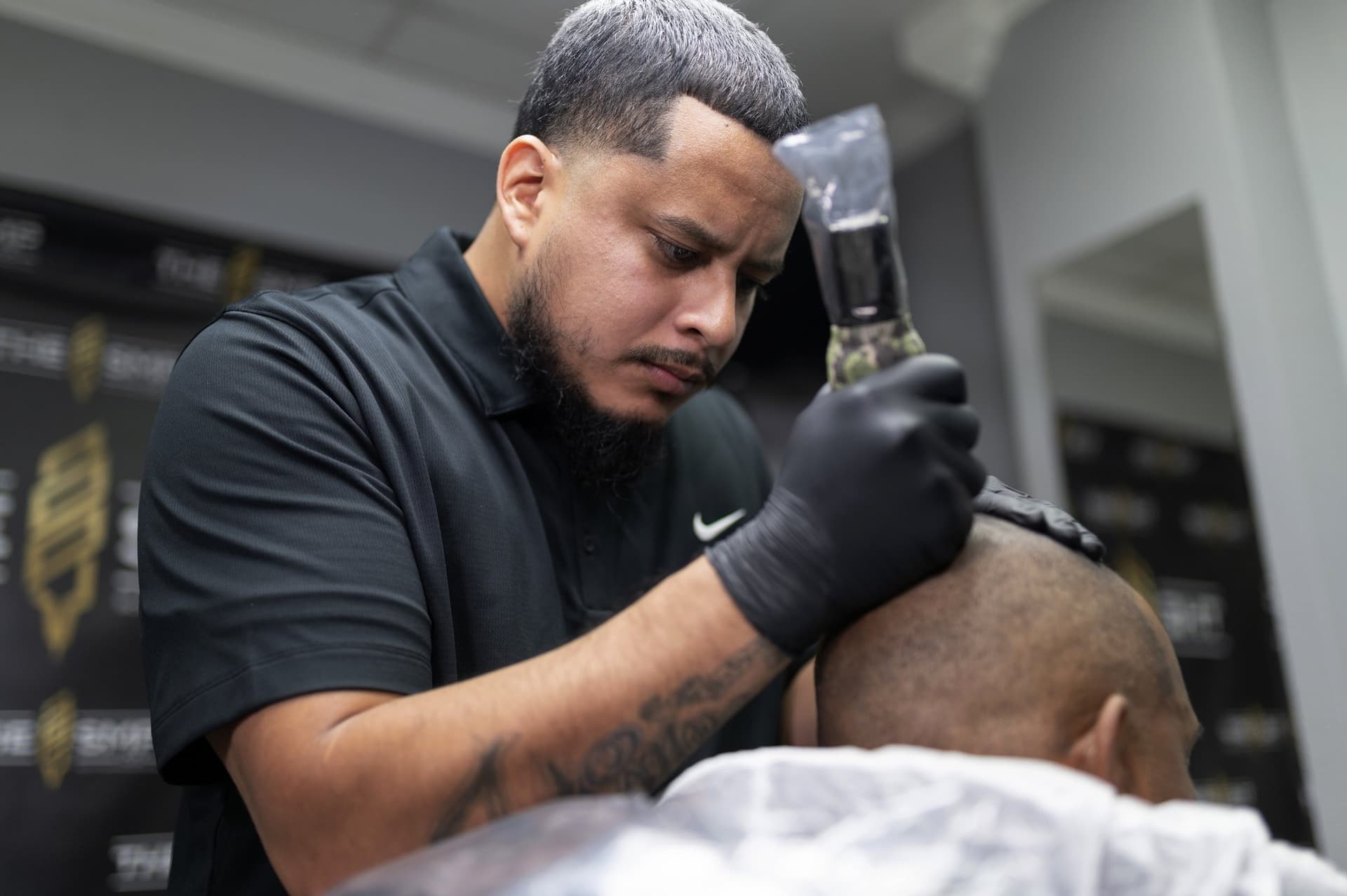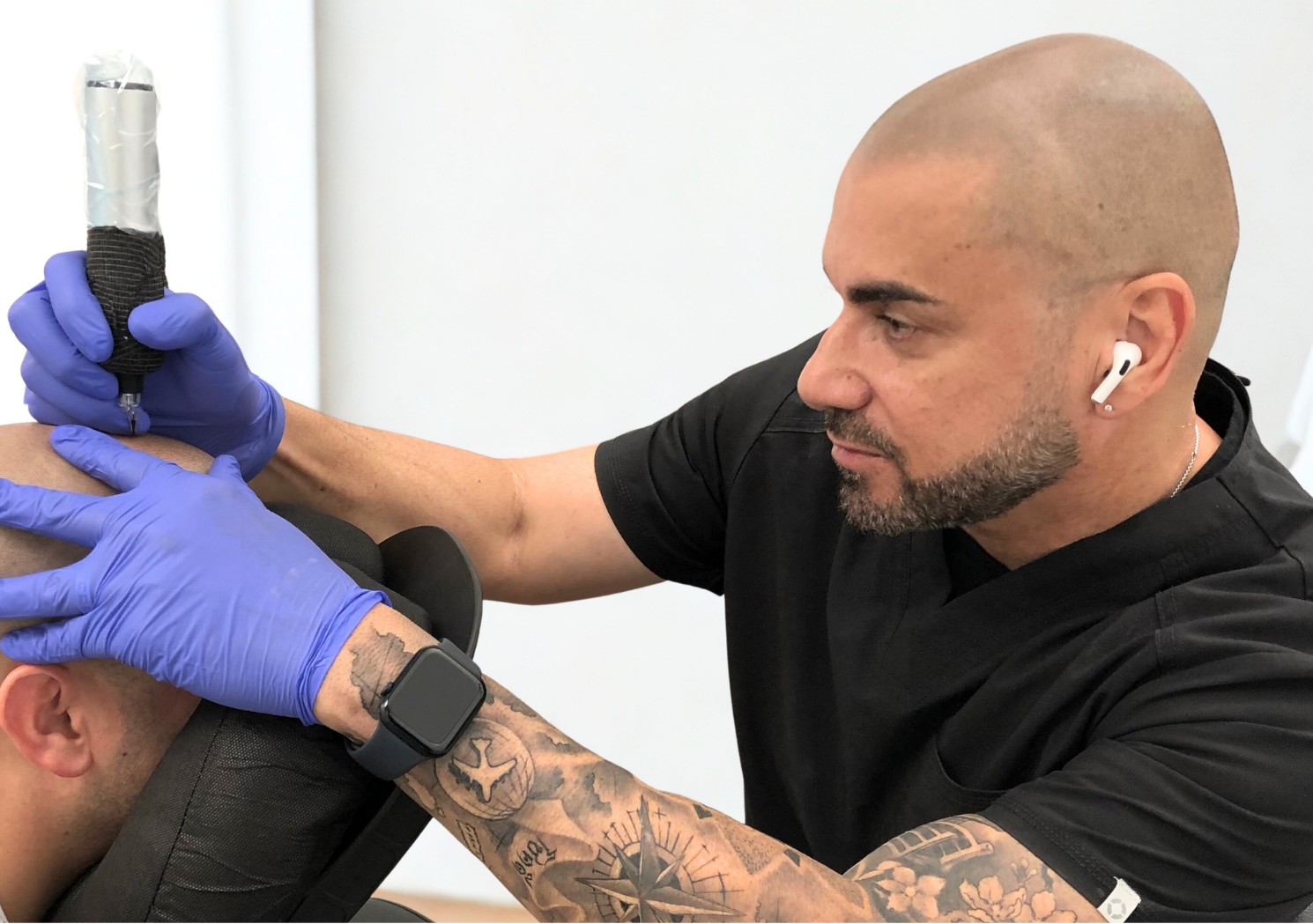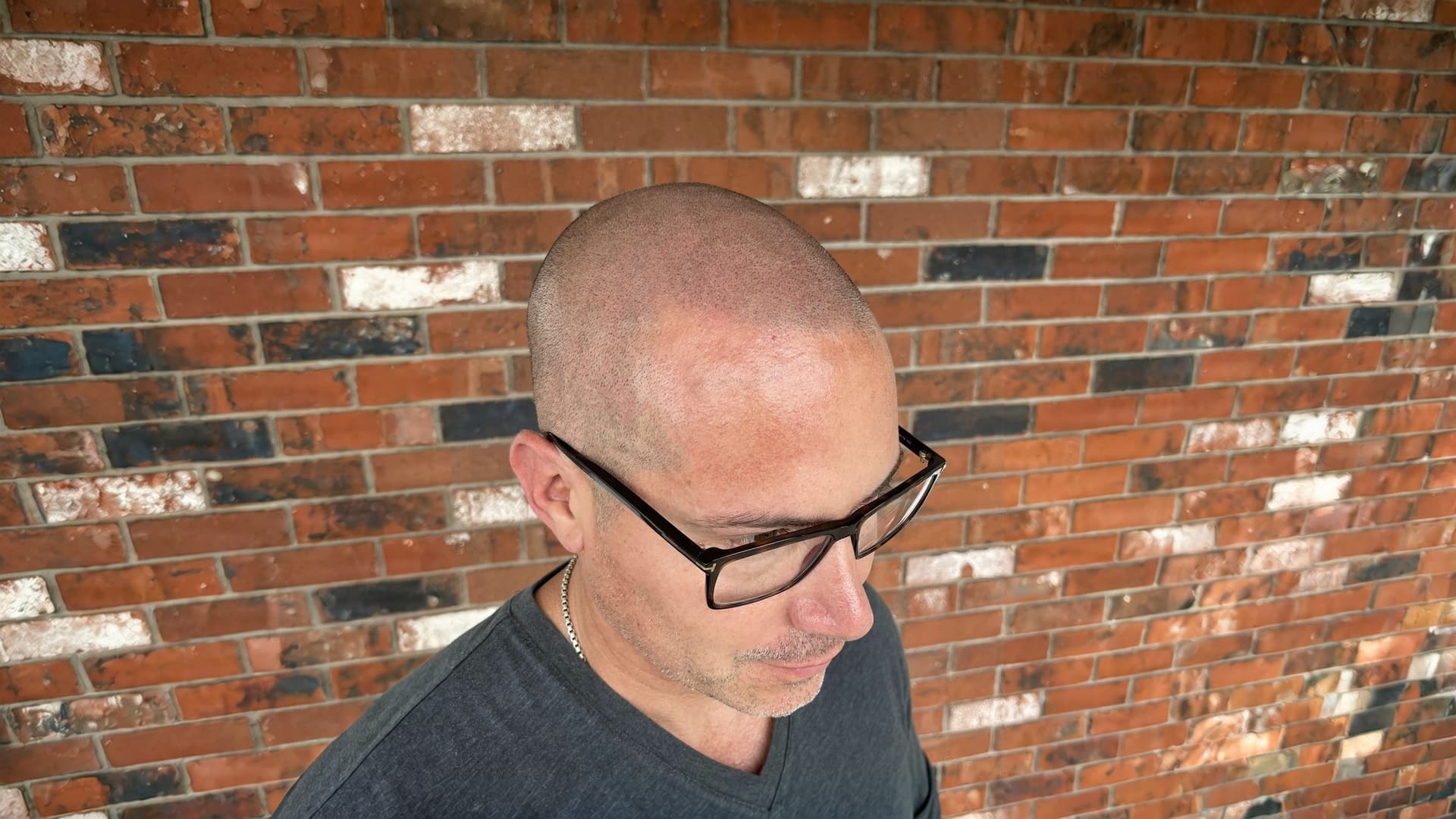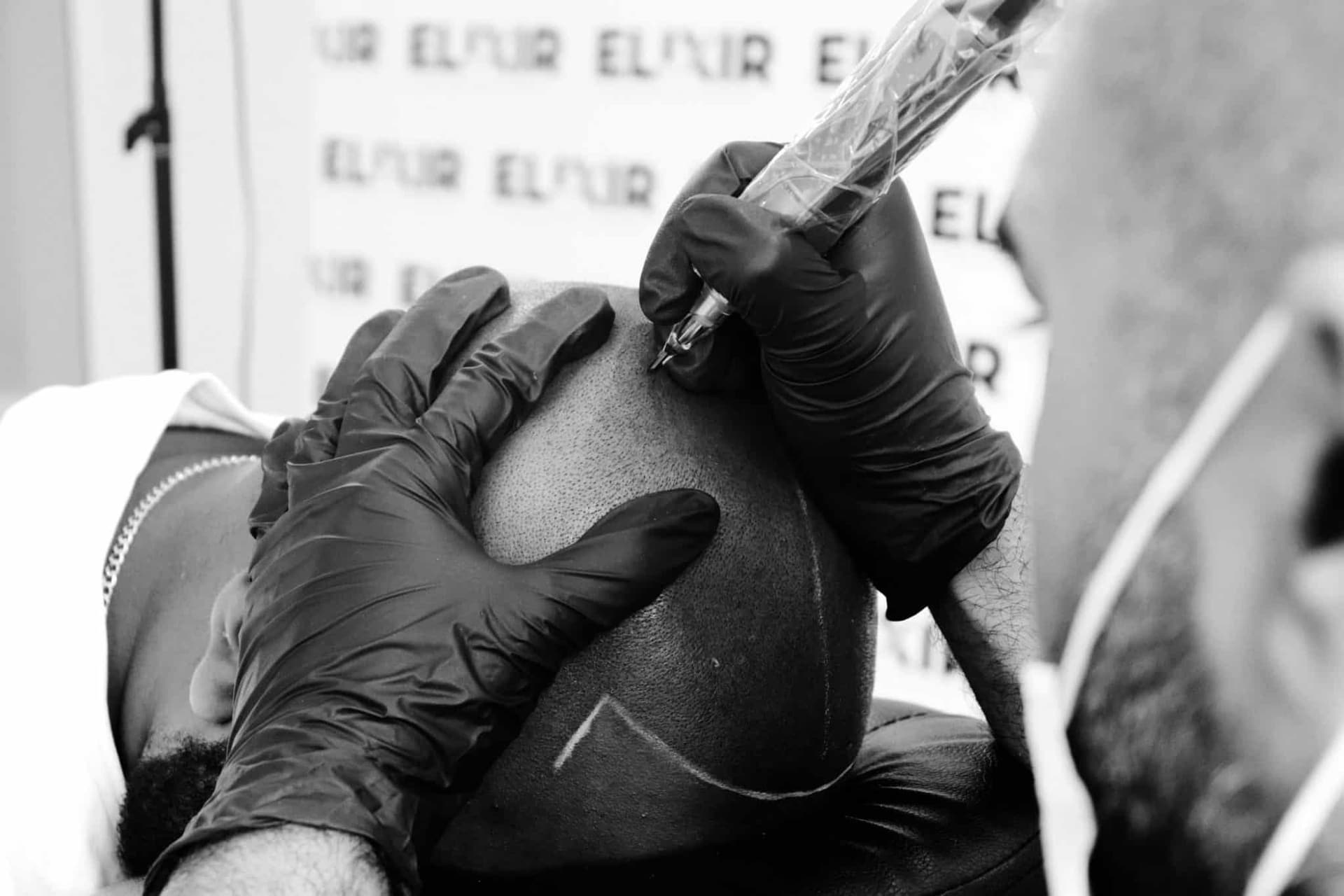
Scalp micropigmentation gets sold as permanent, and most people hear that word as "forever, exactly like the day I walked out". It is not that. The pigment does stay in your skin for a very long time, but the dots soften and lighten, and your hair loss keeps moving underneath them. After 17 years in scalp micropigmentation and permanent makeup, I think about how a head and a hairline look across years, not just on the day the client leaves the chair.
This guide covers everything about longevity I want people to understand before they book: the biology, a year-by-year timeline, what speeds fading up, color shift, touch-ups, removal and how SMP compares with the alternatives. If you are new to the treatment itself, start with the complete guide to scalp micropigmentation and come back.
What "permanent" actually means for SMP
Permanent is a skin-layer word, not a promise about appearance. A 2022 paper in Skin Appendage Disorders states plainly that fading occurs over time and touch-ups are required (Nguyen et al., 2022). What nobody has published, as of 2026, is a controlled study measuring exactly how many years SMP stays sharp. The ISHRS says well-placed SMP lasts 5 to 10 years (ISHRS), and Cleveland Clinic says it usually keeps its appearance for four years or longer (Cleveland Clinic, 2022). Clinic pages commonly put the first refresh at 3 to 5 years (Jae Pak MD, 2023; Ziering Medical, 2021), which is typical practice, not measured science.
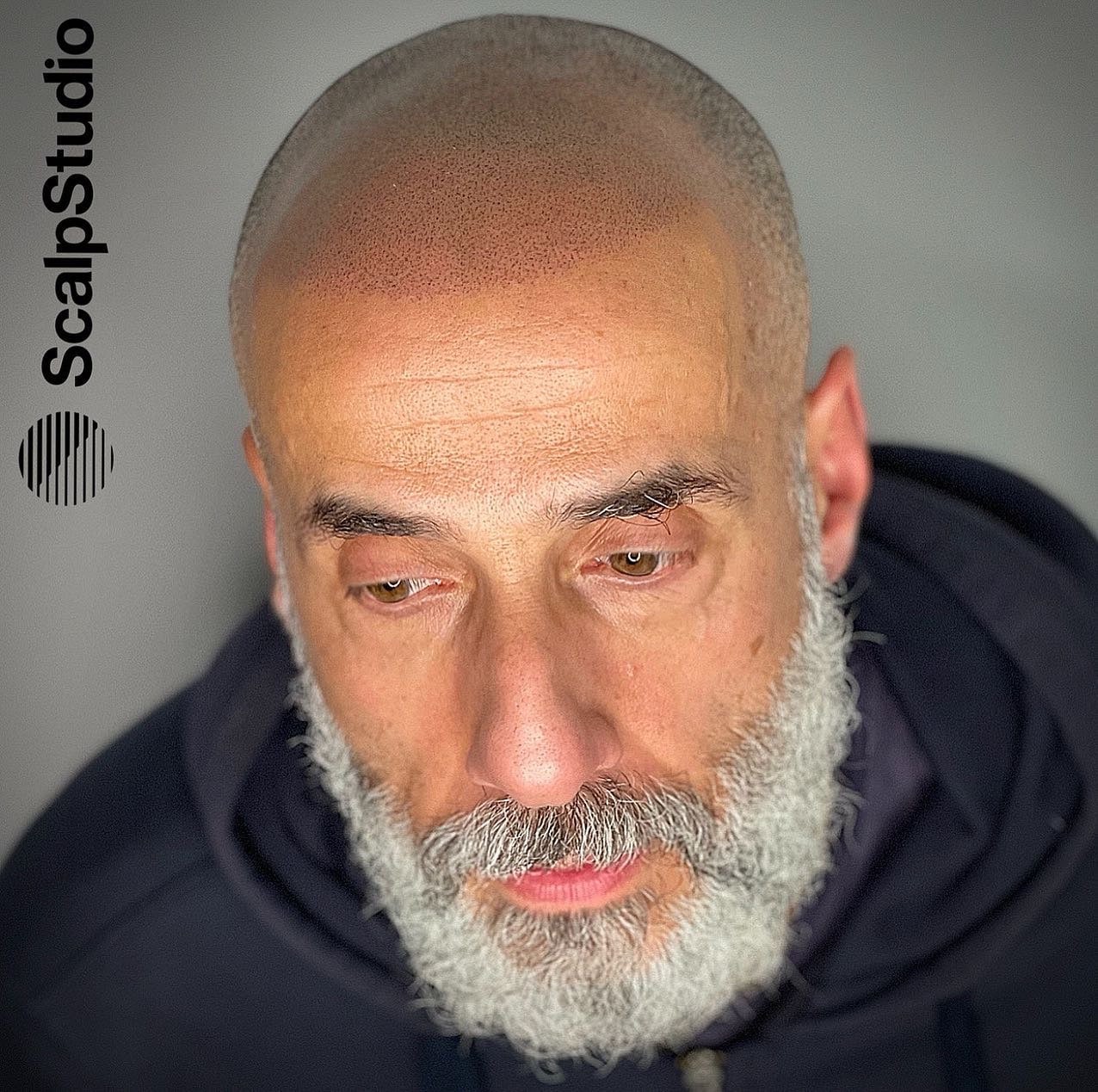
To understand why your dots last, and why they still fade, you need two pieces: where the pigment sits and what your body does with it.
Where the pigment sits
Your skin has an outer layer, the epidermis, which constantly renews and sheds, and a deeper layer, the dermis. The Nguyen paper describes SMP pigment going into the upper and mid papillary dermis, at depths of up to 1.5 mm. It also explains the two ways depth goes wrong: pigment placed too shallow is shed with the outer skin and washed away, and pigment placed too deep can spread and look patchy and blotchy.
The 2015 SMP paper by Rassman and colleagues makes the same point from the other direction: once healing is done, the only pigment that remains is the pigment originally placed in the dermis (Rassman et al., 2015). The same paper cites biopsy work on tattoos in general that found ink in the dermis at 40 years after tattooing. That is the real meaning of permanent.
Macrophages: why ink stays, and why it slowly goes
The cells that hold tattoo pigment are a type of immune cell called macrophages. A 2018 study in the Journal of Experimental Medicine found that in mice, dermal macrophages were the only cells that captured and kept tattoo pigment (Baranska et al., 2018). When those cells die, the pigment is released and new macrophages pick it up again. The authors call this capture, release and recapture, and found it happened without the tattoo vanishing. Their conclusion: long-term tattoo persistence likely depends on macrophages being renewed, not on any single cell living forever. It is a mouse study, so it does not settle every detail in human skin, but it explains a lot.
That recapture is not the whole story. A 2017 study of human tissue in Scientific Reports found tattoo pigments had traveled from the skin to the nearby lymph nodes, with the smallest particles most likely to make the trip (Schreiver et al., 2017). And a dermatology chapter on pigment chemistry opens with a blunt line: tattoos fade with time, and part of that fading comes from pigments breaking down under light (Hauri and Hohl, 2015).
Put those findings together and you get a reasonable picture, though not one measured on SMP specifically. Most pigment stays put in the dermis for decades. A small share drains away or breaks down every year. Over enough years, that small share adds up to a visibly softer result.
Why SMP shows fading sooner than a body tattoo
A bold black body tattoo can lose a fair amount of pigment and still read as black. An SMP dot is the opposite: a tiny, carefully toned impression meant to look like a single shaved follicle. There is very little margin. A small loss shows up as a lighter, less dense head, which is why SMP clients notice fading that a sleeve tattoo would hide.
It is also why SMP is built in layers. The Rassman paper says many patients have two to four sessions before the process is complete, because the initial uniformity after the first session changes as the skin heals. The Nguyen paper puts a full head at 20 to 30 hours of work. That layered density is what you are maintaining for the years after.
The year-by-year fading timeline
This is the table most people come looking for. Read the last column carefully. The healing month is described in published SMP research. Everything after it is typical practice: what artists and clinics report seeing, not results from a long-term study. Your own timeline will move earlier or later depending on the factors in the next section.
| Stage | What you see | What to do | Basis |
|---|---|---|---|
| Healing month | Dark, crisp dots at first, then lighter and patchier as surface pigment sheds | Follow aftercare strictly. Judge nothing yet. | Published SMP research |
| Year 1 | Settled, even result after your 2 to 4 sessions | Take baseline photos. Start daily sun protection. | Published research plus typical practice |
| Years 2 to 3 | Little change if protected. Slight softening, mainly on sun-exposed areas. | Compare photos each year. Keep up SPF or hats. | Typical practice |
| Years 4 to 6 | Lighter, less dense look. Hairline edge less crisp. | Book a refresh, commonly at 3 to 5 years. | Clinic guidance, as of 2026 |
| Year 7 plus | Without a refresh: thin and soft. Hair loss may have moved. | Refresh, or reassess the design with your artist. | Typical practice |
The healing month
This is the stage with the best evidence. The Rassman paper describes some surface ink washing out at the first hair wash, around days 2 to 3, pigment gathering in the dermis between days 7 and 13, and pigment left in the deepest part of the outer skin starting to clear at one month. It also says pigment is likely to sit in the lower epidermis for a few months before that layer clears.
One US clinic page estimates that 20 to 30% of the pigment may come away with the scabs (Ziering Medical, 2021). That is a clinic estimate, not a study figure, but it matches what every SMP client sees: the day-one look is not the result. This is exactly why the work is done over several sessions, and why aftercare matters so much in the first weeks.
Year 1
Once your final session has healed, you have your baseline. This is the look you are trying to protect, so record it. Take photos in daylight, from the front, both sides, the top and the crown, with the same distance and the same haircut length. Do it again at the same time each year.
Those photos are worth more than any timeline in this article. Fading is gradual, and you look at your head every day, so you will not notice it in the mirror. Side by side, a year apart, you will.
Years 2 to 3
For a well-placed, well-protected result, this is usually the quiet stretch. Any softening tends to show first where the sun hits hardest: the top and the front hairline. People who work outdoors or spend a lot of time in the sun without a hat often see it sooner.
Clinic numbers in this window are loose. Ziering Medical's page (2021) says the body's clearance of pigment shows at around two years, while the same page says color usually holds for 3 to 5 years. That contradiction tells you how much these numbers are estimates rather than measurements.
Years 4 to 6
This is the refresh window for most people. The dots read lighter, density looks thinner from a distance and the hairline loses some of its edge. Clinic guidance as of 2026 commonly places touch-ups at 3 to 5 years after the original treatment (Jae Pak MD, 2023). A refresh adds pigment back into the existing pattern rather than starting again.
Year 7 plus
Without a refresh, the result does not disappear, but it no longer does its job as well. It can look thin and washed out, and if your hair loss has progressed, untreated areas may show next to the treated ones. One clinic page describes SMP as normally permanent, with effects that can last decades, while some fading should be expected (Wimpole Clinic, 2026). Both are true at once: it lasts, and it fades.
What speeds up fading
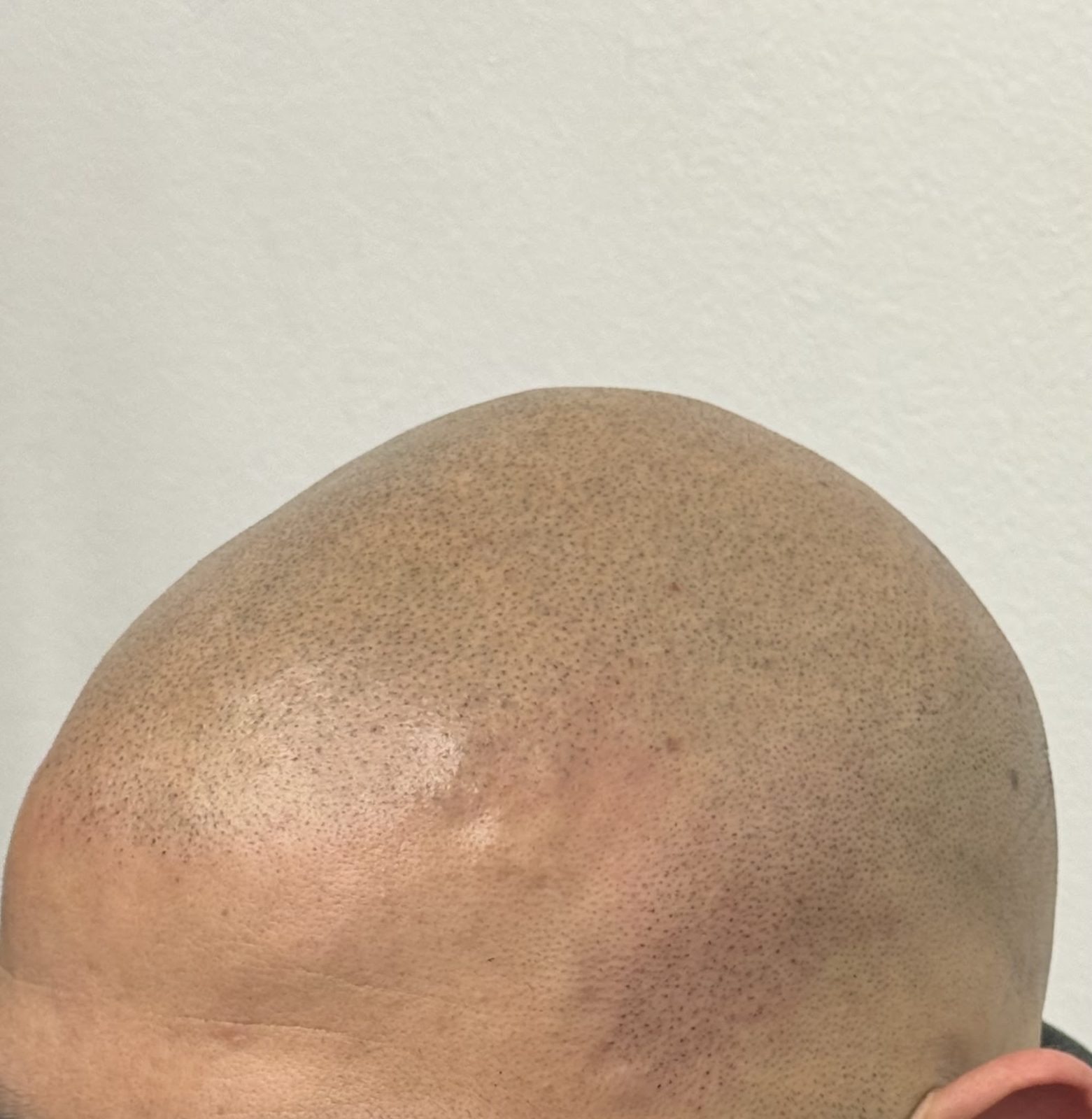
Some fading is biology and nobody can stop it. A lot of the difference between someone who needs a refresh at year 3 and someone who goes past year 6 comes down to a handful of factors. Here is how strong the evidence is for each.
| Factor | What it does | Evidence |
|---|---|---|
| Sun and UV | Fades some inks; speeds color change in non-carbon pigments | AAD; Rassman et al. 2015; Hauri and Hohl 2015 |
| Tanning beds | Can fade tattoo ink | AAD |
| Too-shallow placement | Pigment sheds with the outer skin | Nguyen et al. 2022; Khunger et al. 2015 |
| Too-deep placement | Blurring, blotches, blue tint | Nguyen et al. 2022; Khunger et al. 2015 |
| Scrubbing and exfoliating | Clinics advise avoiding it | Clinic guidance |
| Petroleum-based products | Can cause tattoo ink to fade | AAD |
| Saunas, steam, chlorine | Clinics say they speed fading | Clinic guidance |
Sun and UV
This is the big one, and the evidence is the strongest. The American Academy of Dermatology says ultraviolet light can fade some tattoo inks, and that tanning beds and sunlamps may fade them too (AAD). The Rassman paper adds that UV exposure can speed up color changes in pigment. That risk applies to tattoo inks and permanent makeup pigments; a carbon SMP pigment fades slowly but does not change color.
A shaved scalp has no hair to shade it and points straight at the sky. That makes it one of the most exposed areas you have. If you only change one habit after SMP, make it this one.
Skin type and your skin's own turnover
Ziering Medical (2021) says the length of SMP results depends on skin type and the products used on the scalp every day, though it does not break that down. What is better established is the mechanism: anything that sits in the outer skin is shed as that skin renews, and only dermal pigment stays.
You will read online that oily skin or smoking makes SMP fade faster. I looked for solid evidence on both for this guide and did not find any I would put my name to, so I am not going to repeat those claims as fact. If your artist raises them, ask what they are based on.
Products, exfoliation and heat
The AAD says petroleum-based products such as petroleum jelly can cause tattoo ink to fade, and recommends a water-based lotion or cream if tattooed skin feels dry. Clinic guidance adds steam rooms, saunas, excessive washing and scrubbing, and products with acidic content or alcohol to the avoid list (Jae Pak MD, 2023). Ziering Medical (2021) names saunas, hot tubs and chlorinated water.
These are practitioner recommendations rather than tested findings, but they are cheap to follow. A gentle cleanser, no scrubs or acid peels on the scalp and a simple moisturizer cost you nothing.
Pigment and depth: the artist's side
Longevity starts in the chair. Pigment that is too shallow fades quickly. The Rassman authors write that they have seen almost complete pigment loss within a few weeks of a first session, which may reflect needles inserted too superficially. Pigment that is too deep can blur and look blotchy, and can turn blue. Getting depth right on a scalp, session after session, is a skill, and it is the main reason I tell people to judge artists on healed results, not fresh ones. The guide on how to choose an SMP artist covers what to look for.
Why SMP can turn blue or green
Color shift is the longevity issue people fear most. It has three causes, and they often work together.
The wrong pigment. Tattoo inks and permanent makeup pigments are blends of several colors. As the body slowly breaks a blend down, its colors do not leave at the same rate, and what is left shows the others underneath, usually blue and sometimes green. A carbon SMP pigment is a single color, so there is nothing hidden in it to show through. The Rassman paper says patients should be told there may be a blue or green tint, and that some pigments may be absorbed or change color over time, with UV light speeding it up.
Pigment placed too deep. A deep dot sits under more layers of skin, and those layers act like a filter. Skin without melanin and blood in it is faintly blue, so the deeper a dot sits, the bluer it looks. A 2015 dermatology review describes this as the Tyndall effect, a scattering of light through the skin, and notes that pigment placed too superficially fades instead (Khunger et al., 2015). Depth controls both problems.
Very dark pigment on very light skin. Strong contrast makes any blue cast easier to see, so the risk is highest for fair-skinned clients with dark hair. That is one reason artists dilute carbon pigment to a gray matched to the client instead of using it at full strength.
What the pigment is made of
A dedicated SMP pigment is carbon based: the colorant is carbon black, listed on the label as CI 77266, in a carrier liquid, sometimes with a soothing additive such as witch hazel. The ISHRS says the preferred SMP pigment is carbon only. Carbon is stable: it fades slowly as the body clears a little of it each year, but it does not change color.
That is not true of everything that gets put into scalps. Permanent makeup pigments for brows and lips are built on iron oxides, often with titanium dioxide to lighten them, and tattoo inks are made for a different job. Those products can shift tone as they age, and titanium dioxide in particular has no place in SMP. Pigment chemistry matters because different pigments respond differently to light: the Hauri and Hohl chapter found some pigment families broke down easily under artificial sunlight while others were comparatively stable.
A few tinted SMP pigments now exist, such as Perma Blend's Restore range, made to match the hair color of clients who keep their hair longer. They are a rare choice. For the shaved look, carbon is the standard.
You do not need to become a chemist. You do need to ask your artist which pigment they use, whether it is made for SMP, and to show you healed work at least two years old. Wimpole Clinic (2026) notes a bluish or greenish tint can make SMP stand out against your natural hair color, and that is the outcome those healed photos let you check for.
How your hair loss changes the look over time
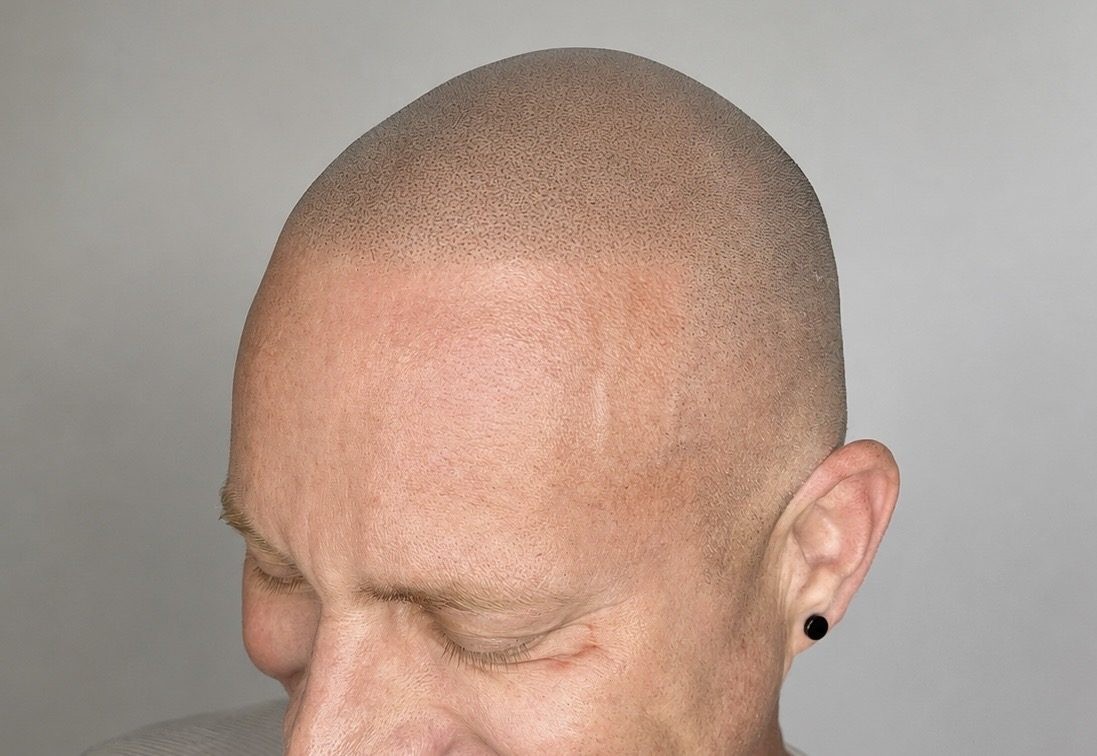
This is the part most longevity articles skip, and it matters as much as the pigment. SMP is a picture of hair painted on a scalp that keeps changing. Harvard Health says hereditary hair loss becomes more pronounced over time unless a preventive treatment is started, and that the earlier it begins, the more severe it tends to be (Harvard Health, 2024). The Rassman paper makes the same point about genetic hair loss getting more pronounced with time.
So even pigment that never faded would not stay a perfect match forever. If you had SMP blended into thinning hair at the crown, more thinning around it can show the edge. If your hair is cut short over the top, new recession at the temples can leave skin showing outside the treated area. Use the Norwood scale guide to see where your pattern is likely to head.
Planning for progression
A hairline has to suit the face it sits on, and that face will be older in ten years. A slightly softer, age-appropriate hairline ages far better than a sharp, low one drawn for a 25-year-old. If you are dealing with a receding front, the guide to SMP for a receding hairline goes into the design side.
The other half is medical. Harvard Health says minoxidil or finasteride, if used, must be continued indefinitely to keep their results, and the benefits are quickly lost when they are stopped. Aftercare guidance from Ziering Medical (2021) and Jae Pak MD (2023) lists minoxidil among products to keep off the treated area. If you use any hair loss medication, talk to your doctor and your artist together about how to handle it. Do not stop a prescribed treatment on your own because of SMP.
Going gray
Hair color changes too. Wimpole Clinic (2026) notes that as you go gray, you may need to color your hair so it does not contrast with the pigment. If you keep your head fully shaved, gray matters less. If your SMP sits behind or between real hair, plan for it, and ask your artist how they would adjust tone at a later refresh.
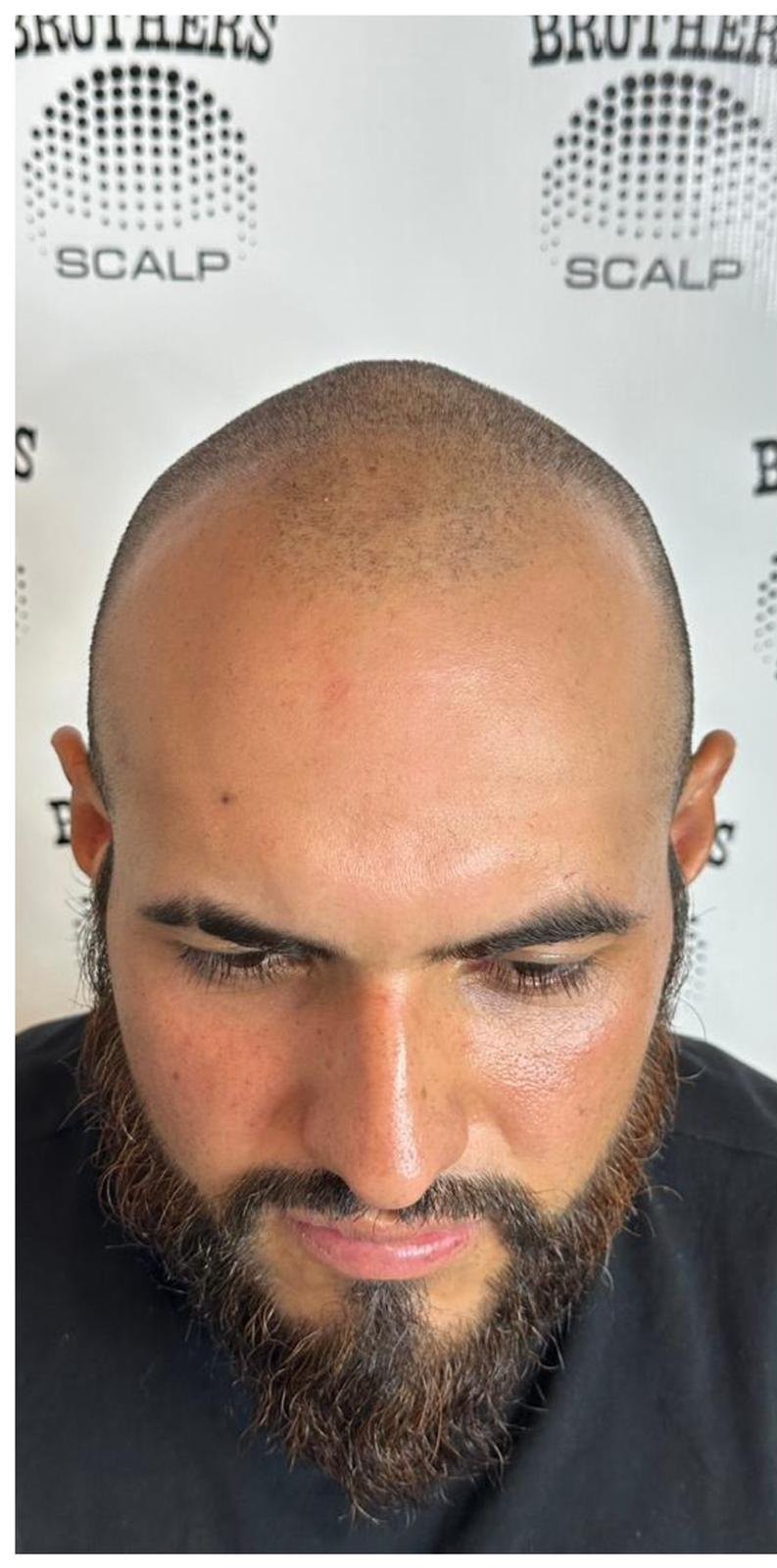
When to book touch-ups
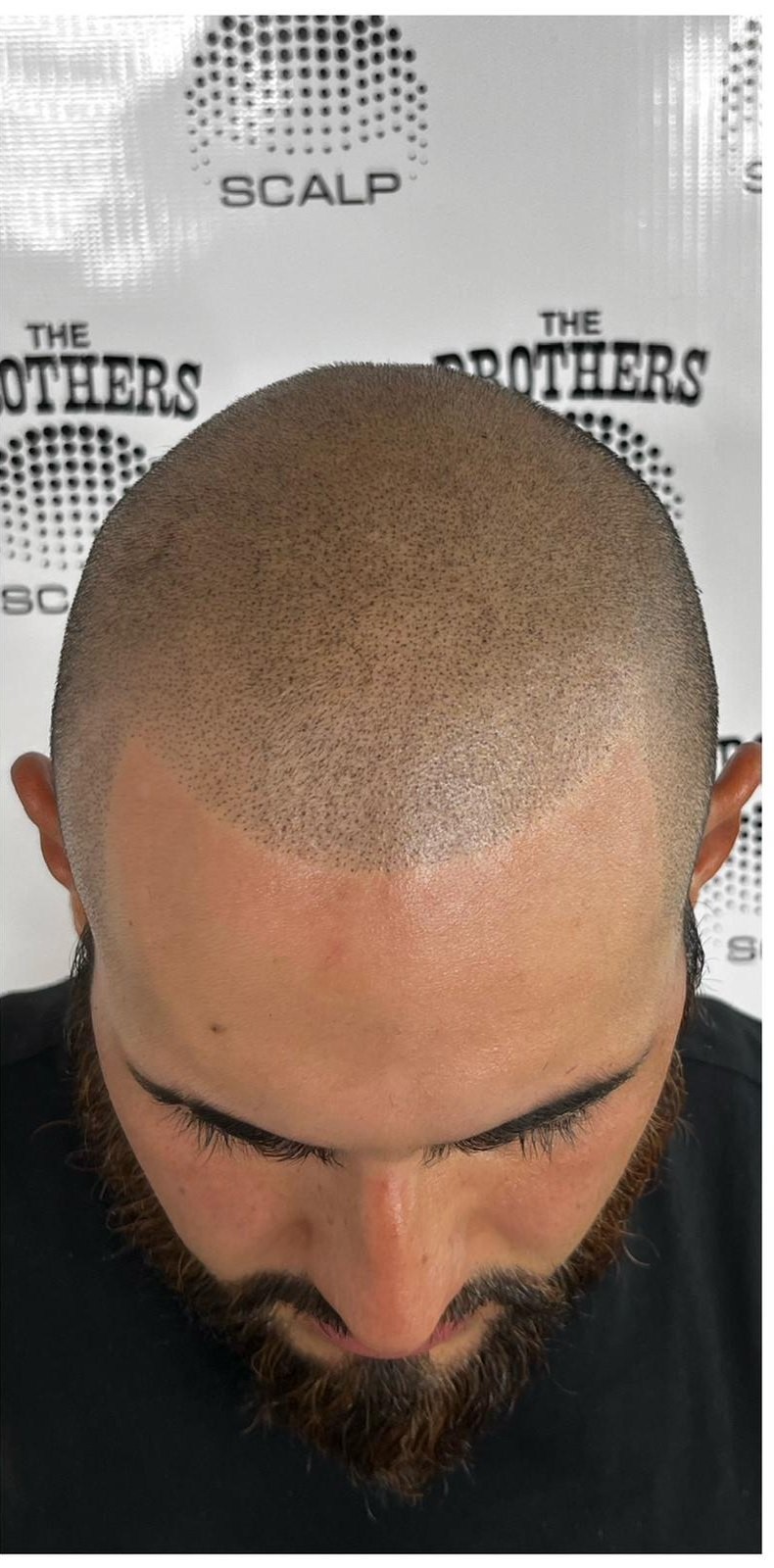
As of 2026, clinic guidance commonly places the first refresh at 3 to 5 years after treatment, and says touch-ups can be done as needed. I would rather you book on evidence than on the calendar. Your yearly photos tell you when.
Signs it is time for a refresh
- The hairline edge looks soft or broken up in photos, not crisp.
- Density looks thinner from arm's length than it did in your year 1 photos.
- The dots look lighter than your natural stubble at the sides and back.
- A blue or green cast in daylight is the exception: it points to depth or the wrong product, so have it assessed before anyone adds pigment.
- Your hair loss has moved and there is skin showing outside the treated area.
A refresh is not the same as the original treatment. The artist works into the existing pattern, adding pigment where it has faded and adjusting tone if needed. For timing, what a refresh involves and how to plan the cost, see the full guide to SMP touch-ups.
How to make SMP last: a checklist
None of this is complicated. It is the same handful of habits, done every day for years.
How to make your SMP last longer
- Choose an artist on healed results at least two years old, not fresh photos.
- Complete every session in your plan. Skipping the last one leaves you with less pigment to fade from.
- Follow aftercare to the letter for each session, especially no picking, sweating or sun in the first weeks.
- Once healed, protect your scalp every time it is outdoors: a hat, or a broad-spectrum SPF 30 or higher. The AAD advises reapplying every two hours and right after swimming or sweating.
- Stay away from tanning beds and sunlamps.
- Wash with a gentle cleanser. No scrubs, exfoliating acids or harsh products on the treated scalp.
- Use a water-based moisturizer if your scalp gets dry, not petroleum jelly.
- Keep saunas, steam rooms and long chlorinated swims to a minimum, or cover up.
- Take dated photos in the same light every year.
- See a doctor about the hair you still have, so progression does not outrun your SMP.
- Book a refresh when your photos show it, not when the result has already gone thin.
What happens if you never touch up
The pigment does not leave, so the real risk is a mismatch. Continuing hair loss can leave untreated skin next to faded treated areas, and the result looks faded in some places and absent in others. That mismatch, more than the fading itself, is what makes old SMP noticeable.
The fix is usually a refresh rather than removal, as long as the original placement and design were sound. If they were not, that is a different conversation, covered in the guides to SMP regrets and botched SMP.
Removal and lightening
Because SMP is permanent, getting rid of it is a medical job, not a scrub. Lasers are the main tool. Cleveland Clinic says tattoo removal can take 6 to 12 visits, and sometimes more, before you see results, that blue and black tattoos respond well because they absorb light better, and that superficial scarring or permanent discoloration can sometimes occur (Cleveland Clinic, 2022).
The 2015 dermatology review adds that lightened or darkened patches of skin are the most common delayed problems, usually appearing 4 to 6 weeks after laser treatment and mostly temporary, and that scarring can occur at high laser settings, particularly in dark or tanned skin. The macrophage study gives the biological reason removal is hard: several laser cycles are needed, some tattoos never fully clear, and released pigment fragments can be captured again by new macrophages.
Lightening before a redo
Removal does not have to be all or nothing. The Rassman paper describes a case where pigment that had spread was treated with a Q-switched laser and the SMP was then redone. Partial lightening to correct a problem area, then rebuilding, is often more realistic than full removal. Cleveland Clinic also lists surgical excision, which suits only small areas, and dermabrasion as other methods.
If you are considering any of this, start with a board-certified dermatologist. They can judge your skin type, the pigment and the risk of scarring before anything is done.
How SMP longevity compares with the alternatives
If longevity is your main question, it helps to see SMP next to the two options people most often weigh it against.
| Option | How long it lasts | Main catch |
|---|---|---|
| SMP | Pigment stays for decades. Refresh commonly every 3 to 5 years. | Fades slowly. Removal is slow. |
| Tricopigmentation | Some pigments made to last 18 to 24 months | Needs redoing regularly. Effects of repeated use unknown. |
| Hair transplant | Transplanted hair is meant to last for life | Original hair can keep thinning. Up to a year for full results. |
SMP versus tricopigmentation
Tricopigmentation is marketed as the temporary version. Wimpole Clinic (2026) says some semi-permanent pigments are developed to last only 18 to 24 months, and warns there is no evidence yet on what repeated use of these pigments does to the body. The appeal is an exit route. The cost is that you are back in the chair every year or two just to stand still. The full comparison is in SMP vs tricopigmentation.
SMP versus a hair transplant
The Aesthetic Society says hair transplant results last for a lifetime, but that some patients continue to lose some of their original hair after the procedure (The Aesthetic Society). Cleveland Clinic says it can take up to a year to see full results, and that some people need several touch-up surgeries for a natural look (Cleveland Clinic, 2021).
So both options need maintenance. They just maintain different things. Plenty of people combine them, using SMP to add the look of density around transplanted hair. The detail is in SMP vs hair transplant.
Questions to ask about longevity before you book
Longevity is decided mostly before the first needle touches your scalp. These questions get the answers that matter.
What to ask your artist
- Can I see healed results on clients at least two years after treatment, in daylight?
- Which pigment do you use, and how does it age on skin like mine?
- How many sessions do you plan for me, and why that number?
- When do you expect my first refresh, and what does it involve?
- How have you designed my hairline to suit me in ten years, not just now?
- What will you do if my hair loss progresses past the treated area?
- How do you handle a blue or green shift if it appears?
A straight answer to every one of those questions is a good sign. Fresh photos only, vague replies about pigment or a promise that it lasts forever untouched are reasons to keep looking. Whatever you decide, go in expecting a result that lasts for years, softens slowly and rewards a little care. That is what SMP really is, and for the right person it is a very good deal.