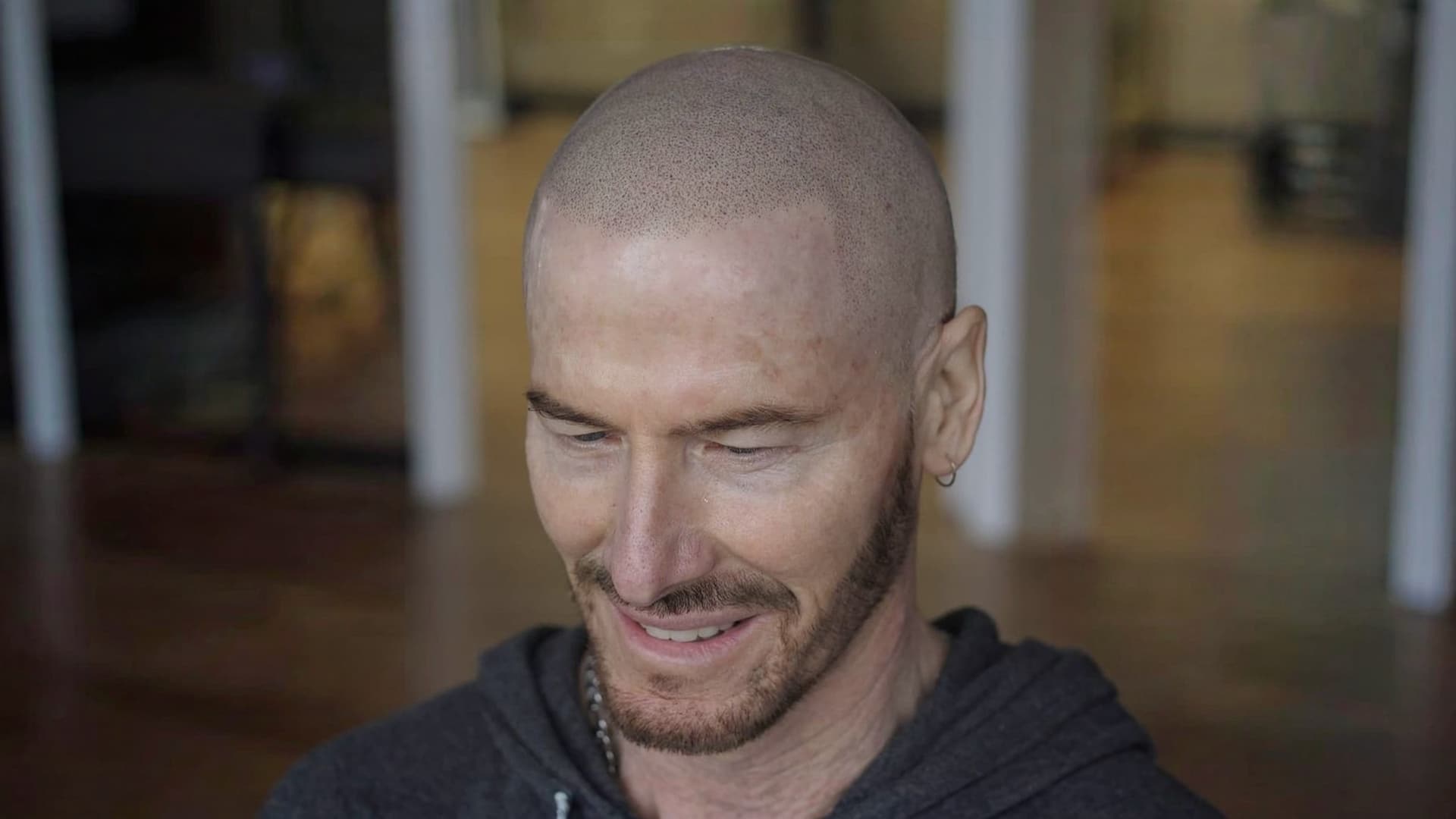
Before and after photos sell more scalp micropigmentation than anything else, and they are also the easiest thing in this industry to flatter without technically lying. After 17 years in scalp micropigmentation, the first thing I look at in any photo is the hairline, then the dots, then the light. This guide goes through the hair loss types one at a time, shows what a realistic result looks like for each and what limits it, and gives you the checks I would run before trusting any gallery. If you are new to the treatment itself, start with the complete guide to scalp micropigmentation.
What a before and after photo can actually prove
SMP is a cosmetic tattoo: tiny dots of pigment placed in the upper dermis to imitate cut hair, or to darken the scalp showing between longer hairs. It does not grow hair. So an honest after photo shows a change in contrast and outline, not a change in hair count.
For people who keep their hair long, a 2015 review in the Journal of Clinical and Aesthetic Dermatology is blunt: seeing some scalp through the hair is the norm after SMP, not a failure (Rassman et al., 2015). The same review describes SMP as a way to make deformities minimally detectable, which is a fair way to set your expectations.
The research is thin. Most published work is small case series from single clinics, judged largely from photographs. That makes the photos themselves the evidence, which is exactly why you need to know how to read them.
One small study gives a useful yardstick. In a 2025 series of 10 patients in the Journal of Cosmetic Dermatology, the authors scored each result on a visual density scale and found the score tracked patient satisfaction very closely (Liu et al., 2025). People were happiest when the result genuinely looked like hair, which sounds obvious until you see how many galleries rely on a dramatic before instead.
| Score | What it means |
|---|---|
| 0 | No improvement |
| 3 | Mild: under 50% coverage, blurred edges |
| 6 | Moderate: 50% to 80% coverage, natural gradient |
| 10 | Over 80% coverage, looks like natural hair |
How to read SMP before and after photos critically
In 2025 the professional title Aesthetics Journal published before and after photography guidelines, approved by its clinical advisory board. Its list of things that make photos misleading reads like a description of a typical SMP feed: bad or inconsistent lighting, different angles, edited or filtered images, and selfies (Aesthetics Journal, 2025). Its fix is boring and correct: same camera settings, fixed distance, a tripod, soft even light, a plain background and no windows.
Hair research is stricter still. A 2023 review in Cutis says standardized hair photos need washed, dried and combed hair with no product, because wet hair clumps, reflects more light and shows more scalp (Rubin et al., Cutis, 2023). The same review notes that overall photos are less precise when hair loss is under 50%, which matters for density work on thinning hair.
Lighting
Scalp visibility comes down to contrast. A 2024 study on women's thinning explains that a light scalp reflects more light into the eye than the hair around it, which is what makes thinning obvious (Park et al., 2024). Change the light and you change the contrast. A before lit hard from above and an after lit softly from the side tells you about the light, not the work.
Angle and distance
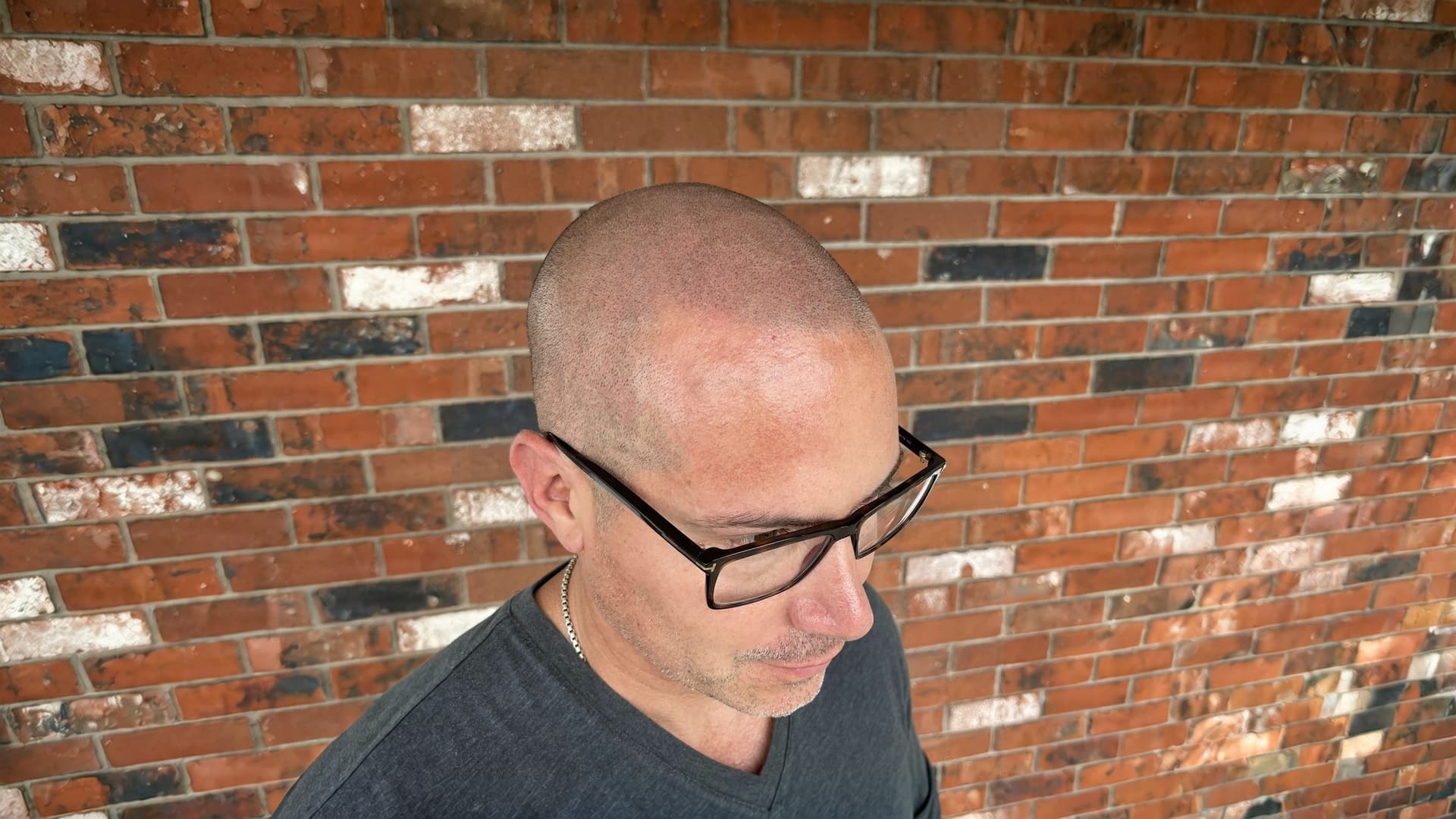
From two meters away, almost any SMP looks like hair. Dot quality only shows at arm's length or closer, which is where a hairdresser, a partner or your own mirror sees it. Ask for one wide shot for the overall shape and one close shot of the same area, from the same angle in both the before and the after.
Fresh versus healed
Fresh SMP looks crisp and dark because some pigment still sits in the surface layer of skin. The 2015 review notes that pigment in the epidermis washes out within days to months, and treats touch-ups as a normal part of the service. A healed photo, taken weeks after the last session, is the only one that shows what you will actually walk around with.
Wet versus dry
A wet before and a dry after is the oldest trick for thinning hair, and it works in reverse for the shaved look, where a damp scalp changes how the dots read. Both shots should show dry hair, styled the same way, with no fibers, sprays or powders.
Filters and edits
Smoothing filters blur the exact dots you are trying to judge, and contrast boosts make gray dots look even and black. Look for normal skin texture: pores, a few stray hairs, a slight natural shine. A scalp with no texture at all has usually been edited.
| Trap | What it hides | What to ask for |
|---|---|---|
| Fresh after shot | Fading, softening, color shift | Same area healed, a month or more later |
| Different lighting | Shine, blur, blue tint | Matching light in both shots |
| Wide shot only | Dot size and blur | A close shot of the same area |
| Wet hair in the before | True starting density | Dry, combed hair in both |
| Filter or smoothing | Uneven or merged dots | Unedited photos or a live look |
My photo checklist
- The same light, angle and distance in both shots.
- Hair dry and styled the same way in both, with no concealer products.
- The after is labeled as healed, with how long after the last session it was taken.
- At least one close shot where you can see individual dots.
- Visible skin texture, so the image has not been smoothed.
- The same client shown at more than one stage: fresh, healed and later.
- A hair loss type, skin tone and hair color close to yours.
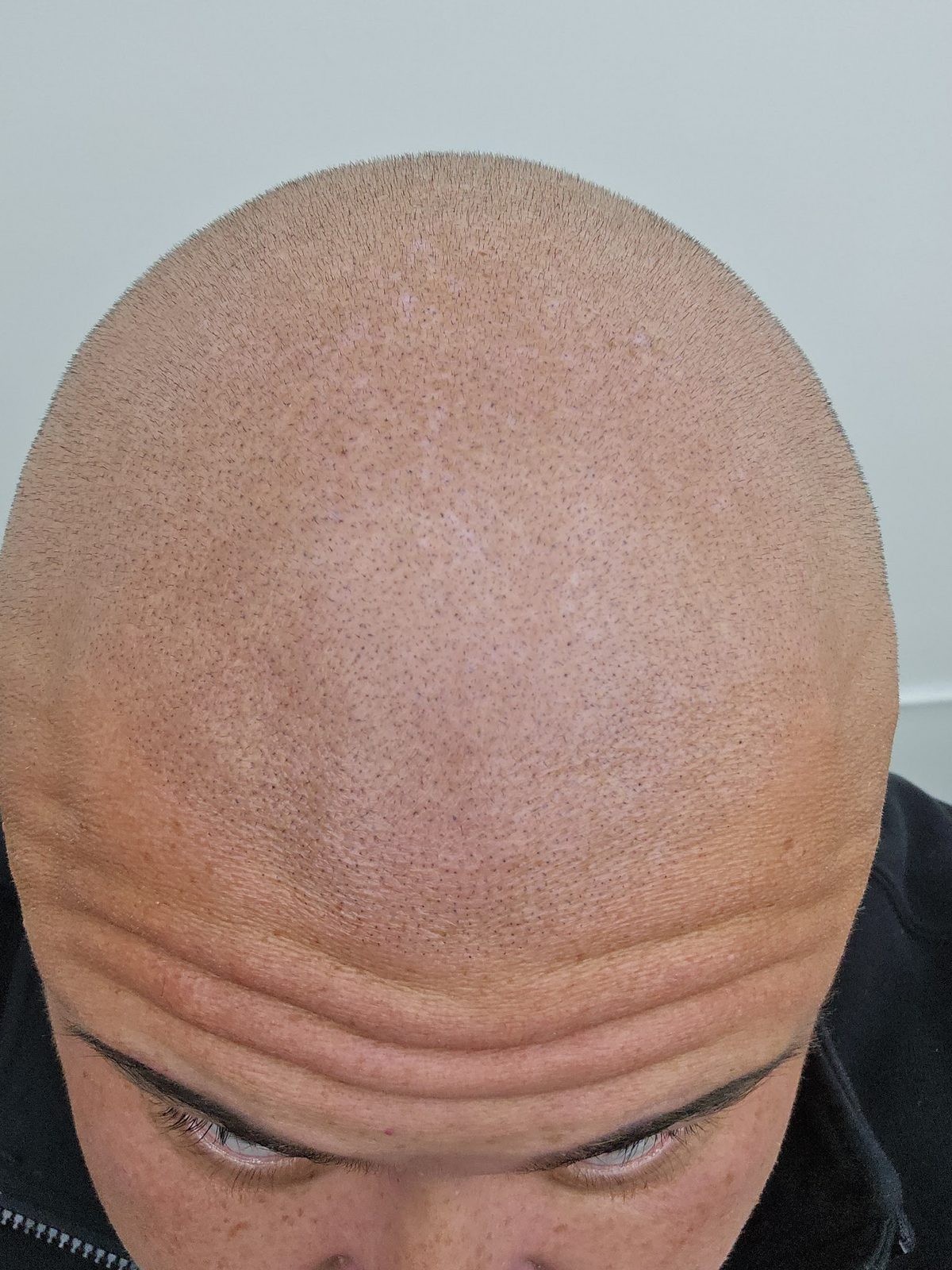
What healed SMP looks like at 1 month, 1 year and 5 years
The first days look worse than the result. Rassman's 2015 review says redness typically fades within one to two days, and surface pigment washes out at the first wash (Rassman et al., 2015). After that, the dots soften and lighten as the surface layer sheds, which is why the result is built over several sessions.
How many sessions varies. The 2015 review says most people need two to four. A 2021 series of 22 patients in the Journal of Craniofacial Surgery used three weekly sessions plus a touch-up one month after the last (Seyhan and Kapi, 2021). The 2025 series built density in steps: about 40 dots per square centimeter in session one, 60 in session two, and 80 to 100 by the last.
At about 1 month
A month out, the scalp has settled and the true color shows. This is the first fair after photo. The 2025 authors treat fading within the first month as feedback for the next session rather than a failure: the artist adds pigment, and only adjusts depth in tiny steps if fading repeats.
At about 1 year
Published follow-up is short. In the 2025 series, the five patients rescored at six months averaged 7.7 on visual density, against a whole-group average of 8.7 straight after treatment, and the scar cases lost more than the pattern hair loss cases. The 22-patient series followed people for 7 to 32 months, 20 on average, and reported minimal fading. The 2025 authors say sun exposure can fade or shift pigment color, and that six months of follow-up may be too short to show later fading, so a one-year photo is a tougher and fairer test than a six-month one.
At about 5 years
I could not find a peer-reviewed study that photographs SMP results at five years. What the evidence does say is this: dermal tattoo ink can persist for decades, and the 2015 review cites biopsies showing pigment still in the skin 40 years after tattooing. Yet every SMP paper I read also says the result fades and needs touch-ups. Expect a five-year photo to look lighter and softer than a one-year photo, and ask anyone showing five-year results whether there were touch-ups in between. There is more on this in how long SMP lasts.
| Time | What you should see |
|---|---|
| First days | Redness for a day or two, dots darker than final |
| About 1 month | Softer, lighter dots; first fair photo |
| 6 months | Slight drop in density, more in scars |
| 1 to 2 years | Minimal fading reported; sun can fade it further |
| 5 years | No published photo data; expect softer dots and touch-ups |
What good and poor results look like
Shaved-style SMP is unforgiving. A 2019 paper on 80 shaved-style patients in the International Journal of Dermatology warns that even a few dots that are much bigger or blurred, among several thousand, will look unnatural (Park et al., 2019). Its rule is small, defined and consistent dots, with the needle kept at 90 degrees to the scalp.
Dot size
Real stubble is fine, so the dots must be too. The 2025 series used a 0.2 mm single-point needle in the zone about 1 cm behind the hairline, where natural hair is finest, and heavier groupings further back where hair is coarser. A good result looks finer at the edges than in the middle.
Spacing
Hair does not grow in a grid. The 2025 authors stress a random distribution pattern, because uniform spacing looks artificial, especially around the hairline and sideburns. In thinning areas, density should taper off gradually into your real hair rather than stop at a hard border.
Blur
Depth is the whole game. The 2015 review explains that pigment left too shallow washes out as the skin heals, while pigment placed too deep spreads beyond where it was put, and the 2019 paper warns that deep needle work in early sessions makes ink spread. The 2025 authors add that blur mostly comes from packing too much pigment into one area.
Hairline shape
The 2025 paper singles out the hairline as the place where ink spread is most noticeable. My own view is that a convincing hairline is soft, slightly irregular and suits the age of the face. A ruler-straight line or a solid band of color reads as a tattoo from across the room.
Color shift
Pigment under skin scatters light, so black can read as bluish or greenish, a tint the 2015 review describes and links in part to how skin absorbs and scatters light. The 2025 authors say a bluish shift happens across all skin types, including people of African descent, even with pure black pigment, and that dots under 0.5 mm help the eye blend it away. A proper carbon SMP pigment does not change color over time, so a blue, green or purple look that grows over the years points to pigment placed too deep or to the wrong product, such as tattoo ink or a permanent makeup pigment.
| Feature | Good | Poor |
|---|---|---|
| Dot size | Fine, finer at edges | Large, uneven |
| Spacing | Random, tapering | Grid-like or hard border |
| Edges | Crisp separate dots | Merged, blotchy patches |
| Hairline | Soft, irregular | Straight solid line |
| Color | Matches side stubble | Blue, green or too black |
Signs of a poor result in a photo
- Dots that join into a shaded patch rather than reading as separate points.
- A hairline drawn as one line, with no feathering into the forehead.
- Color that looks blue or green next to the real stubble on the sides.
- A treated area that stops at a visible border instead of fading into real hair.
- Results shown only fresh, never healed.
When it goes wrong, fixing it is hard work. A 2024 retrospective study of 120 people who needed correction after SMP found 89.2% had first been treated at a tattoo or beauty salon offering permanent makeup; fixes included laser removal, redoing the SMP and hair transplant surgery (Park et al., 2024). That is one clinic's patients, so it shows what corrections involve, not how often SMP fails. More in botched SMP.
Receding hairline and temples
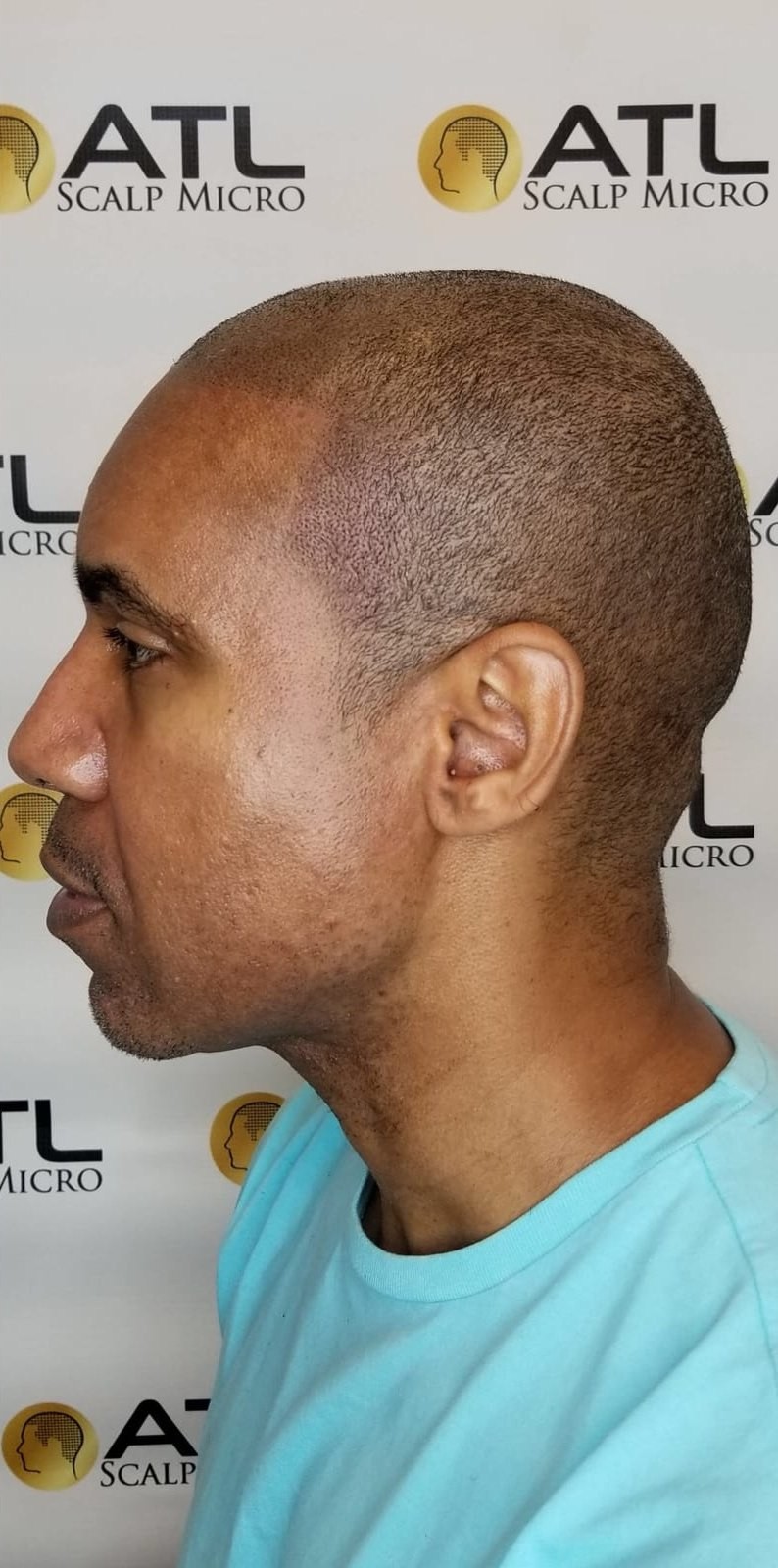
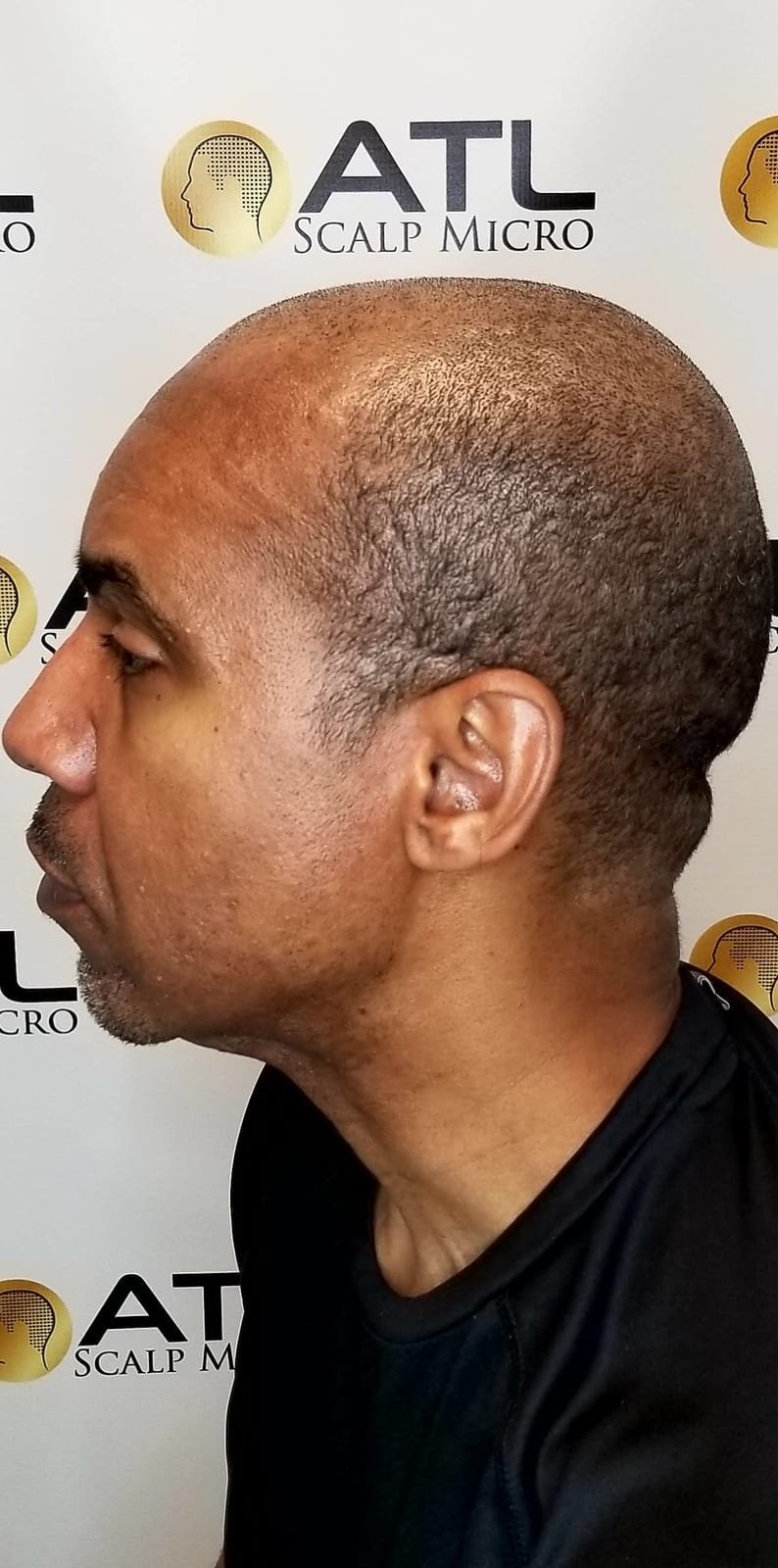
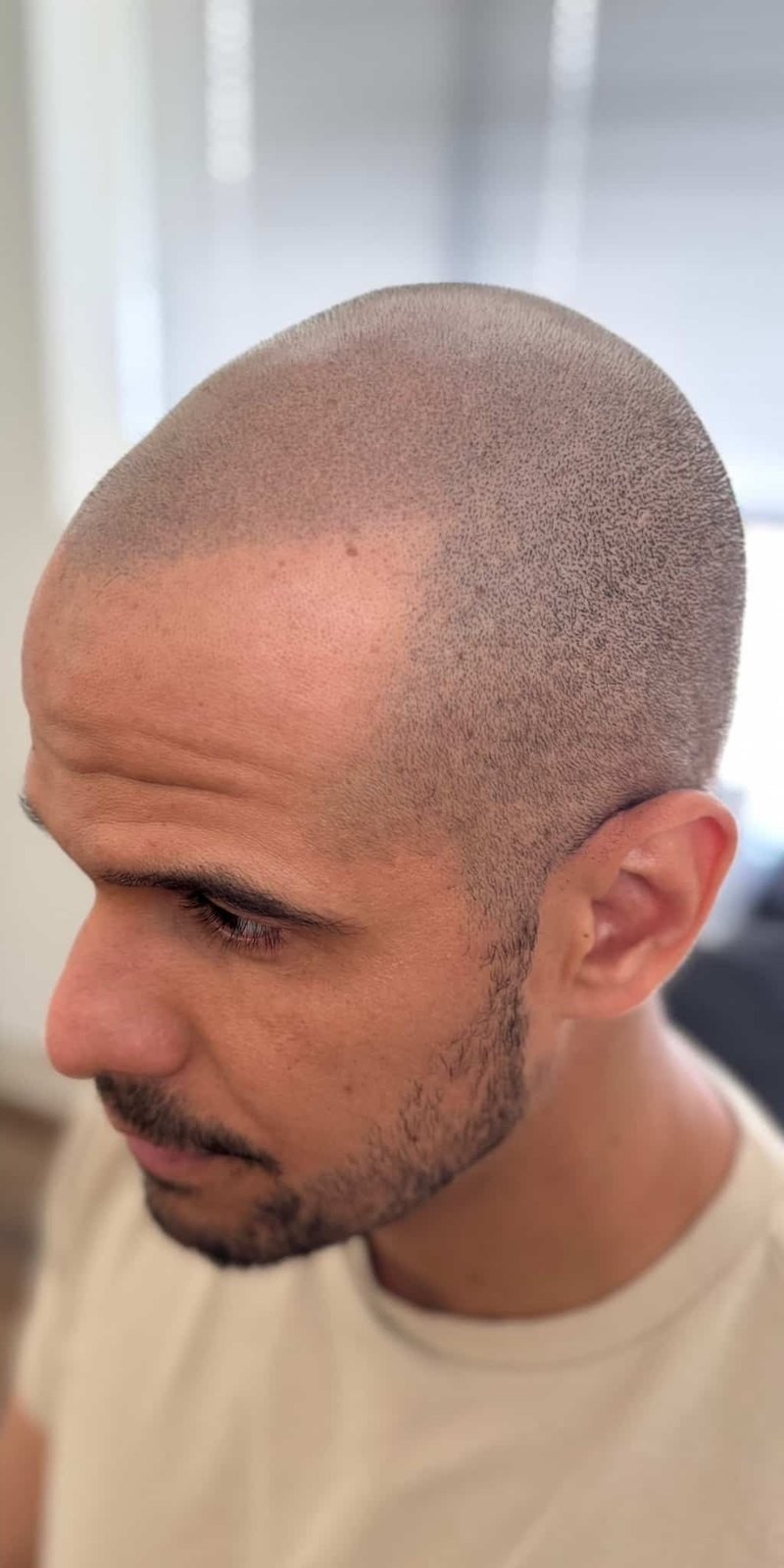
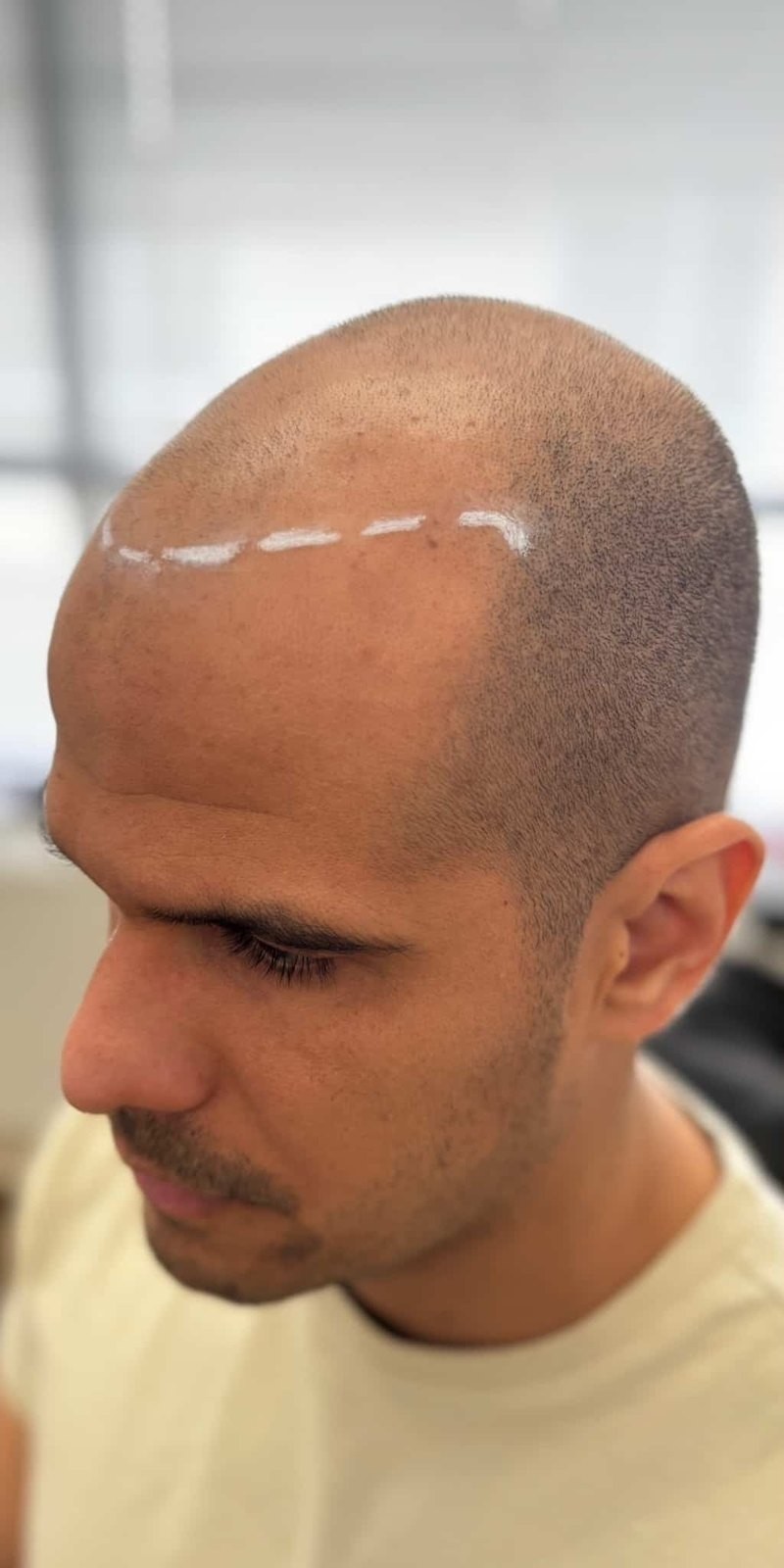
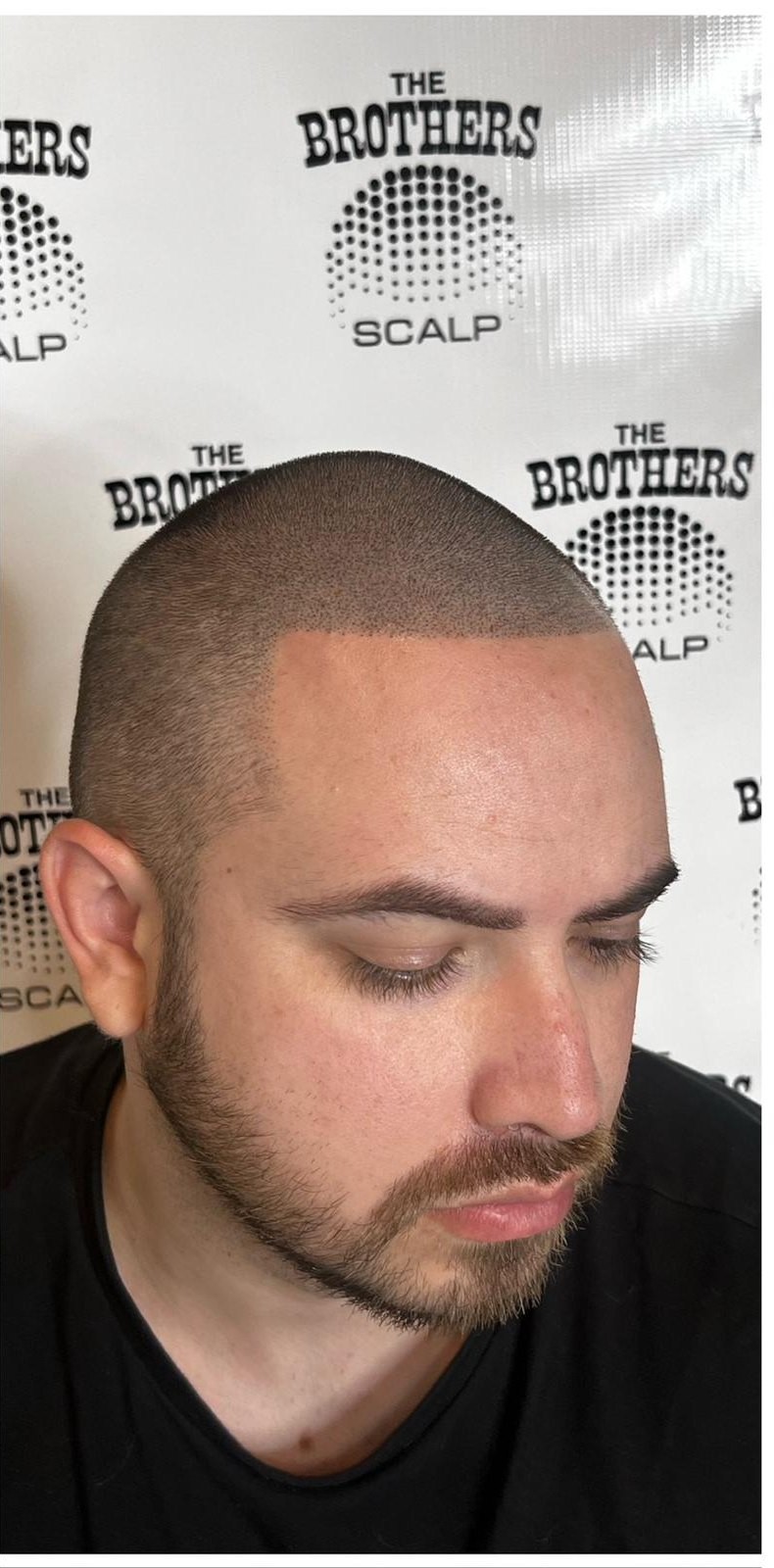
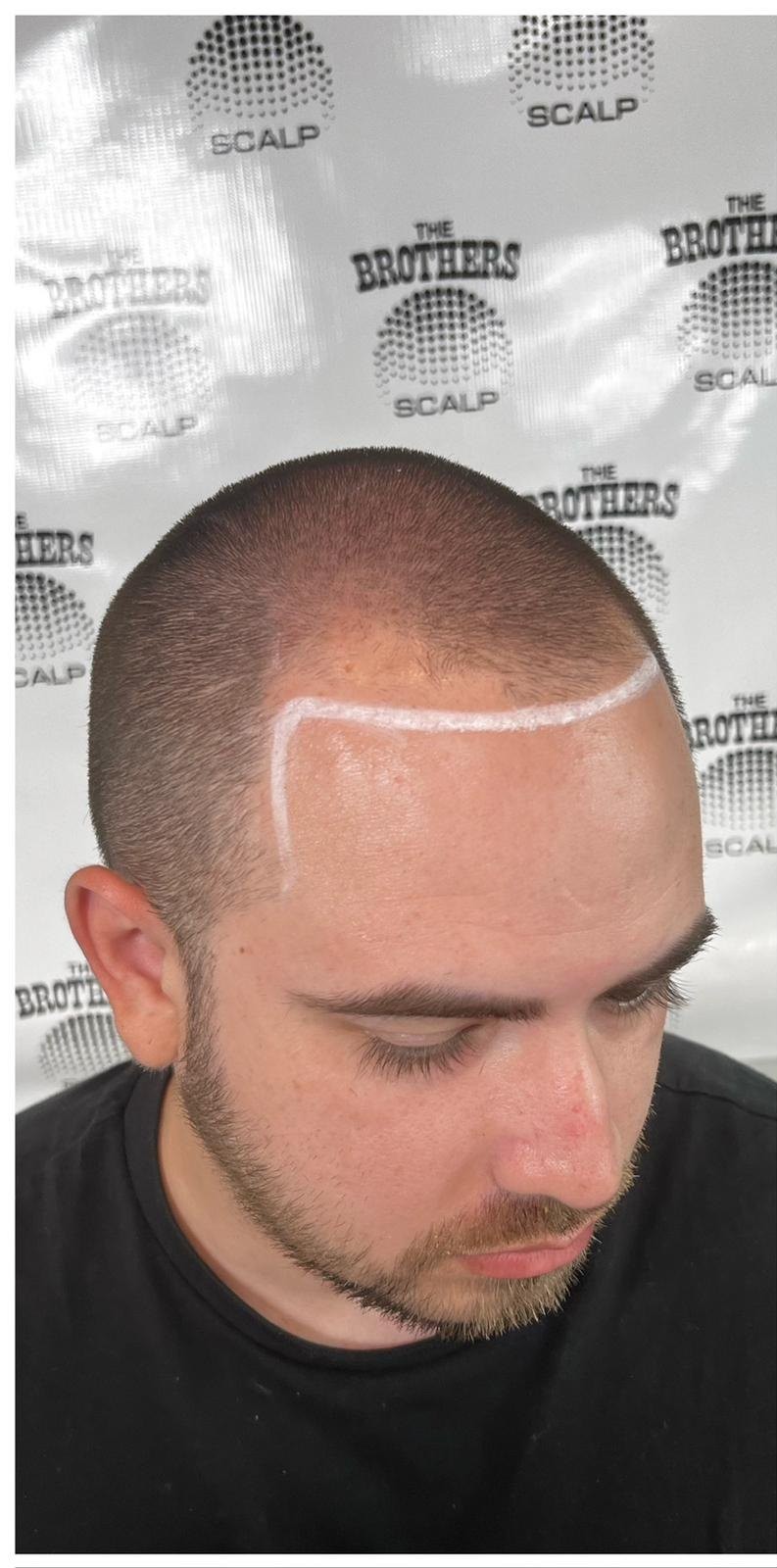
This is the work I care about most, because the hairline frames the whole face. A realistic before and after here shows the temples filled in and the front edge defined, with the dots at the very edge finer and sparser than those behind them. If you keep a little hair on top, the healed after should look like a fresh short haircut, not a drawn-on border.
The 2025 series includes two men treated for thinning at both temples. At six months their visual density scores were 8.8 and 8.9 out of 10, and both were still rating themselves very satisfied. That is a small sample, but it fits what you should expect: the temples are a compact area on healthy scalp, so they hold pigment well.
Between session one and the healed result, the change is mostly density and softness. Session one lays out the shape with sparse dots. Later sessions fill in and feather the edge. The healed result should look less dark than session one did on the day.
What limits it is design, not pigment. Hairline height and shape are permanent decisions on a face that will age, and hair loss behind the line can keep progressing. The 2019 paper advises reviewing age, family history and the stability of the remaining hair, with extra caution in young patients. See our guide to SMP for a receding hairline.
| Aspect | Realistic expectation |
|---|---|
| Session 1 | Shape mapped with sparse dots |
| Healed | Filled temples, finer dots at the edge |
| Main limit | Hairline design and edge blur |
| Watch for | Straight solid line, edge set too low |
Crown and vertex
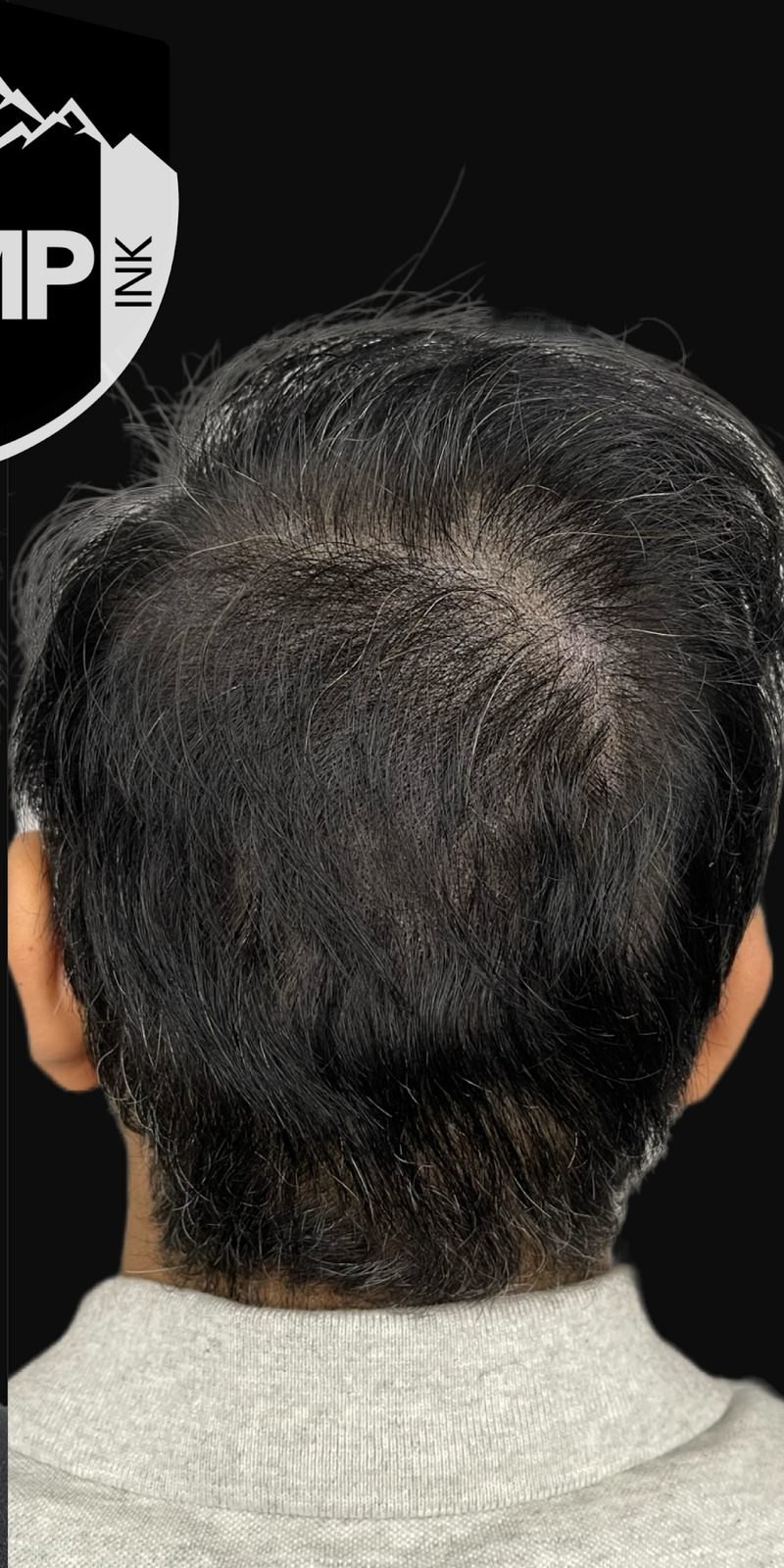
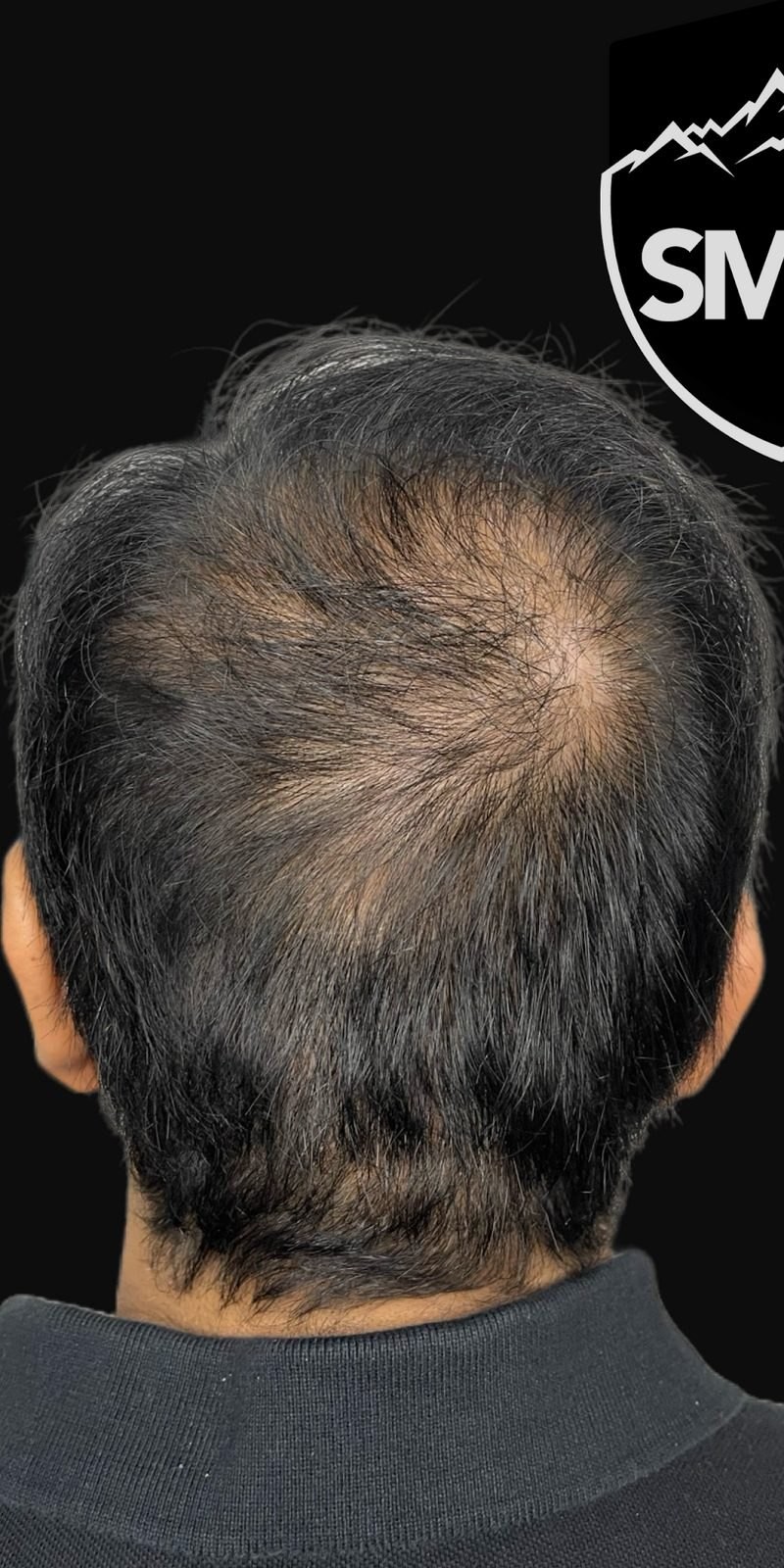
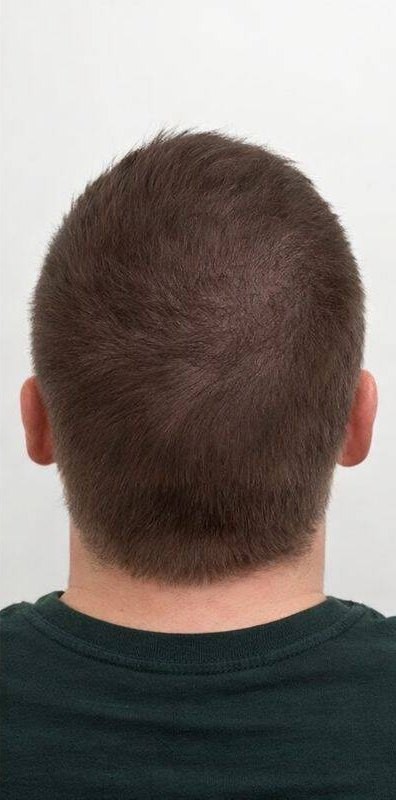
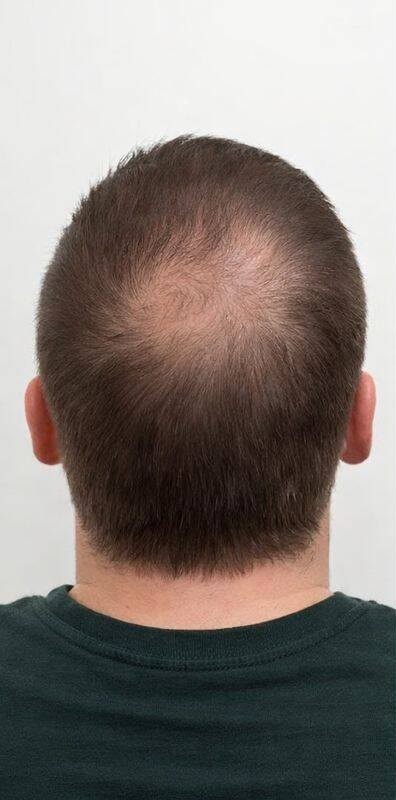
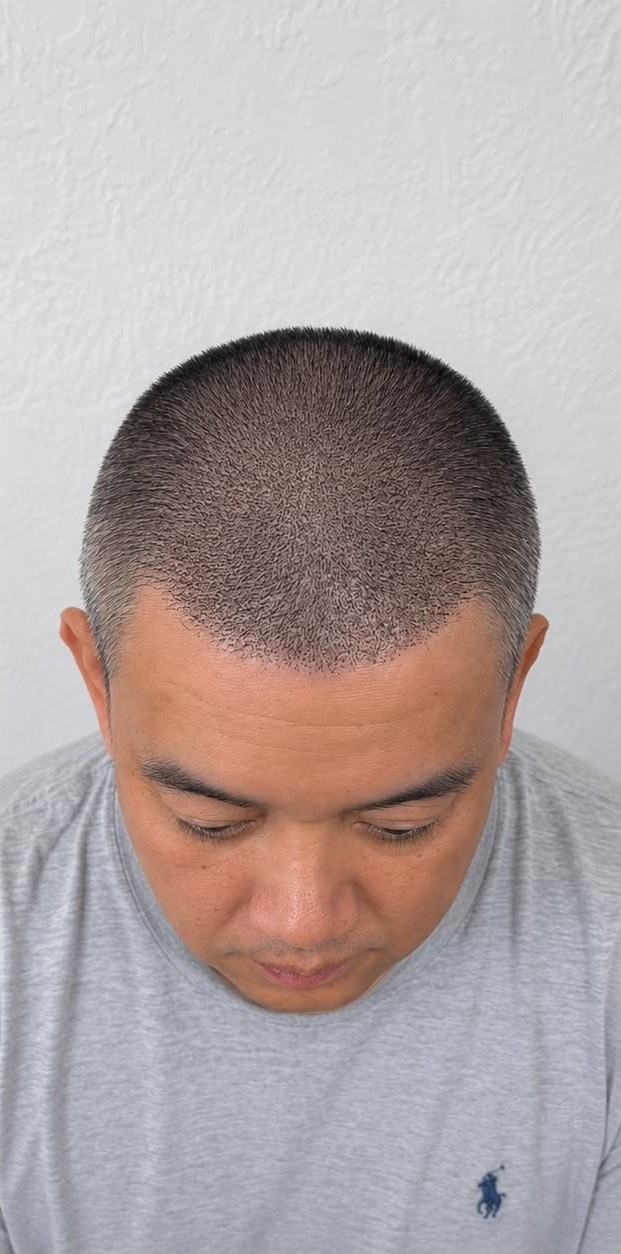
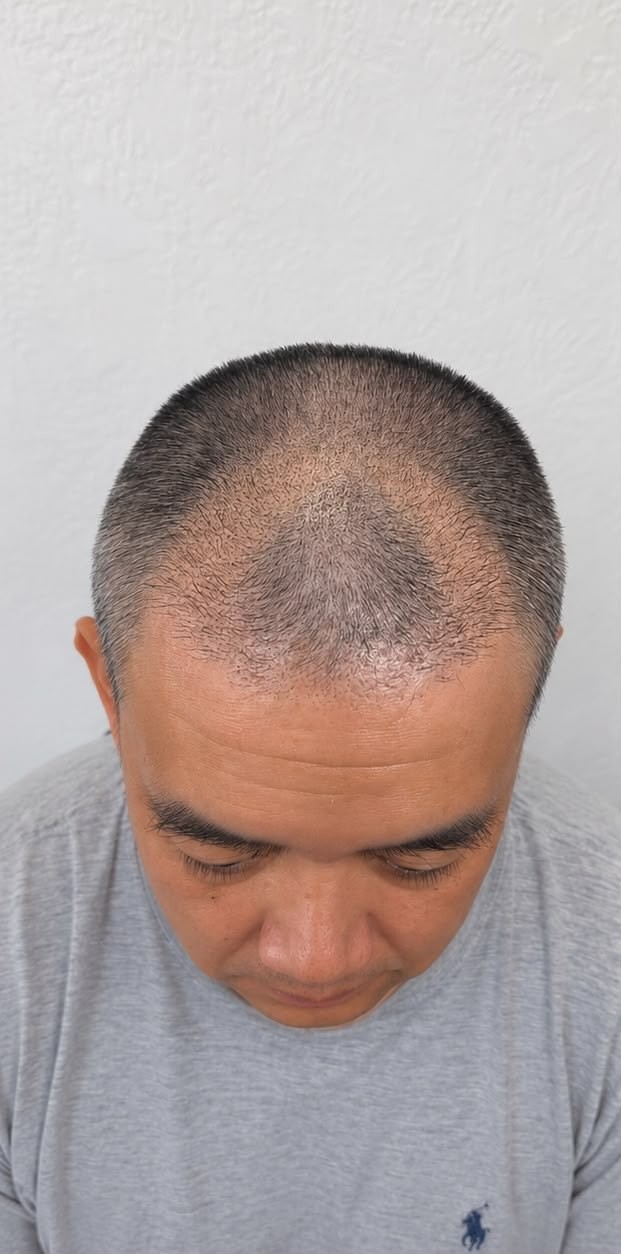
The crown is where SMP blends into whatever hair you still have. A realistic before and after shows the bright spot at the whorl gone dull, with the treated area fading into the surrounding hair rather than sitting as a dark circle. Top-down shots under matching light are the only fair comparison.
The 2019 paper makes a useful distinction. On a crown with hair still present, SMP mostly darkens the scalp showing through to cut the contrast, and the existing hair helps hide small imperfections. On a shaved crown, every dot is on show. The 2025 series treated a teenager's crown thinning with a visual density score of 8.7 straight after and 7.8 at six months.
Session one versus healed is about the blend. Early dots sit in the middle of the thinning area, and later sessions extend and taper them outward. A good healed crown has no visible edge.
The limit is progression. If the thinning around it keeps spreading, the treated area can end up surrounded by new thinning, needing more work. If your crown is still changing quickly, ask a doctor or dermatologist about stabilizing it first.
| Aspect | Realistic expectation |
|---|---|
| Session 1 | Dots in the center of the thin area |
| Healed | Less shine, edge tapers into hair |
| Main limit | Ongoing thinning around the area |
| Watch for | A dark circle with a visible border |
Diffuse thinning (density work)
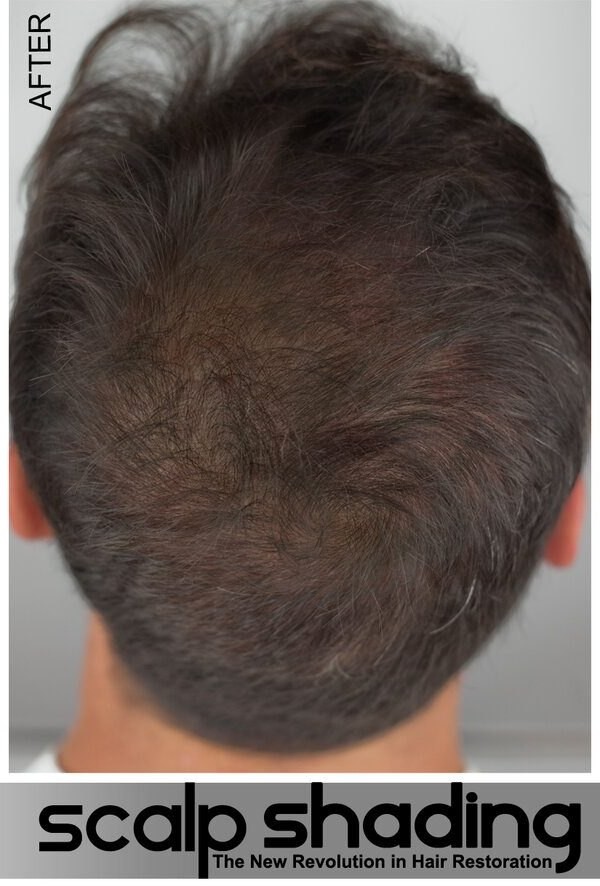
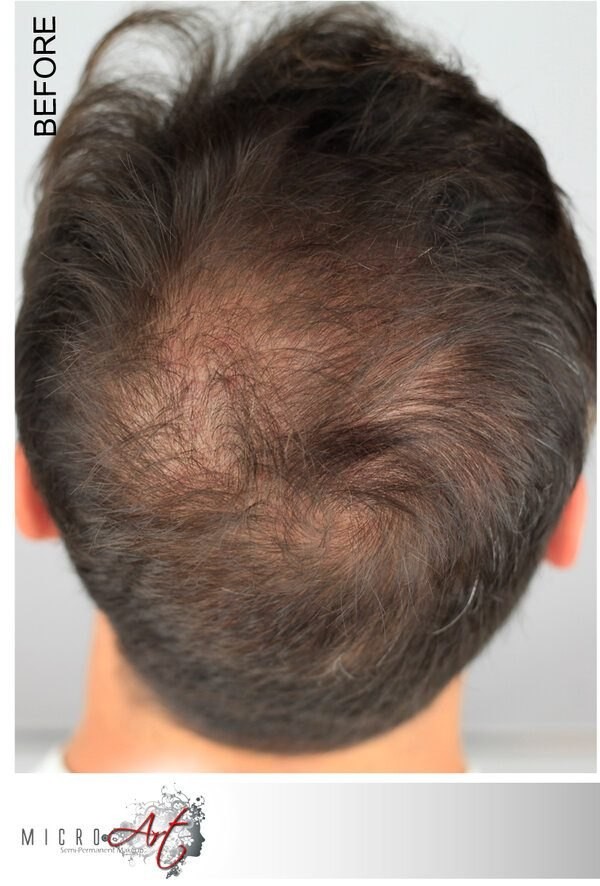
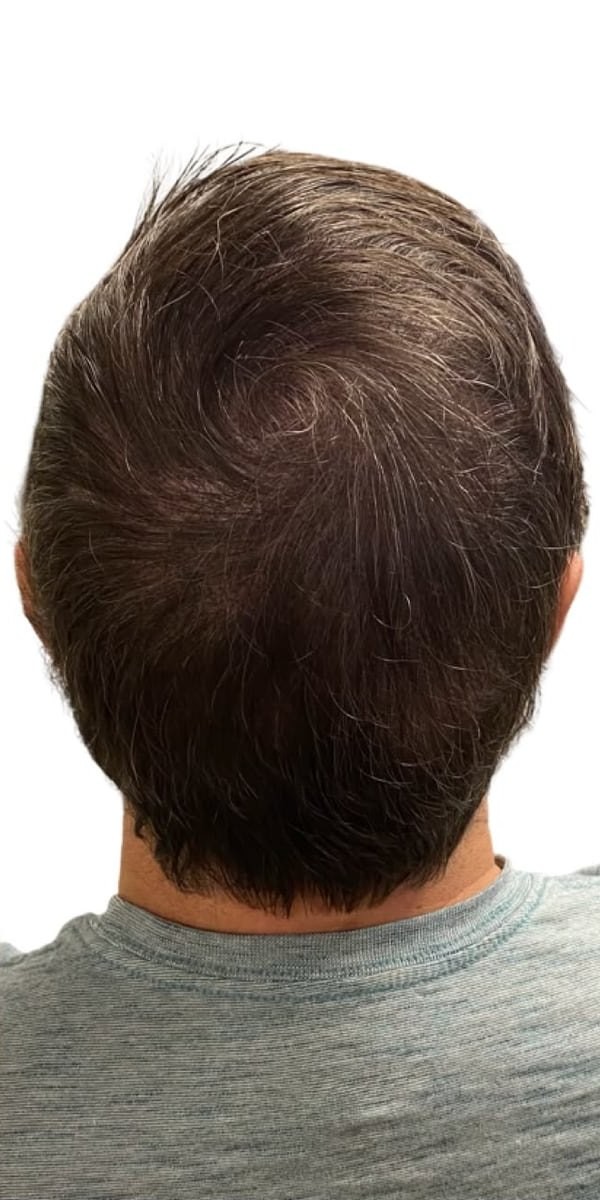
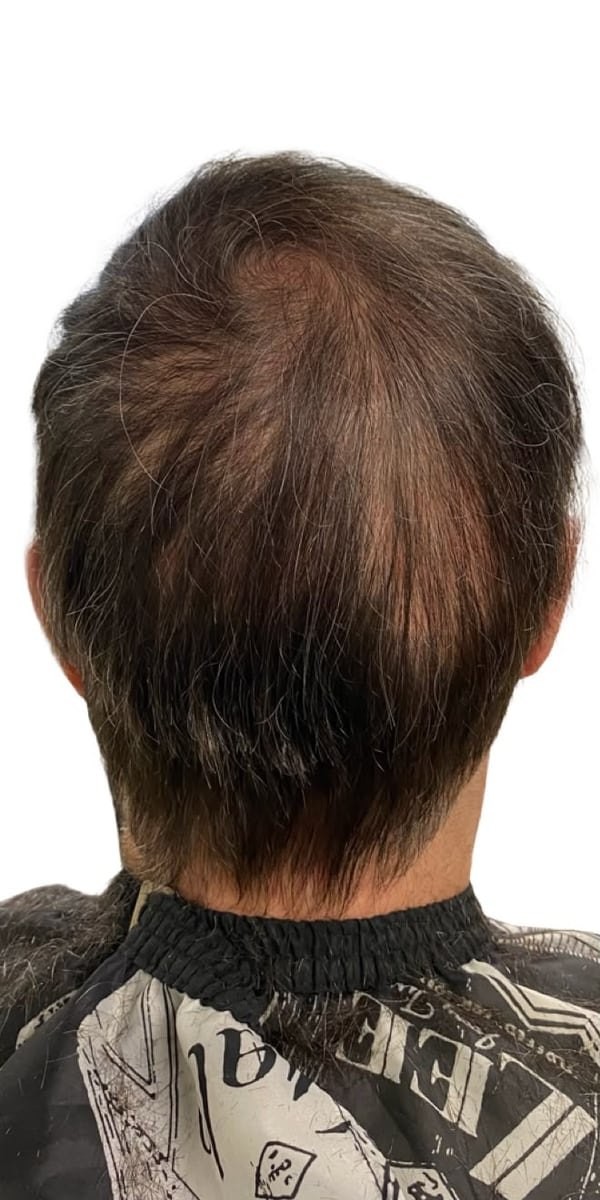
Density work is the subtlest before and after you will see, and the one most often shot unfairly. The dots are not meant to be seen individually. They sit between your hairs and darken the scalp, so the after shows less shine and less see-through, not more hair.
A 2017 study in the Journal of Cutaneous and Aesthetic Surgery used a standardized technique on 30 patients, 27 of them with diffuse, non-scarring hair loss, and judged results with standardized global photographs. All showed moderate to great improvement with satisfactory scalp coverage (Dhurat et al., 2017).
The 2024 study on women's thinning explains the mechanism and its ceiling. Small dark dots reduce how much light the scalp reflects, which hides see-through. They cannot restore lost volume, so a flat, thin look from the front stays. That is why I say density work makes thin hair look thicker, not that it makes it thick.
Between session one and the healed result, density builds in layers. A good artist keeps the pigment tone close to your hair color and stops short of making the scalp darker than your hair. Contrast matters too: the 2024 authors note that scalp visibility depends on hair-to-scalp color contrast, so their findings in East Asian women with black hair may not carry over to people with lower contrast.
| Aspect | Realistic expectation |
|---|---|
| Session 1 | Barely visible change |
| Healed | Less scalp shine through the hair |
| Main limit | No added volume; some scalp still shows |
| Watch for | Scalp darker than the hair, wet-hair befores |
Full Norwood 6 and 7: the shaved look
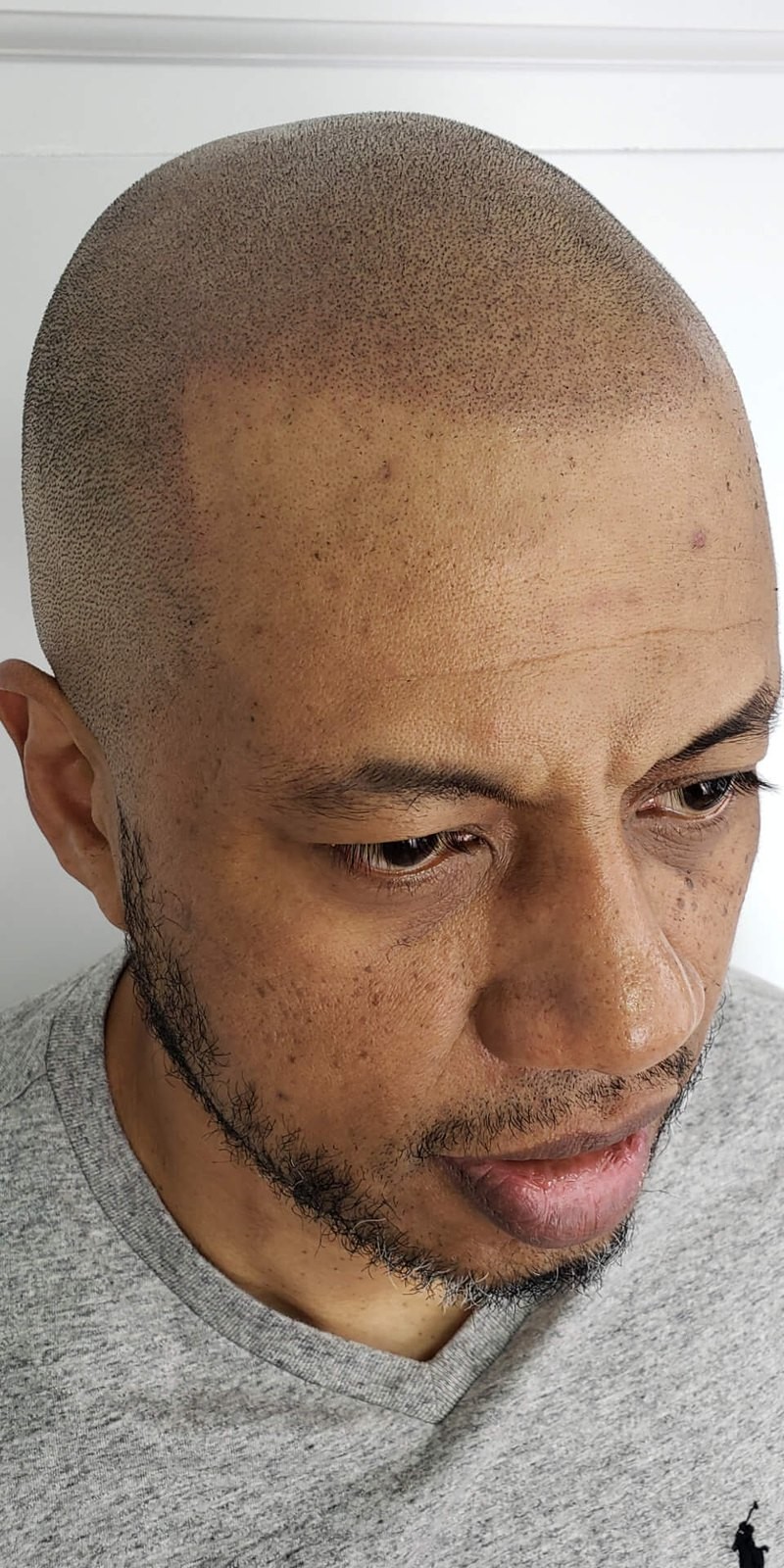
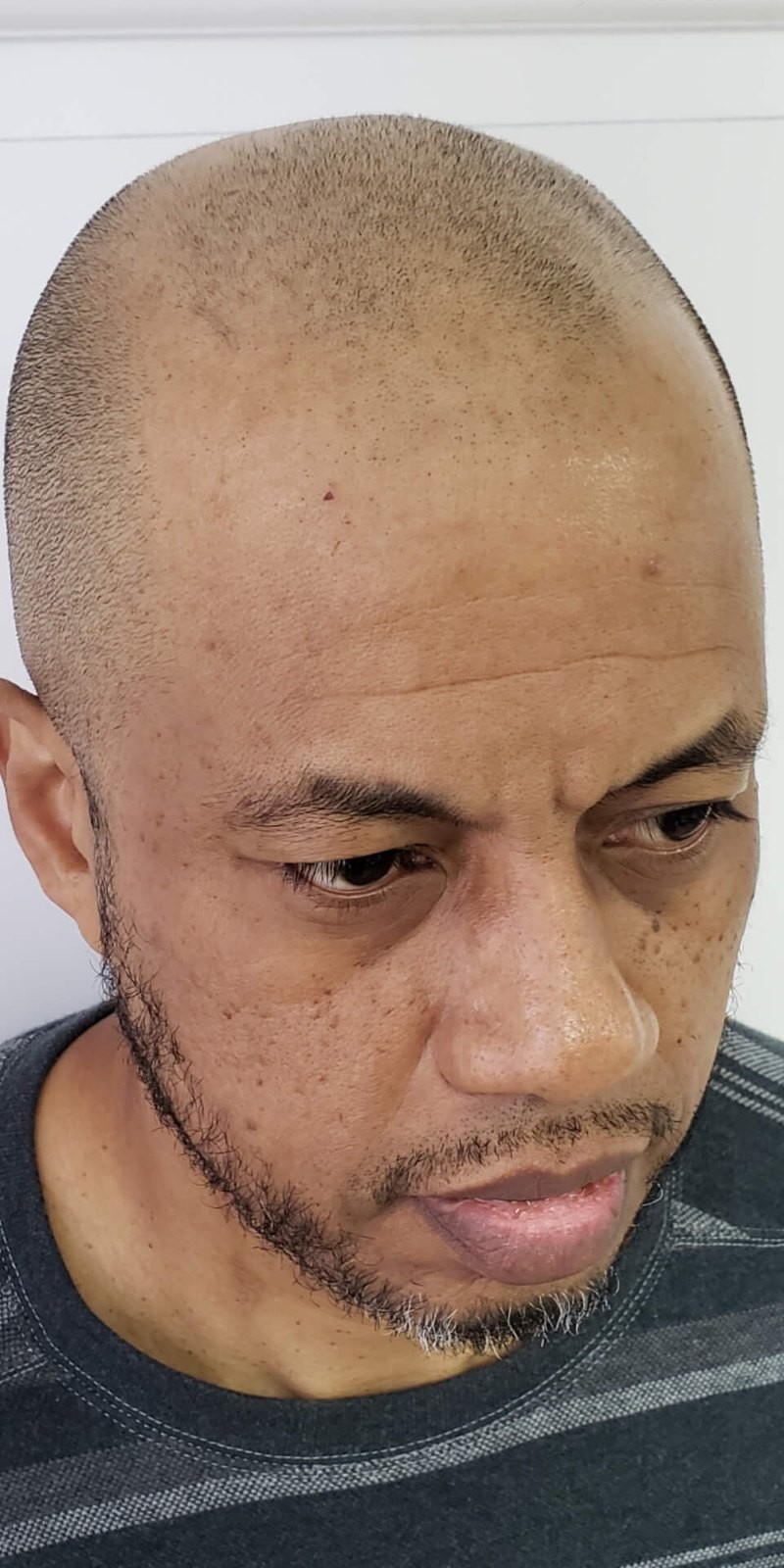
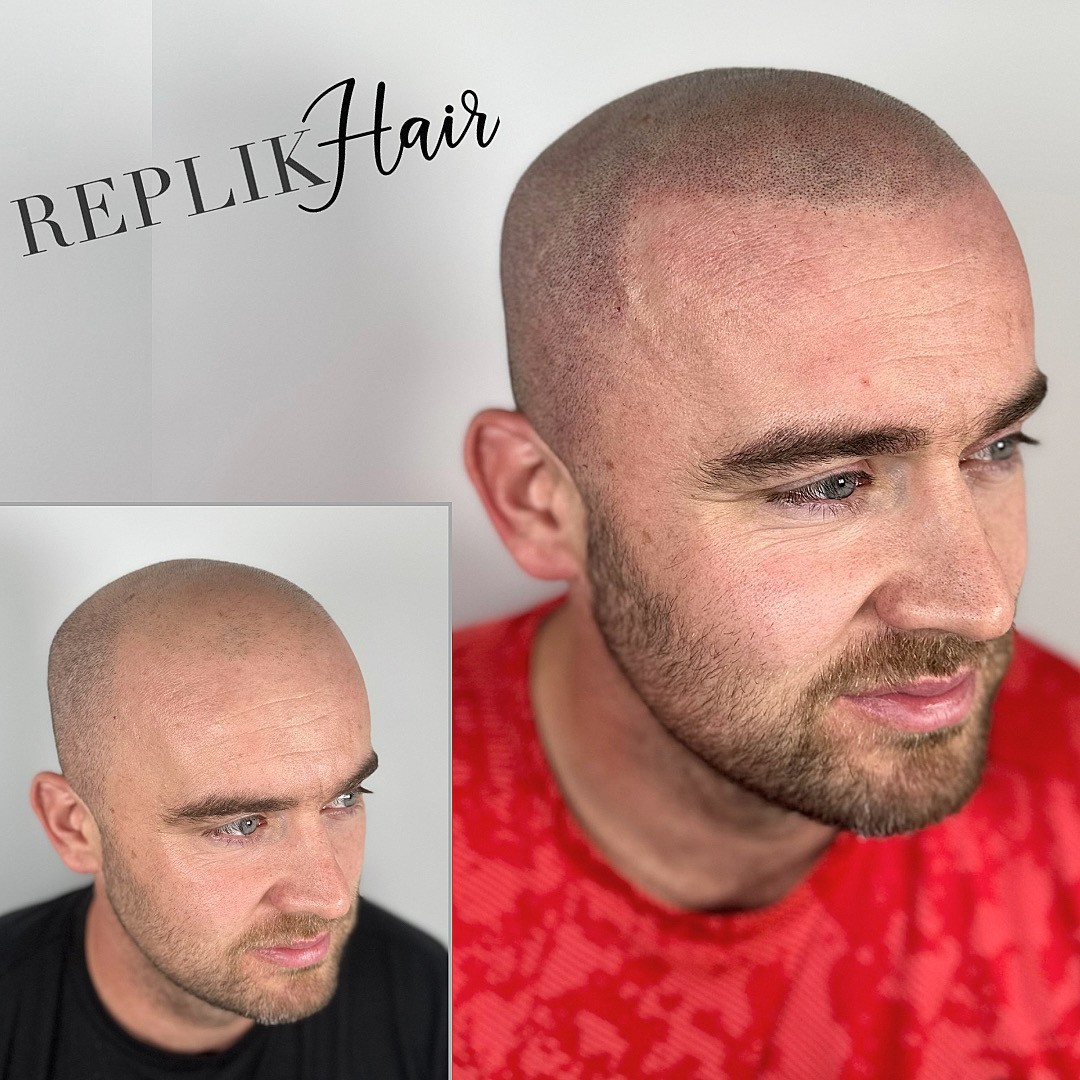
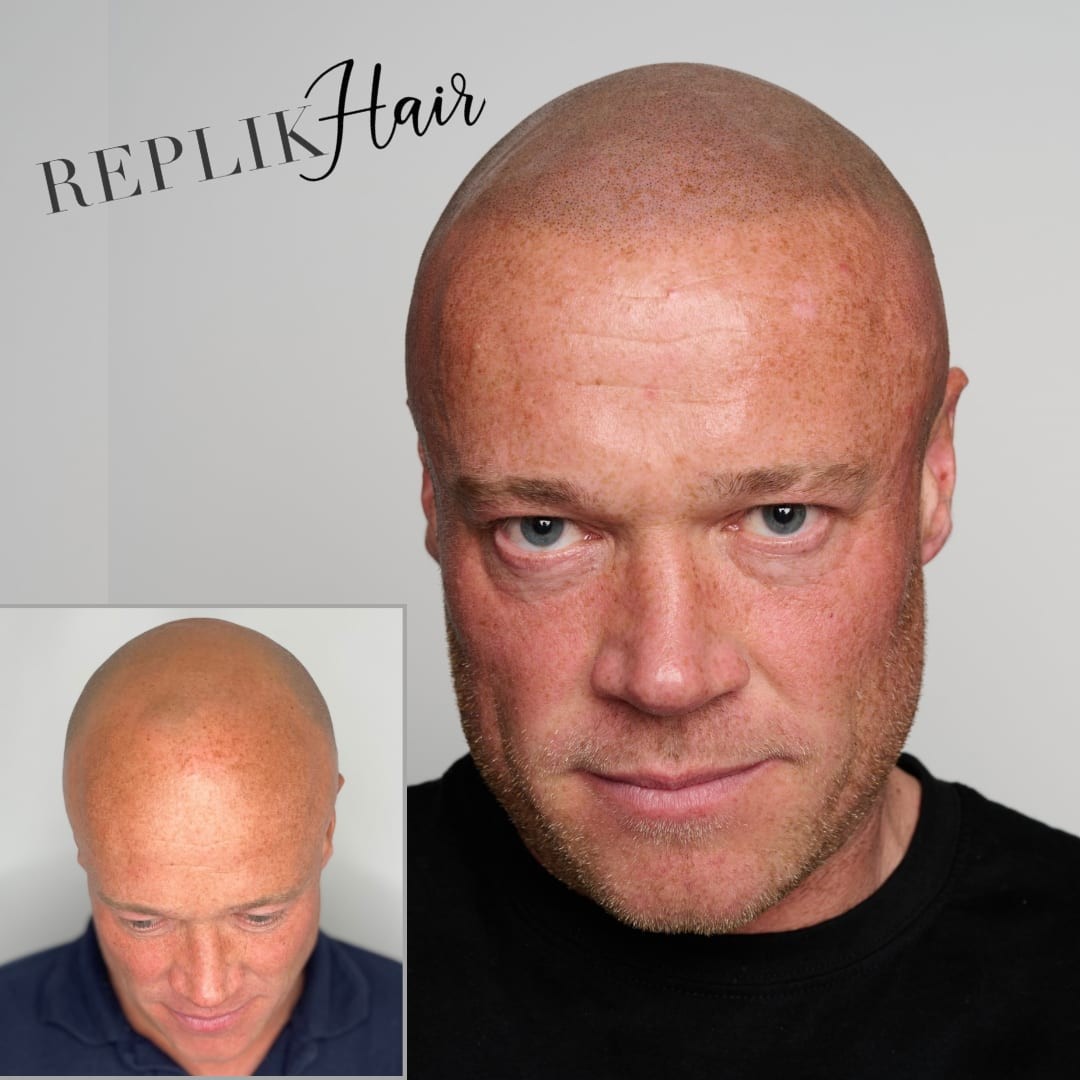
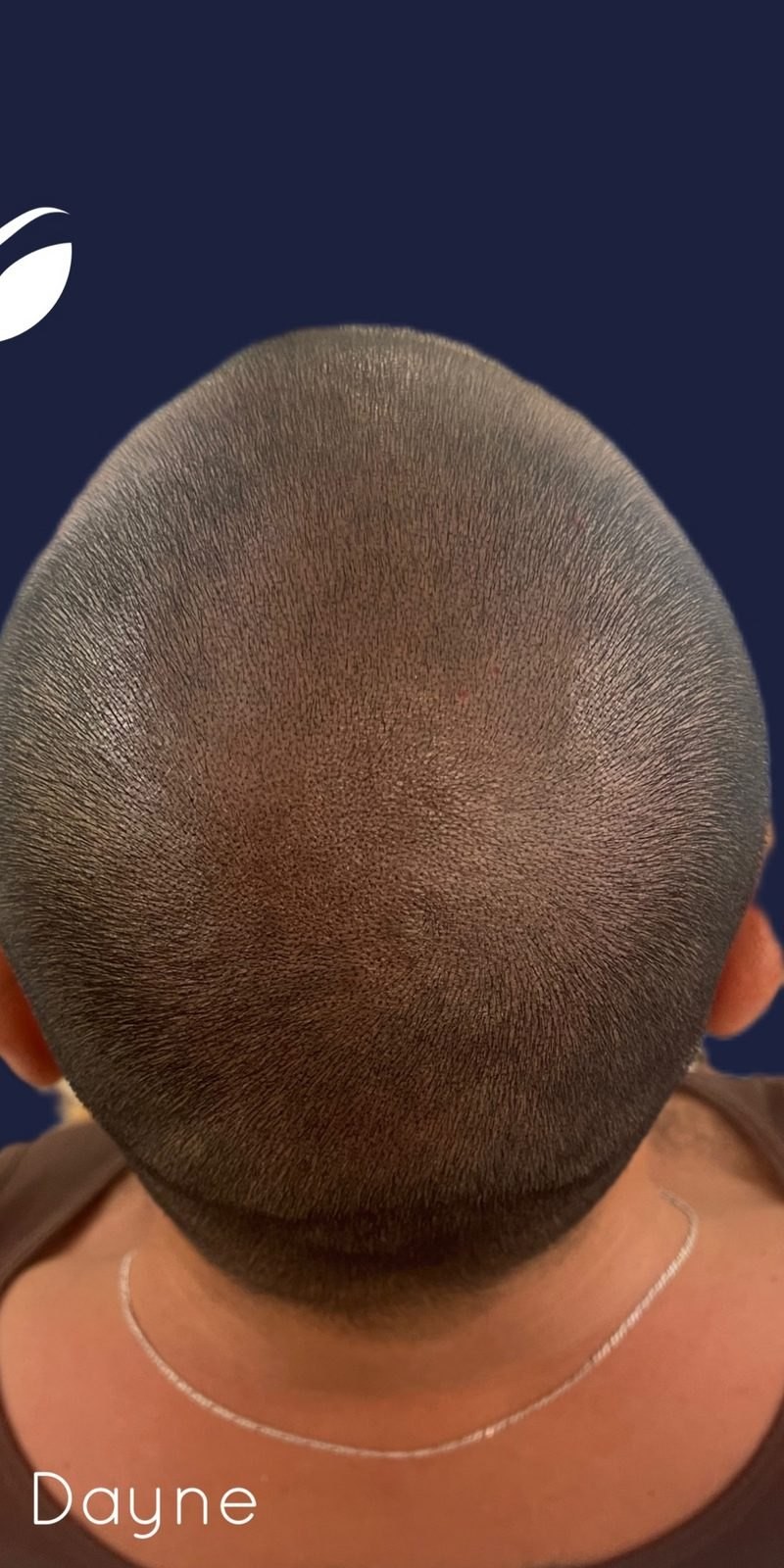
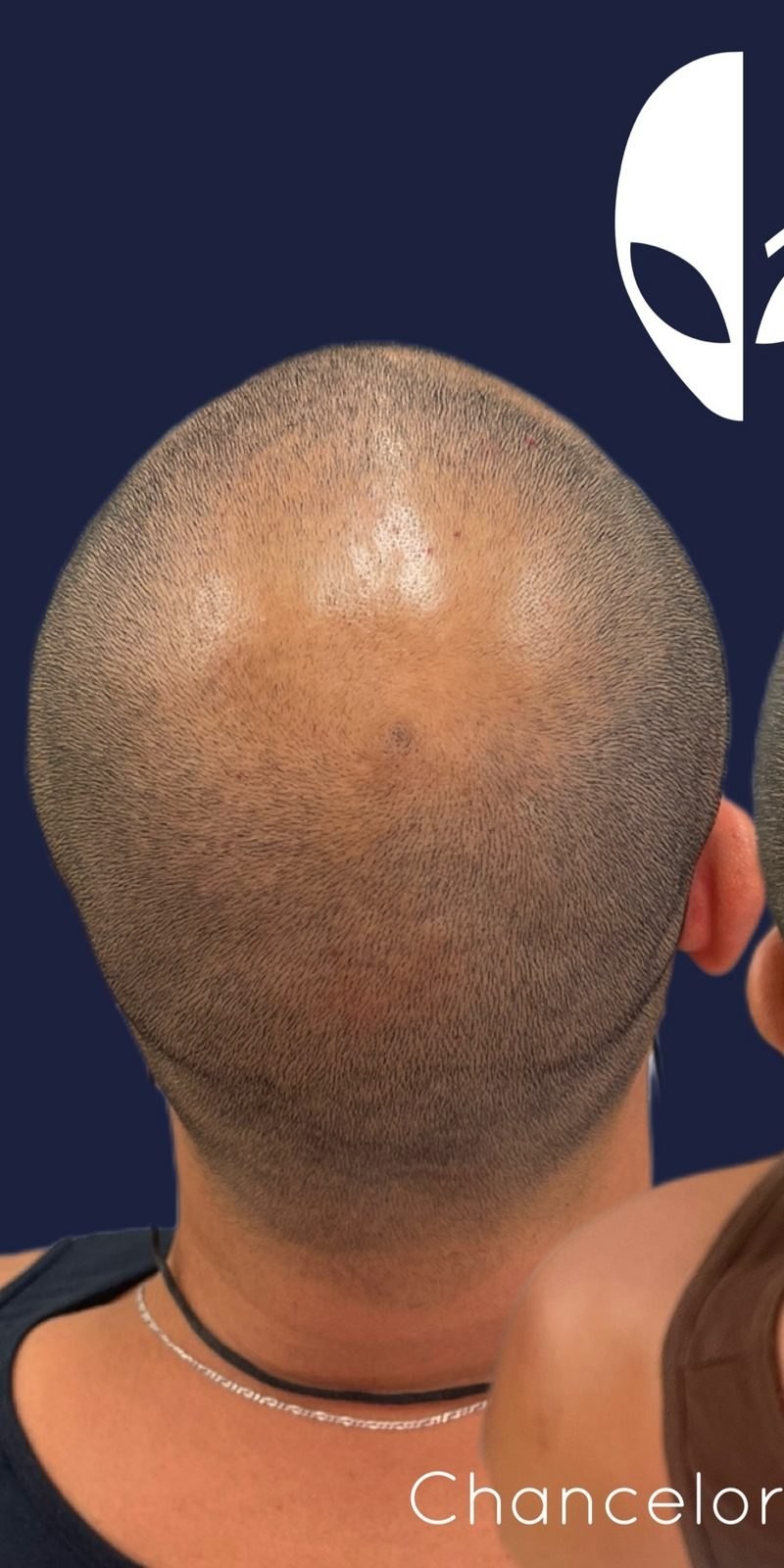
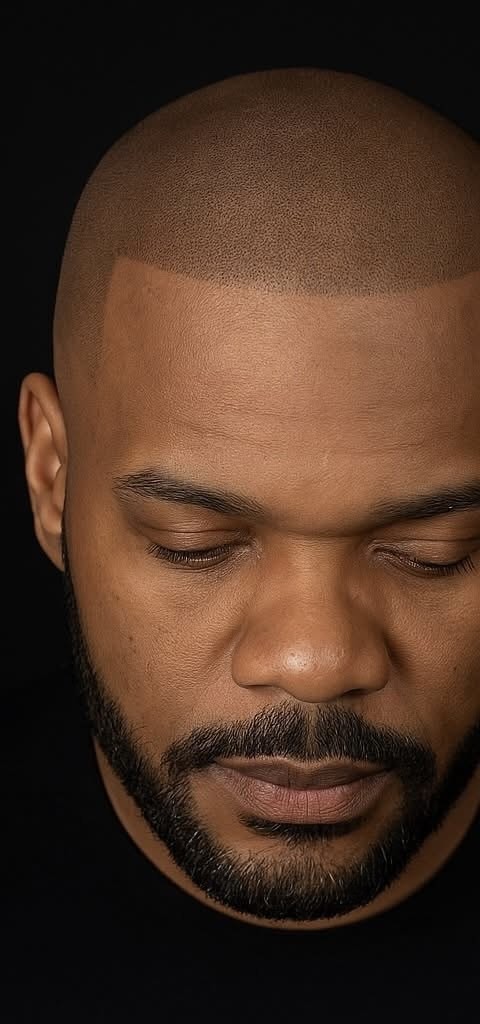

This is the before and after most people picture: an advanced bald pattern turned into what looks like a close buzz cut. It is also where weak work has nowhere to hide. If you are not sure where you sit, see the Norwood scale guide.
The best published data is the 2019 paper. Of its 80 shaved-style patients, 23 started at Norwood 6 and 29 at Norwood 7. They needed 4.34 sessions on average, anywhere from two to seven. Average patient satisfaction was 4.8 out of 5, independent surgeons found mild blurred margins in two patients, and no patient complained that others could tell.
Why SMP instead of a transplant at this stage? A 2017 paper in Plastic and Reconstructive Surgery Global Open explains that the donor hair at the sides and back is only about 20% to 25% of the original hair count, so it cannot cover a large bald area for many people (Rassman et al., 2017). For the full comparison, read SMP versus hair transplant.
Session one is a sparse map of the hairline and the whole top. The healed result after the last session should look even from front to crown, with a matching density down into the real stubble on the sides. The 2019 authors warn against chasing the final look in one session, because going too deep early makes ink spread.
The limits are lifestyle ones. You keep the sides and back short for life, and the 2019 authors say patients should agree to that before starting. Your remaining hair can keep thinning at the sides, too.
| Aspect | Realistic expectation |
|---|---|
| Sessions | About 4 on average, 2 to 7 reported |
| Healed | Even buzz-cut look front to crown |
| Main limit | Sides kept short for life |
| Watch for | Blurred edges, mismatch with side stubble |
Women's thinning
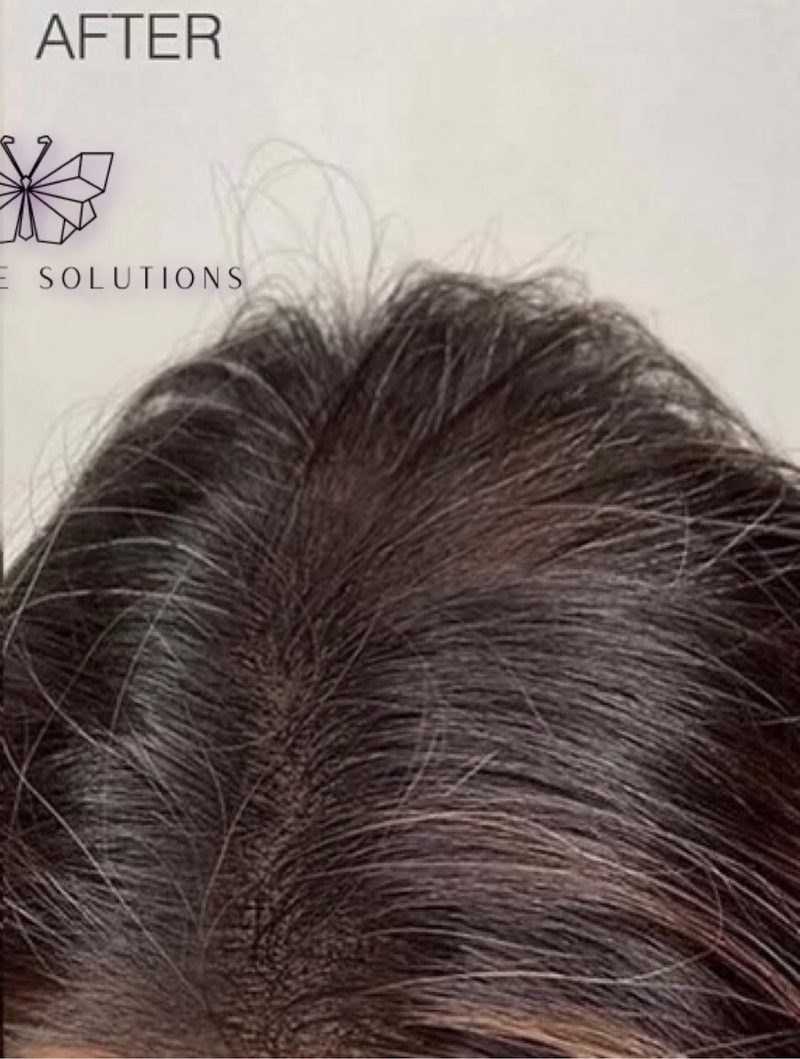
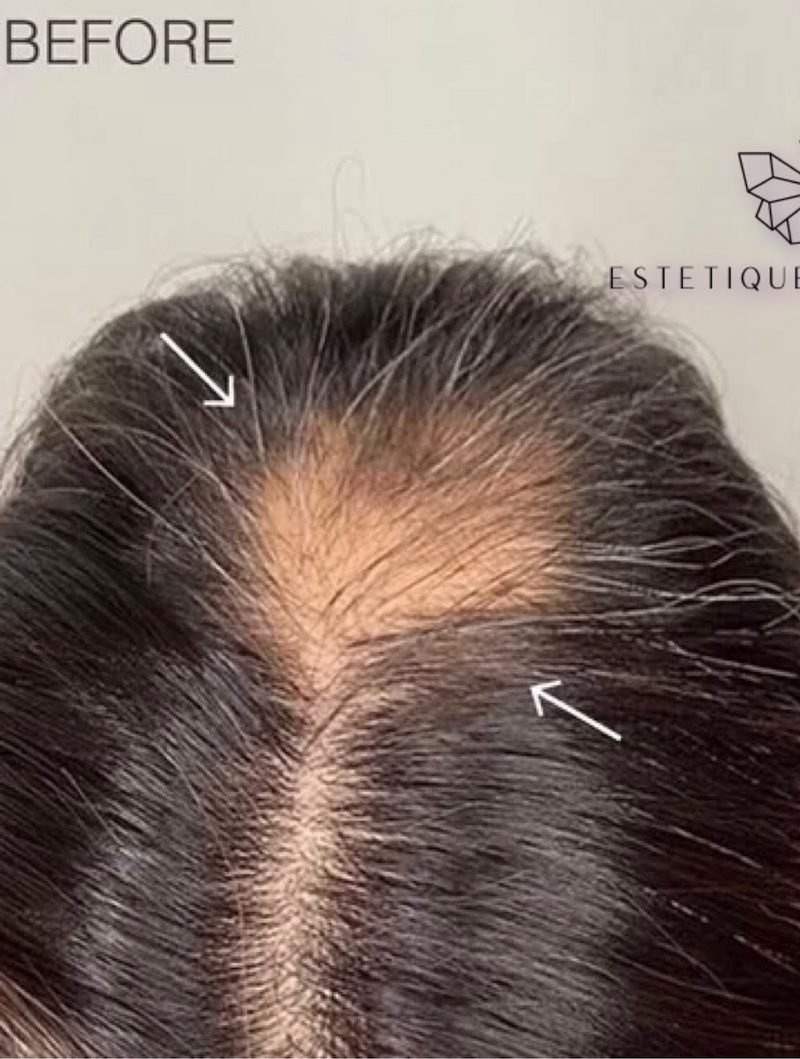
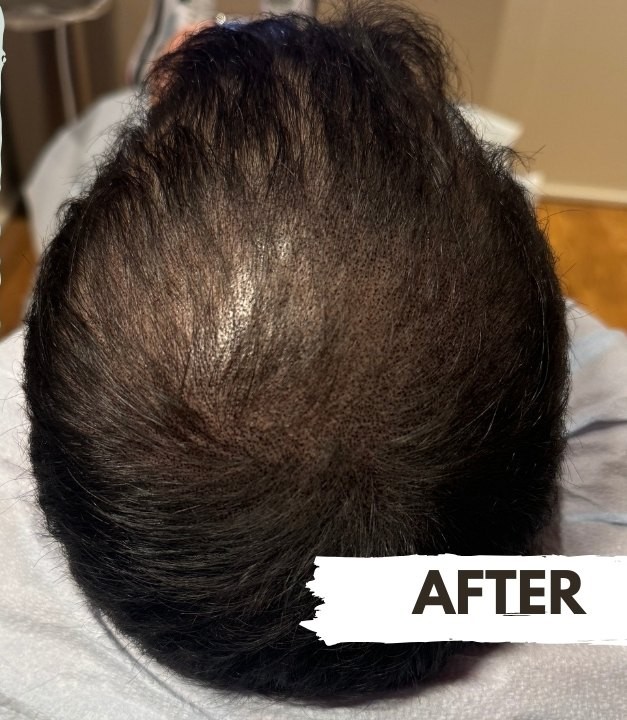
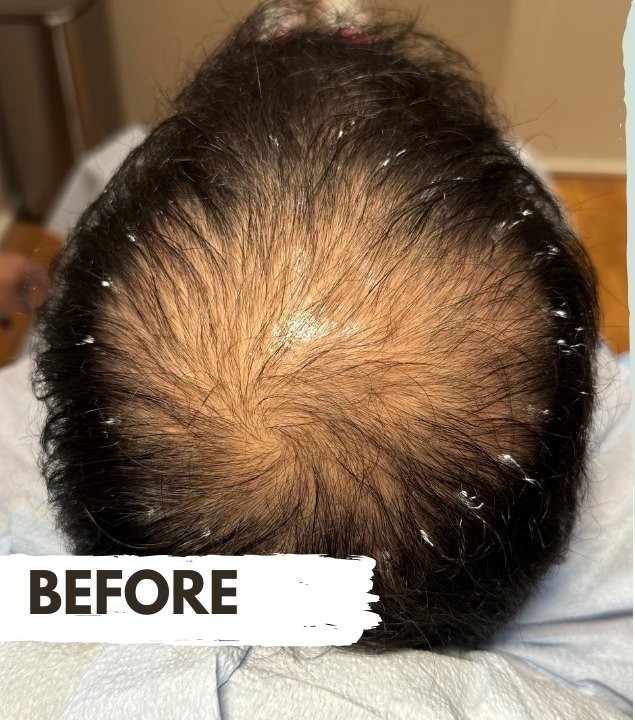
Women's results almost never involve a shaved look. The typical before is a widened part or see-through top in long hair, and the after shows a narrower-looking part and less scalp. The 2024 study notes that female pattern hair loss usually spares the front 3 to 4 cm of the hairline, so the work sits along the part and crown.
That study is the most useful reference for women. It reviewed 40 women with good outcomes, 17 of whom had SMP, and found the choice came down to remaining hair density. SMP was recommended at 104.6 hairs per square centimeter or more, while lower densities, or a skull outline visible through the hair from the front, pointed toward transplant surgery. One example treated an area 8 cm wide and 15 cm long along the part.
Mild thinning gives a subtle photo. In a 2014 series of 43 Korean patients, including 23 women with female pattern loss, one woman at the earliest stage was dissatisfied because she did not notice a remarkable change, even though the physician rated the result well (Park et al., 2014). The other 42 results were rated highly satisfactory.
Between session one and the healed result, the part line darkens in layers until it matches the hair tone. Volume is the hard limit, the same as in density work. There is more in our guide to SMP for women.
| Aspect | Realistic expectation |
|---|---|
| Area | Part line and crown, hair kept long |
| Healed | Narrower-looking part, less see-through |
| Main limit | No volume; very low density suits surgery |
| Watch for | Early thinning where change is barely visible |
FUE dot scars
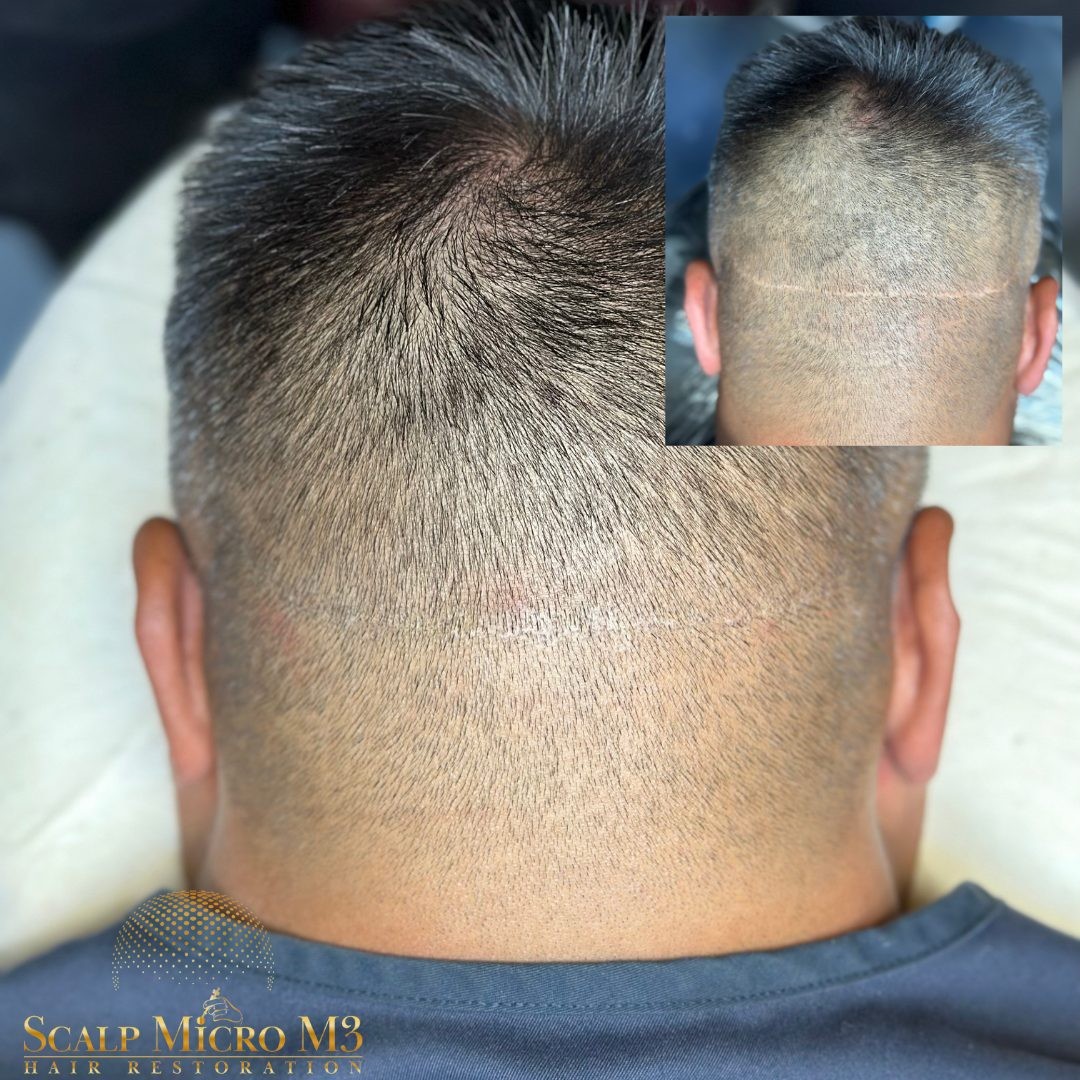
FUE leaves many small round scars rather than one line. The 2017 Rassman paper puts them at roughly 1 mm each, one for every graft removed, and says they limit how short people can cut their hair. Overharvesting can also leave a thin, moth-eaten donor area.
A realistic after shows the white dots blended into a darker, even background at a short clipper length. The 2025 series treated a moth-eaten donor area after a transplant with a visual density score of 8.1 straight after the final session. The 2019 paper treated donor scars alongside the shaved-look work in patients who had previous transplants.
Between session one and the healed result, expect the scars themselves to take pigment differently from the skin around them. The 2025 authors note scar tissue resists the needle more, and their scar cases faded more by six months than their pattern hair loss cases. Extra passes are normal. Read more in SMP for scars.
| Aspect | Realistic expectation |
|---|---|
| Session 1 | Scars dulled but still visible |
| Healed | Dots blend at a short clipper length |
| Main limit | Scar tissue holds pigment less evenly |
| Watch for | Pigment that spreads on scar tissue |
FUT strip scars
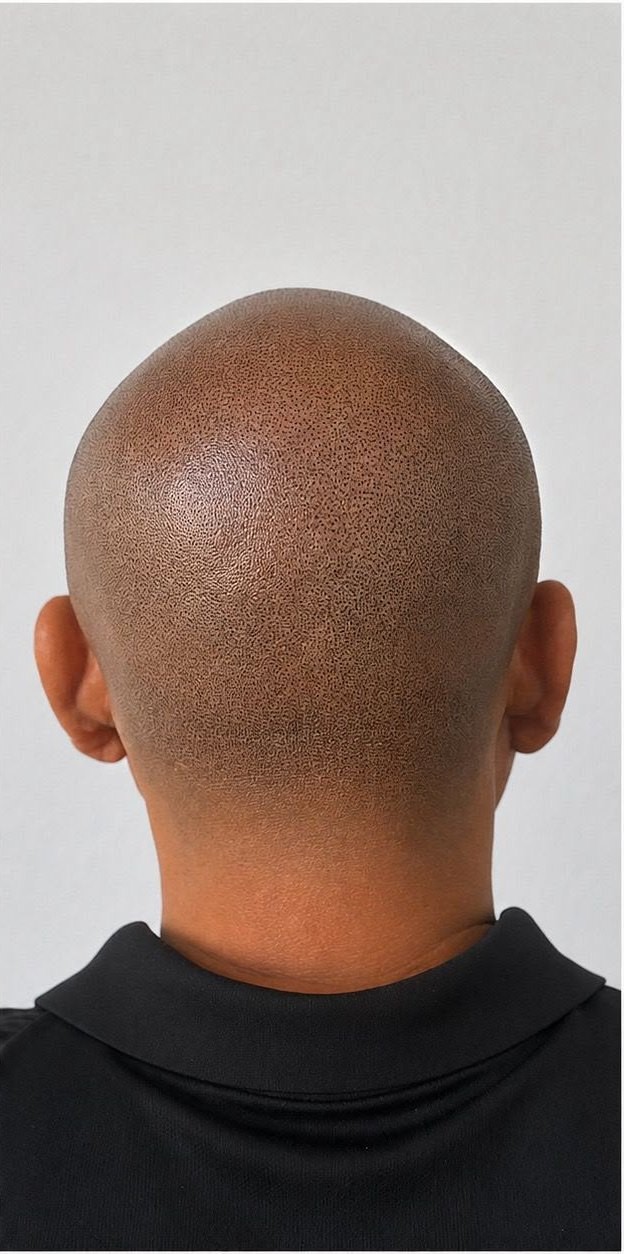
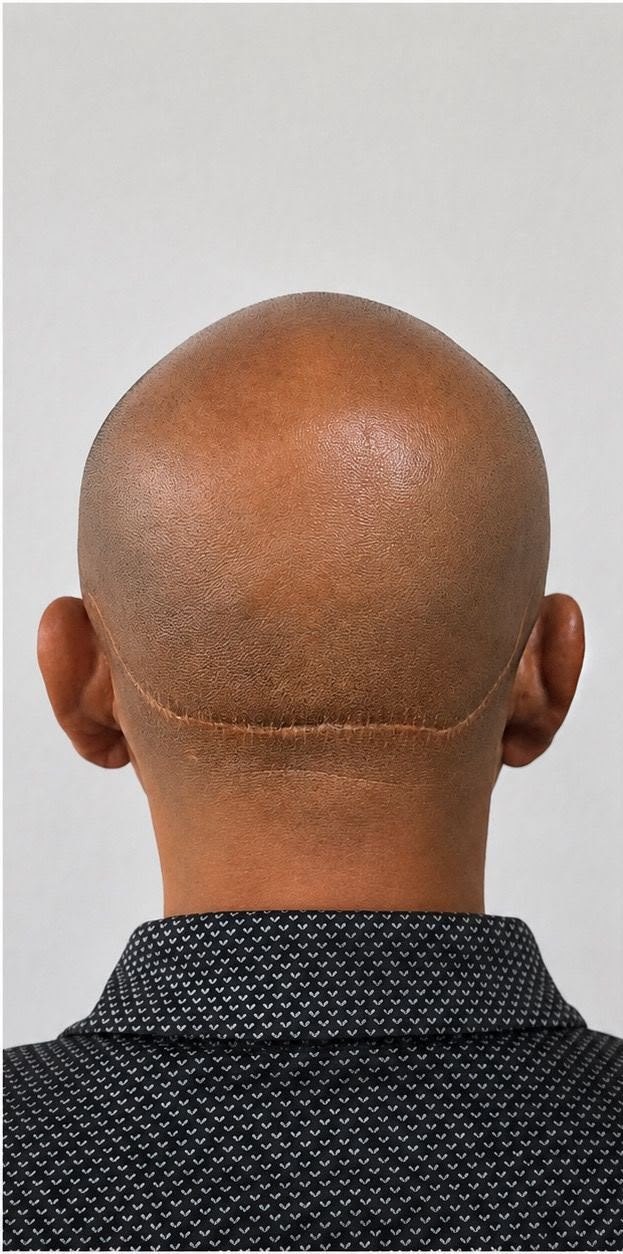
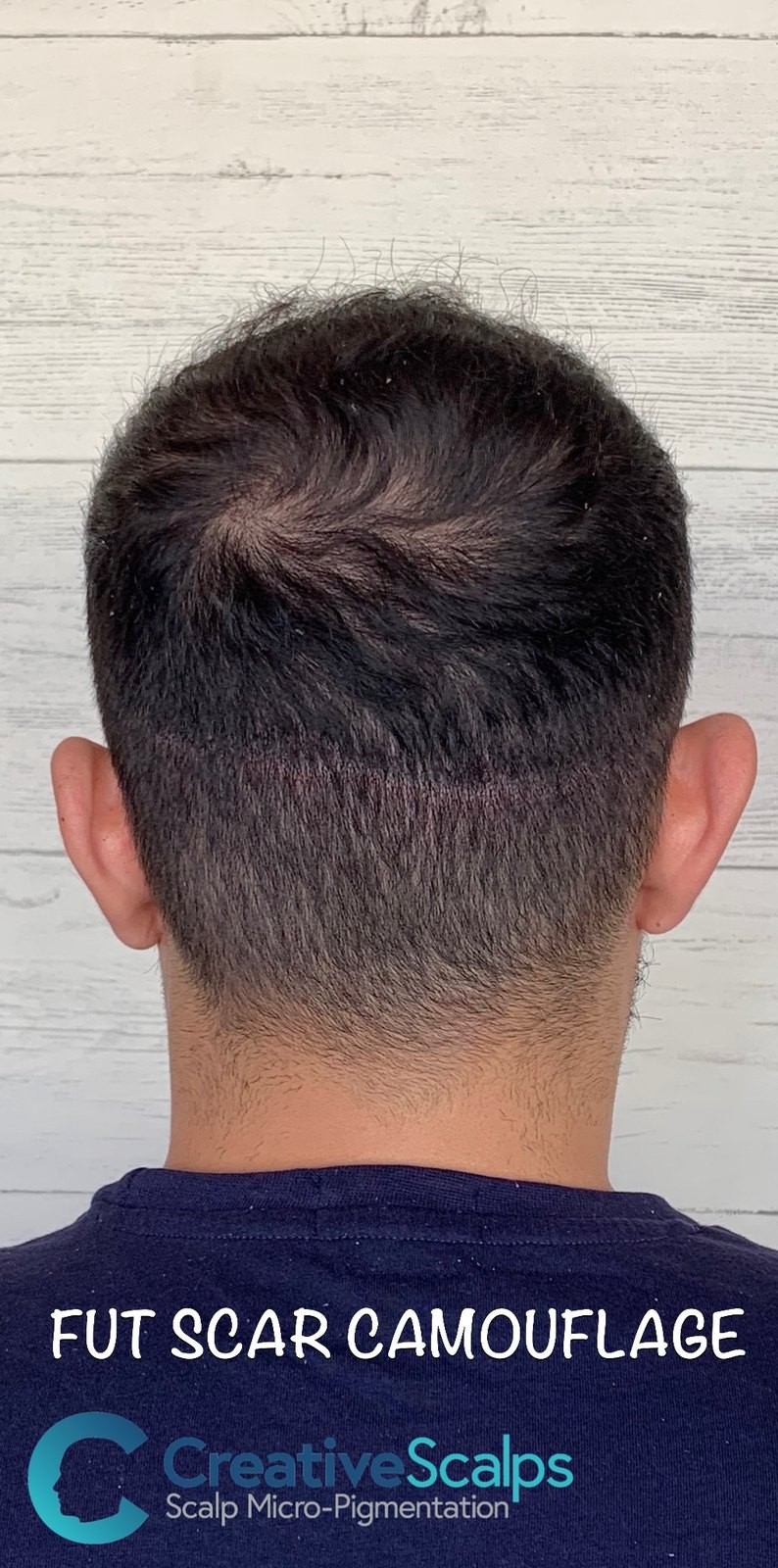
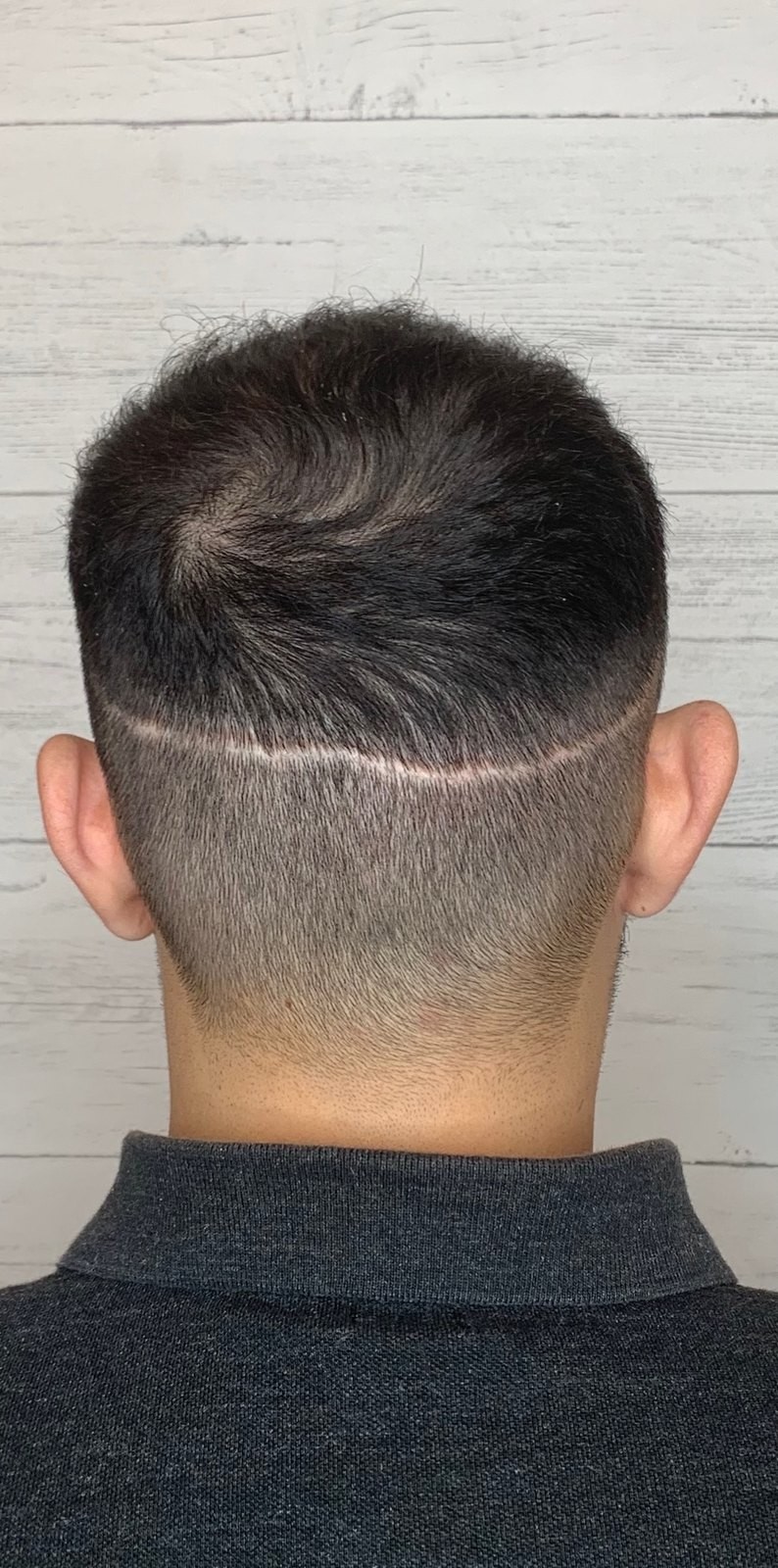
A strip scar is a single line across the back of the head, sometimes thin, sometimes stretched wide. The 2015 review lists wide strip scars as one of the main reasons people turn to SMP, and shows a before and after of one. A realistic after shows the line broken up by dots so it reads as hair at normal distance.
The 2019 authors warn that scarred skin needs careful handling to avoid an obvious difference between scar tissue and normal scalp. In practice, a good healed result has dots on the scar matching the spacing and tone of the dots or stubble on either side of it.
The limit is texture. SMP changes color, not the surface, so a raised, sunken or shiny scar can still catch hard side light. Dense scar tissue also tends to hold pigment less well: a 2026 study of 18 people with scarring scalp conditions saw the lowest pigment retention in the most fibrotic conditions, though the difference was not statistically significant (Shubham et al., 2026).
| Aspect | Realistic expectation |
|---|---|
| Session 1 | Line softened, still traceable |
| Healed | Scar reads as hair at normal distance |
| Main limit | Texture and shine stay; touch-ups likely |
| Watch for | A dark stripe that outlines the scar |
Alopecia areata patches
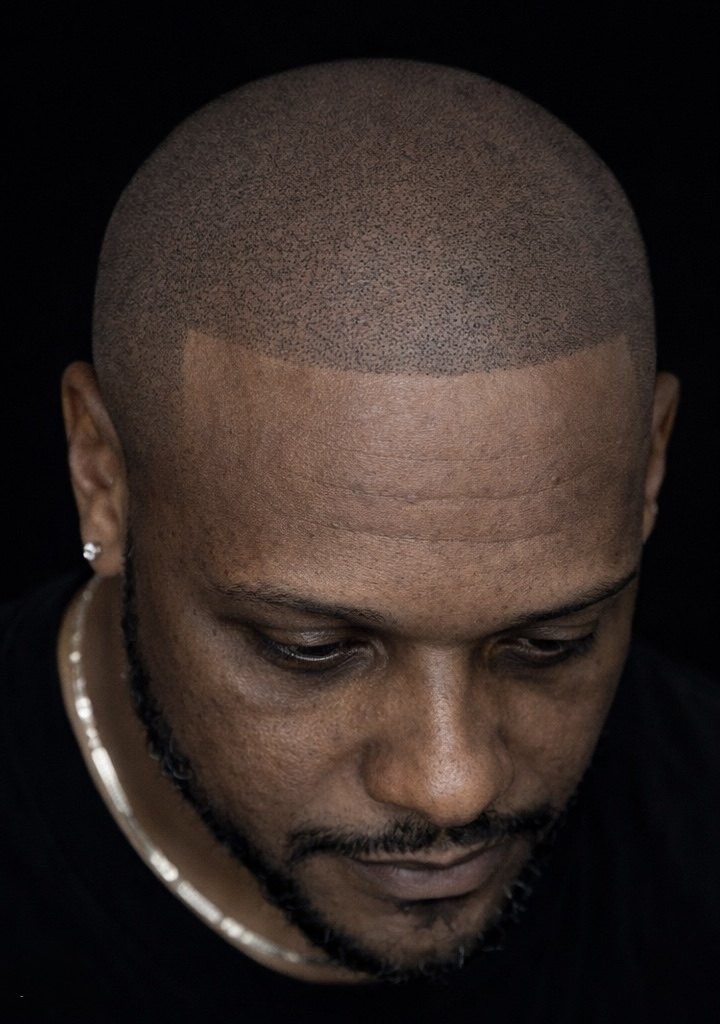
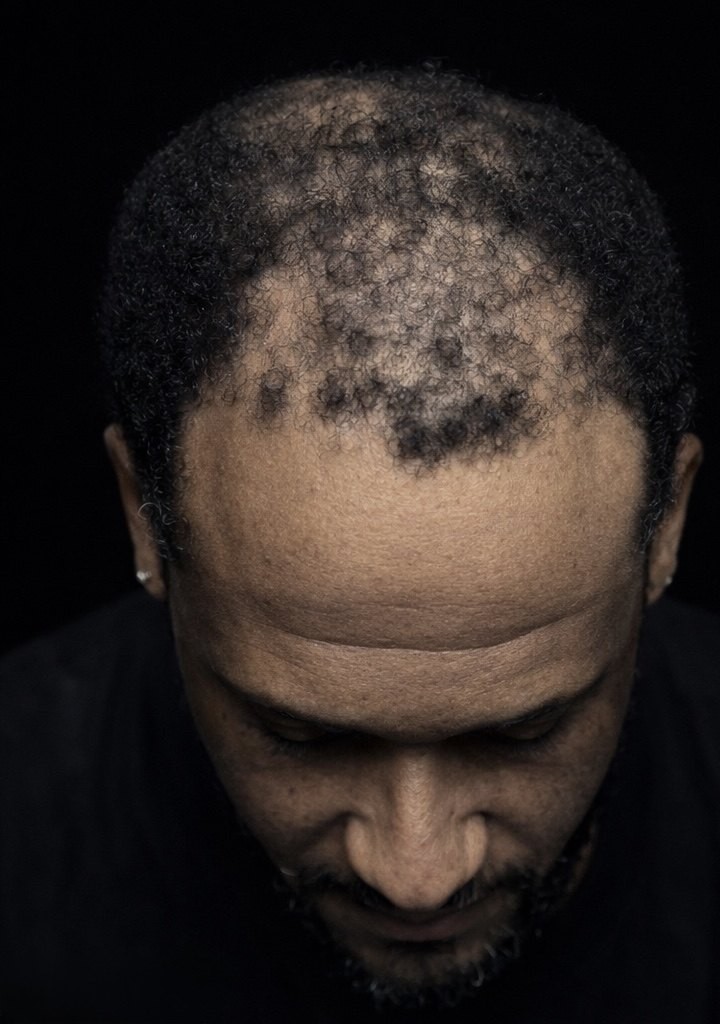
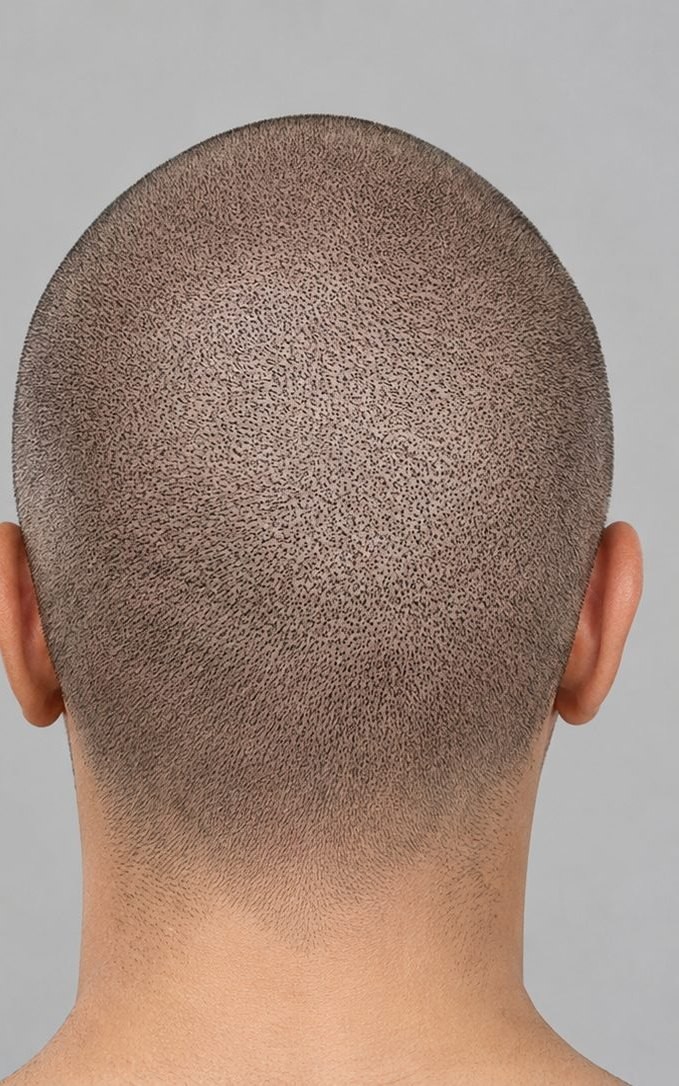
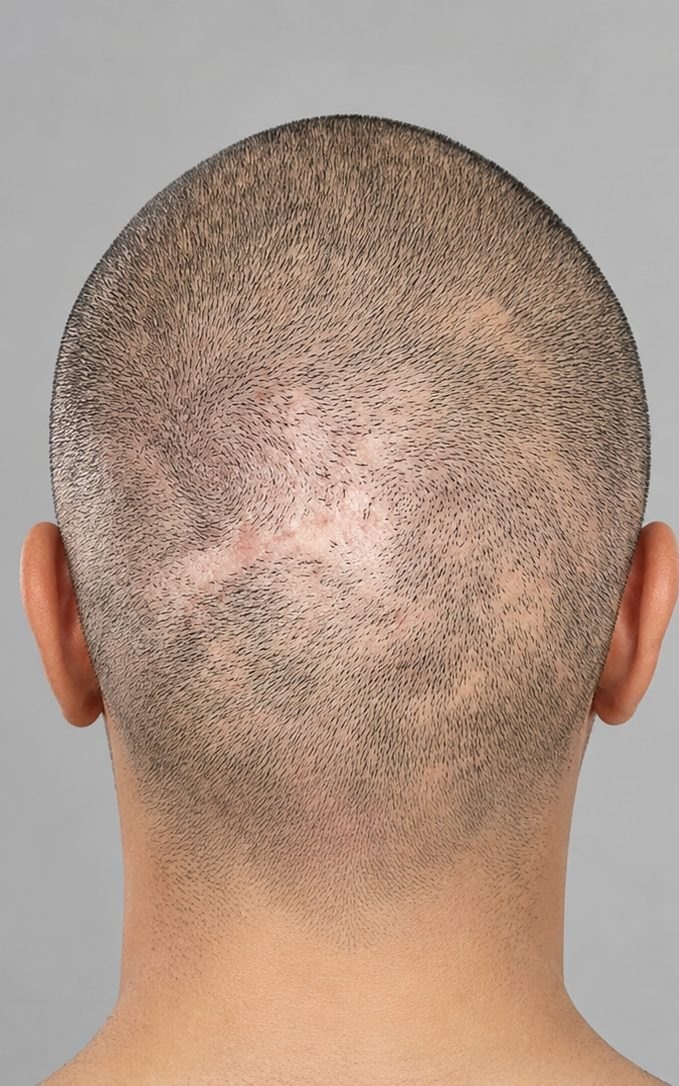
Alopecia areata usually starts as a smooth, round or oval bald patch, according to the American Academy of Dermatology, and more patches can follow (AAD, 2023). The same page notes that hair can regrow in one spot while it starts falling out in another. That moving target is the main limit on any before and after here.
SMP has been used for alopecia areata that has not responded to treatment, and for total scalp loss. The 2015 review shows examples of both, and the 2017 Rassman paper shows a patient with alopecia totalis given a full, normal-looking hairline with SMP. A realistic after on a short-cut scalp shows the patch filled to match the stubble around it.
The risk is what happens next. If hair regrows in a treated patch, or new patches open elsewhere, the scalp no longer matches the work. For long-standing, widespread loss, shaved-look SMP over the whole scalp avoids that mismatch. The 2025 series only took patients whose hair loss had been stable for at least six months.
| Aspect | Realistic expectation |
|---|---|
| Best fit | Stable, long-standing or total loss |
| Healed | Patch matches short stubble around it |
| Main limit | Patches can move or regrow |
| Watch for | Treating an active, changing patch |
Burn and injury scars
I could not find a peer-reviewed study of SMP specifically on burn scars, so I will not describe burn results I cannot source. Injury and surgical scars have more data. The 2015 review lists neurosurgical and head trauma scars among the things SMP can camouflage.
The 2025 series included three people with scarring after trauma, and they show the range. A woman with a scar at the front hairline started at a visual density score of 6.1 and fell to 5.5 at six months, with her satisfaction dropping too. A 76-year-old woman with a scar on the crown scored 9.2 straight after and 8.9 at six months, and stayed very satisfied. A man with a trauma scar scored 6.3.
The 2026 study of 18 people with scarring scalp conditions gives a sober picture of scar tissue. Half kept more than 50% of their pigment at six months. Color change was reported in 72.2% at three and six months, and pigment spread in 55.6%. Expect scar work to need more touch-ups than work on normal scalp.
Ask your surgeon or dermatologist whether the scar is stable before anyone tattoos it, and expect your before and after to show improvement rather than a scar that disappears.
| Aspect | Realistic expectation |
|---|---|
| Evidence | Trauma scars studied; no burn studies found |
| Healed | Improved, rarely invisible |
| Main limit | Fading, spread and color change in scar tissue |
| Watch for | Results shown only fresh |
Questions to ask an artist about their portfolio
A portfolio is a sales tool, so treat it as a claim to check. These questions are the ones I would want any artist to answer easily, and the answers matter as much as the photos. For the wider decision, see how to choose an SMP artist.
Questions to ask about any SMP portfolio
- Is this photo healed, and how long after the last session was it taken?
- How many sessions did this result take, and were there touch-ups?
- Can I see the same client a year or more later?
- Can I see results on my hair loss type, skin tone and hair color?
- Were these photos edited or filtered in any way?
- Can I see a close shot where the individual dots are visible?
- Do you have scar or thinning work, not just shaved heads?
- Did these clients give written consent for their photos to be shown?
The last question matters more than it looks. The Aesthetics Journal guidelines call for written consent before photos are taken and used, and an artist who handles consent properly is usually careful about the rest. Ask about price separately, with our SMP cost guide to hand.