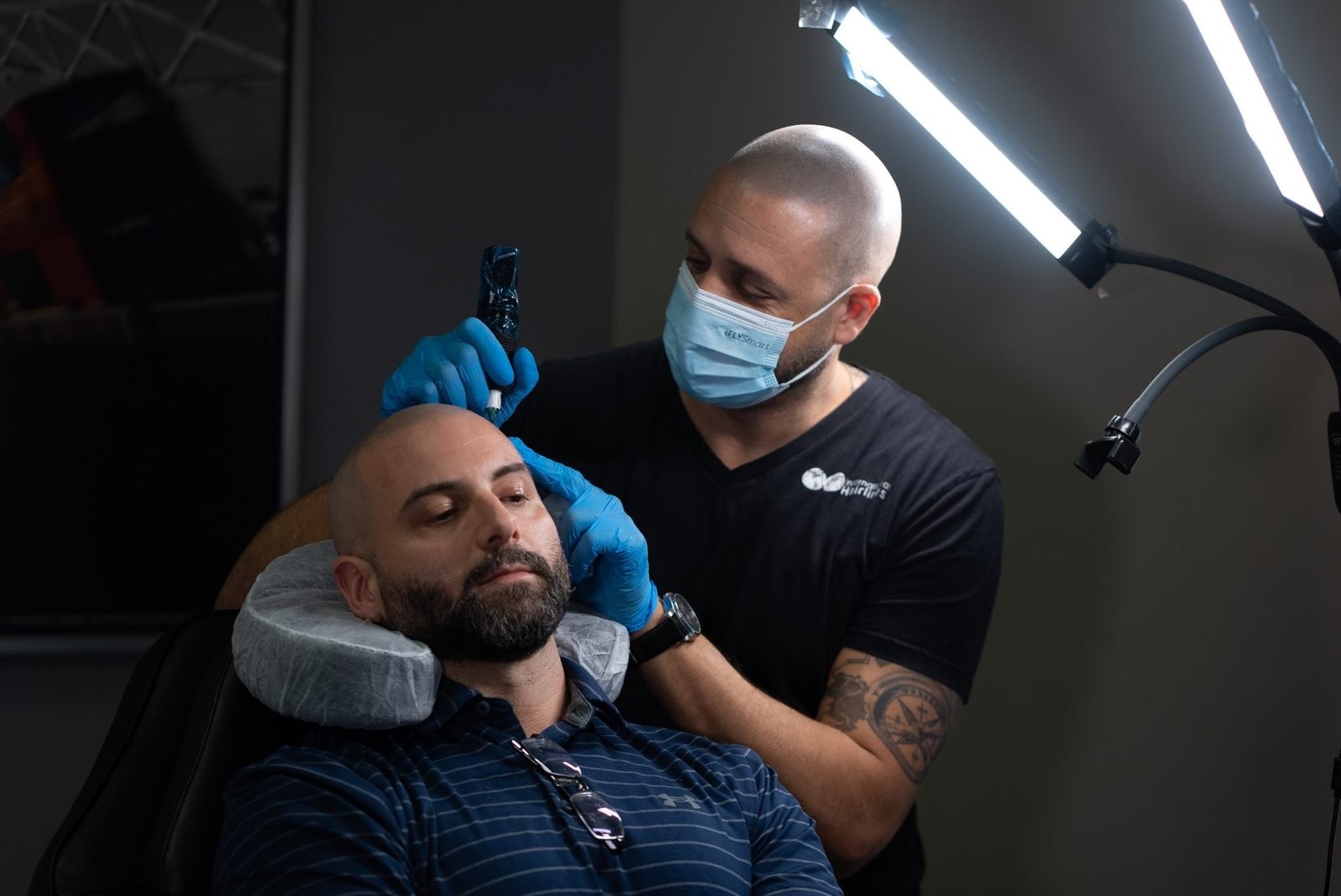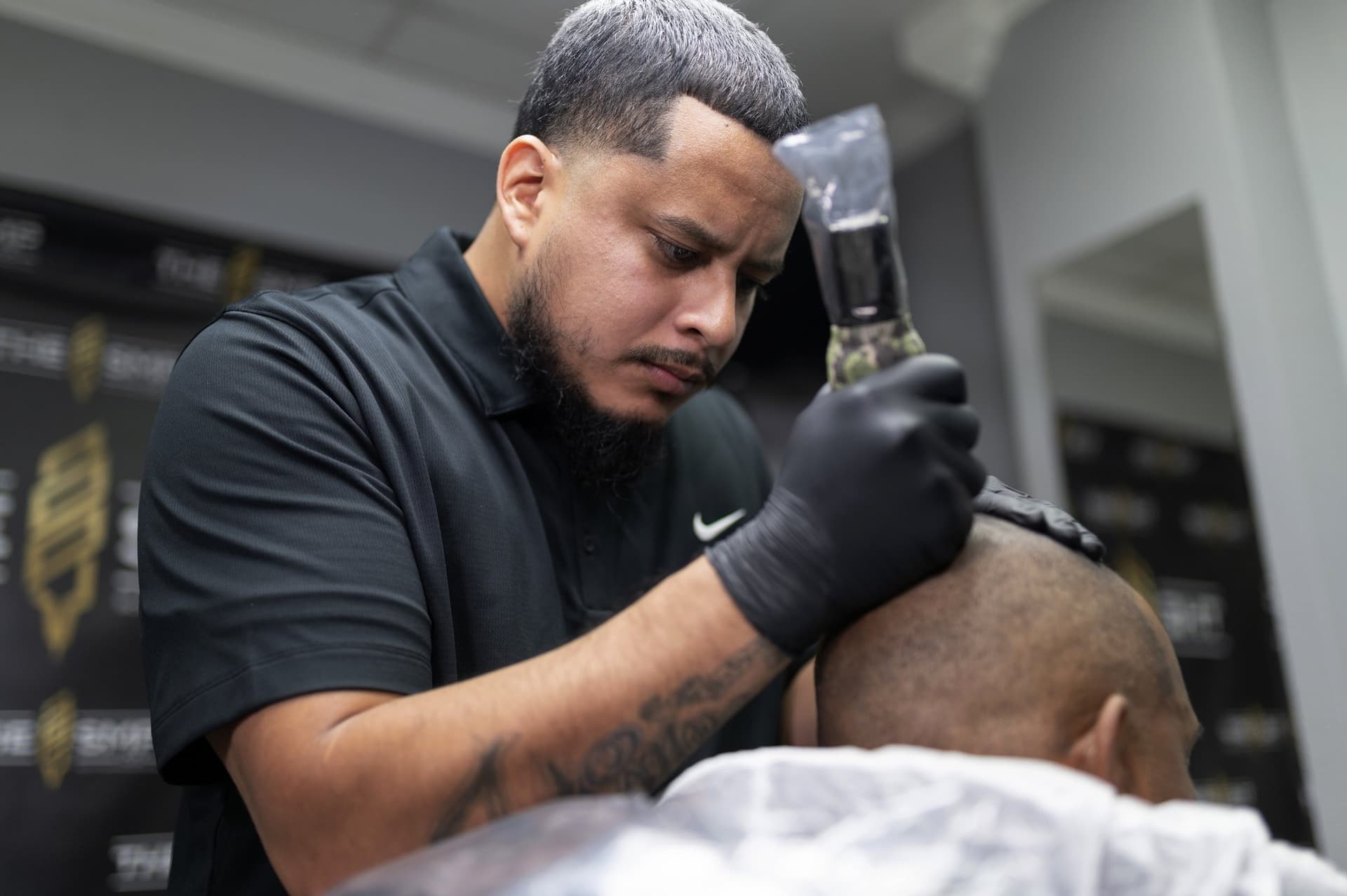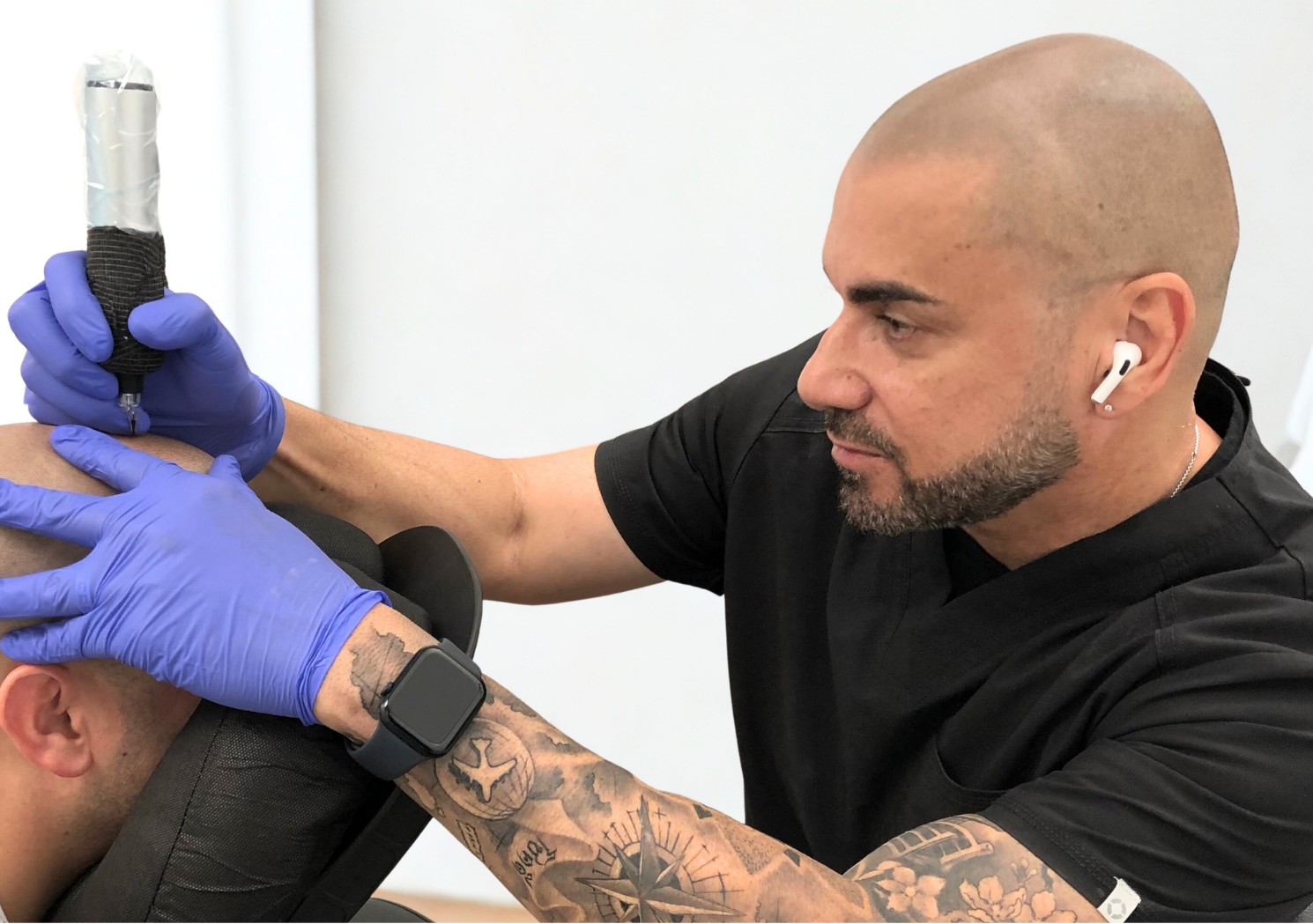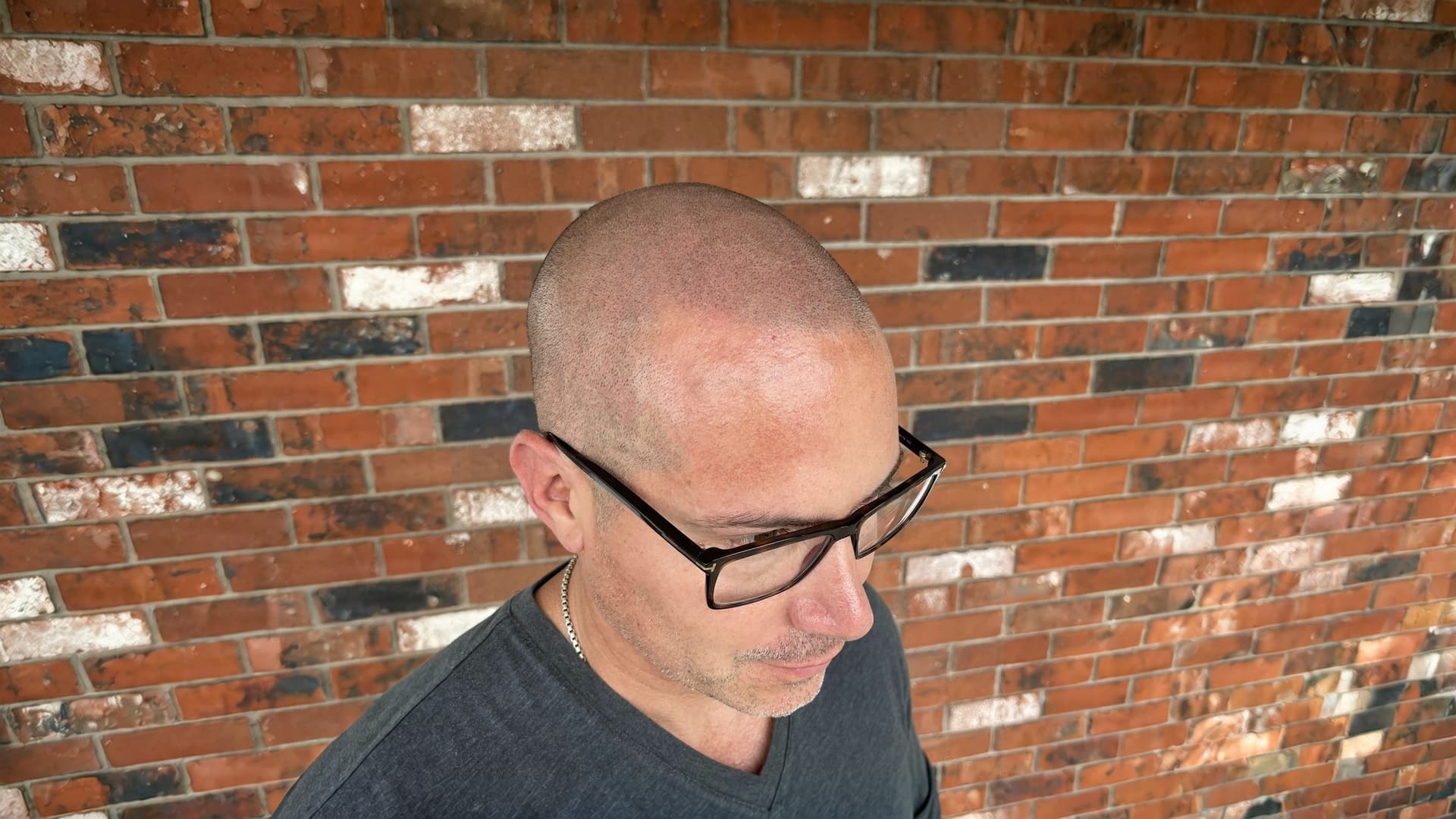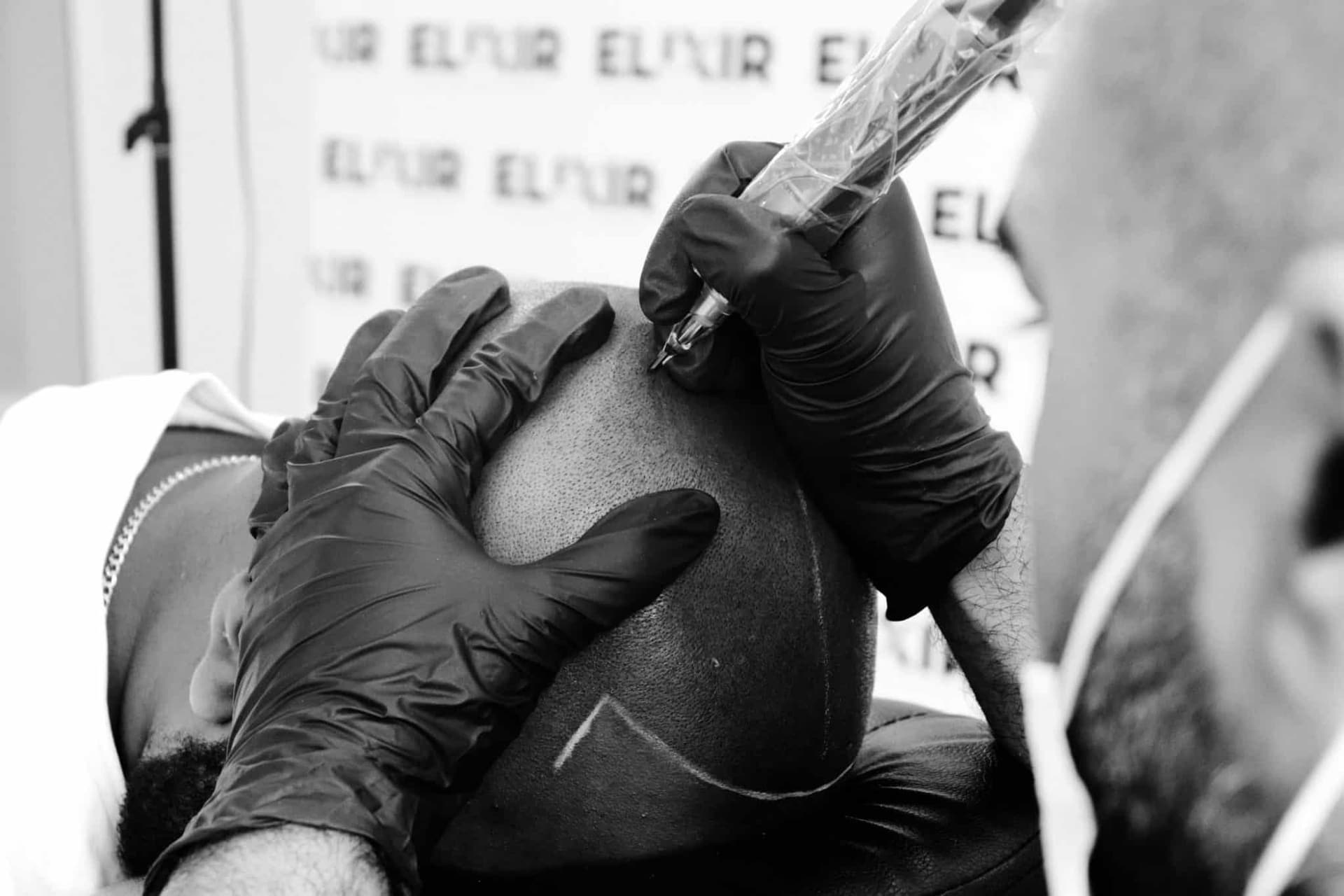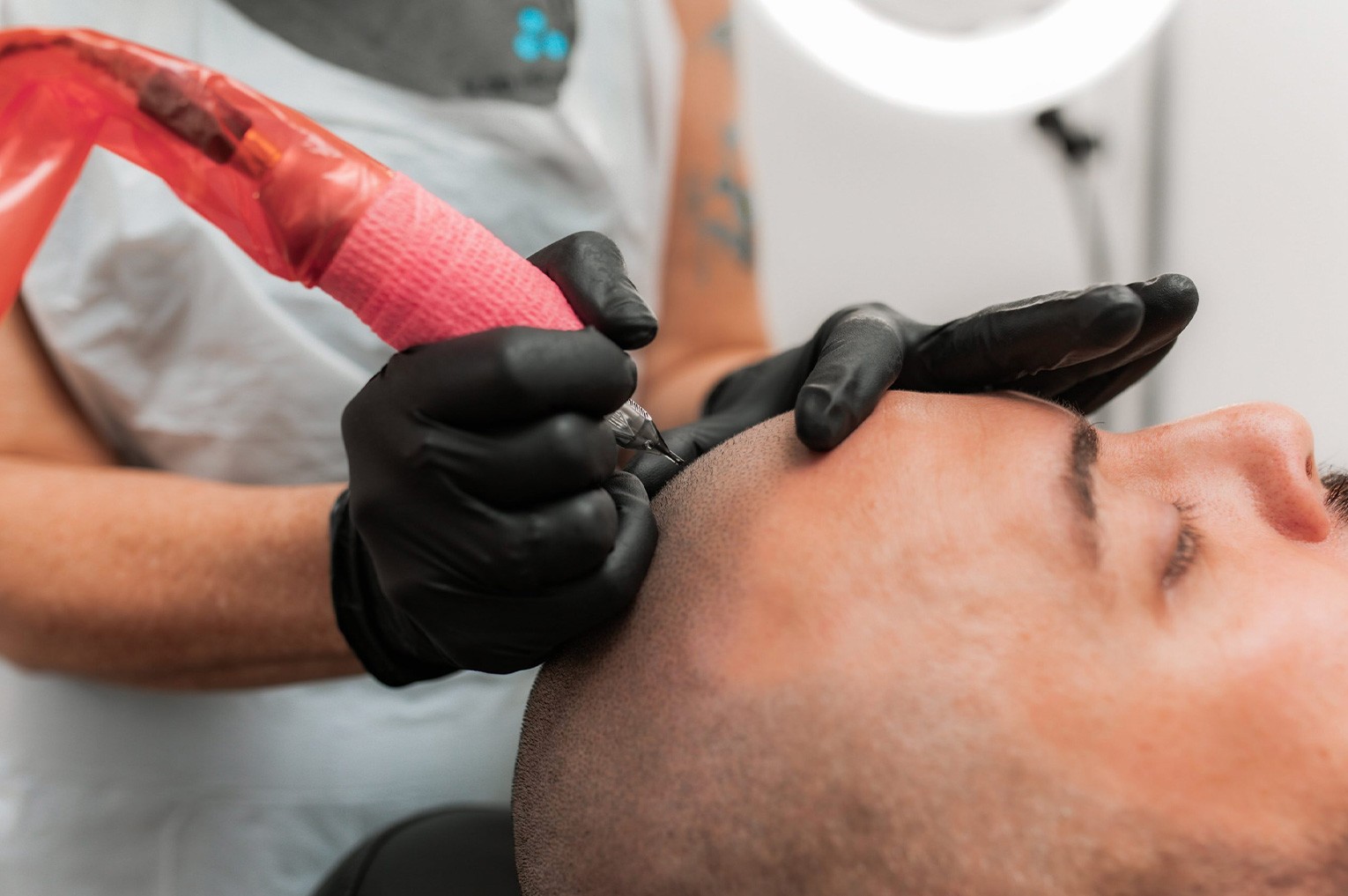
Most people find SMP more tedious than painful, but that is no help if you are the one with sensitive temples or a transplant scar, so I want you to know exactly what you will feel, where, why, and what you can do about it. I have spent 17 years in scalp micropigmentation and permanent makeup, and I would much rather you walk in prepared than walk in hoping.
How much does SMP hurt, really?
Clinics describe SMP as light scratching, tapping or tingling rather than pain. One clinic page, as of 2026, puts it at about 2 to 4 out of 10, depending on individual tolerance. Another describes it as light tapping or gentle scratching against the scalp. These are practitioner descriptions, not measured research, so treat them as a rough guide.
Published research on SMP pain is thin. The clearest data I could find is a small 2026 study in the Journal of Cutaneous and Aesthetic Surgery: 18 patients had SMP over scarring alopecia, and 6 of them (33.3%) still reported pain one week after treatment, falling to 1 patient at two weeks and none at three months. Those patients were treated by doctors with an injected local anesthetic, and scarred scalps behave differently, so the numbers do not transfer neatly to a standard hair loss client.
If you are still deciding whether SMP is right for you at all, start with the complete guide to scalp micropigmentation and come back here once you are weighing up the experience itself.
Why SMP feels the way it does
To understand the sensation, you need two pieces of anatomy: where the needle goes, and which nerves are waiting there.
Where the needle goes
Your skin has three layers, and SMP pigment belongs in the middle one, the dermis. The dermis has two parts: a thin papillary layer sitting right under the surface, and a thicker reticular layer below it. According to Cleveland Clinic, the dermis holds blood vessels, hair follicles and nerve endings, and those nerve endings let you feel pressure, pain, heat, cold and itch. The papillary layer also carries touch receptors.
Dermis thickness varies across the body, from about 0.6 mm over the eyelids to about 4 mm over the back (source: Cleveland Clinic). In the 2026 SMP study, the team placed pigment in the upper dermis using a dot technique at 90 degrees, with single needles at the hairline and small multi-point needle groupings further back. They reported a depth of roughly 1.2 to 1.7 mm.
That placement is why SMP feels like it does. The needle has to pass the surface and reach a layer full of nerve endings. Every dot is a tiny, sharp, pressure-and-scratch signal. Thousands of them in a row produce the buzzing, stinging feeling people describe.
Your scalp's nerve supply
The scalp is not one even sheet of feeling. It is stitched together from several nerve territories. The skin sits on a dense connective tissue layer that, according to the anatomy reference Teach Me Anatomy, is rich in both blood vessels and nerves.
| Scalp area | Main sensory nerves | Where they come from |
|---|---|---|
| Front hairline and forehead | Supratrochlear and supraorbital nerves | Ophthalmic branch of the trigeminal nerve |
| Top of the head toward the crown | Supraorbital nerve branches running back | Ophthalmic branch of the trigeminal nerve |
| Temples | Zygomaticotemporal and auriculotemporal nerves | Maxillary and mandibular branches of the trigeminal nerve |
| Behind the ear | Lesser occipital nerve | Cervical (neck) nerves |
| Back of the head | Greater and third occipital nerves | Cervical (neck) nerves |
The practical point is that the front of your scalp and your temples are wired by the same nerve family that serves your face. The face is a sensitive area, and the front of the scalp often feels like an extension of it. The back of the head is supplied by nerves from the neck, and clinics do not list it among the sensitive areas.
The scalp's blood supply matters too. Teach Me Anatomy notes that scalp vessels are held open by the dense tissue around them and connect with each other in many places, which is why scalp wounds bleed so freely. In SMP terms, anything that thins your blood or increases bleeding makes the work slower and the skin more irritated.
SMP compared with a tattoo
If you already have tattoos, the obvious question is whether SMP is worse. The mechanics are related but not the same, and the difference shows in how it feels.
| Feature | SMP | Body tattoo |
|---|---|---|
| What the needle makes | Single dots, one impression at a time | Lines, shading and filled areas |
| Where pigment sits | Upper dermis | In the dermis (intradermal) |
| Typical sensation described | Scratching, tapping, tingling | Varies widely by body area and design |
| Session length | Up to five hours (Cleveland Clinic) | Depends on size and detail |
My view: a single SMP dot is gentler than a tattoo line, because the needle is not being dragged through the skin and the area is not being packed with color. What makes SMP its own kind of challenge is volume and duration. You are receiving thousands of tiny impressions over several hours, often on a bony, thin-skinned part of the body.
If you are comparing SMP with other ways of tattooing the scalp, the hair tattoo guide covers the terminology and what is actually different between them.
Pain by scalp area and session
This is the table I wish every client saw before booking. It pulls together what clinics commonly report, what the published SMP study found, and how I would explain each area before a first session. Your own experience will vary, but the pattern is consistent enough to plan around.
| Area or session | How it tends to feel | What changes it |
|---|---|---|
| Front hairline | Sharper, more of a sting | Slow single-needle work; face nerve territory; tiredness late in a session |
| Temples | Often the sharpest spot | Thinner skin; face nerve territory; tension in the jaw |
| Crown | Sensitive for some, dull for others | Thin skin in some people; whorl area worked carefully |
| Top of the scalp | Scratchy, steady, tolerable | Long stretches of work; fatigue |
| Sides and back | Usually the easiest | Neck nerve territory rather than face nerves |
| Over scars | Numb, or unexpectedly sharp | Nerve endings damaged in the original injury or surgery |
| Session 1 | Longest; fatigue sets in | Unfamiliar sensation; anxiety; hours of work |
| Session 2 | Familiar, often easier to tolerate | Skin only recently healed; shorter session |
| Session 3 and touch-ups | Short, focused, can still sting | Detail work at hairline; recently treated skin |
Why the hairline and temples feel sharper
Clinic pages commonly name the temples, crown and hairline as the more sensitive areas, and one attributes it to thinner skin there. Anatomy backs part of this: the hairline and temples sit in the trigeminal nerve territory that also serves your forehead and face.
There is also a technique reason. The front hairline is where the artist slows down and works with a single needle, building a soft, irregular edge. Slow, precise work means more time on the most sensitive strip of skin. If you know that going in, the first ten minutes at the front are much easier to sit through.
Why sessions feel different
The first session is usually the longest. Cleveland Clinic says an SMP treatment can take up to five hours, depending on the size of the area, and the first one lays down the base over the whole area. Most of the pain people report from session one is really fatigue: by hour three, your patience and your pain tolerance are both lower than they were at the start.
Later sessions tend to be shorter and more targeted. The skin has healed, but it has only been a short time, and in the 2026 study, pain showed some recurrence during touch-ups. You also know what to expect, which matters more than people think (more on anxiety below).
What makes SMP hurt more
Pain is not only about the needle. Your body's state on the day changes how loud the signal feels. Here is what the evidence supports, and where it does not.
What makes SMP feel worse
- Poor sleep. In a UC Berkeley study published in the Journal of Neuroscience (Krause et al., 2019), 25 healthy young adults felt heat pain sooner after a sleepless night (around 107°F compared with around 111°F), and brain areas that process pain showed sharply higher activity.
- Anxiety. In a study of 140 patients having eye injections, anxiety before the procedure was the only significant predictor of how painful it felt (Wieder, Mbekeani et al., Ophthalmic Surgery, Lasers and Imaging Retina, 2021). Nerves do not just make you feel worse, they change the pain itself.
- Alcohol. Western Australia's health department advises avoiding alcohol for at least 24 hours before and after body art, because it can increase bleeding and delay healing. More bleeding means more irritation and slower work.
- Sunburn. Sunburned skin is red, tender and warm to the touch, and MedlinePlus notes that sunburn pain is worst between 6 and 48 hours after sun exposure. Working on that skin adds an existing injury to a new one.
- Being unwell. The same health department guidance says that being sick slows healing and raises the risk of local infection. Reschedule if you have a cold or fever.
- Hunger and thirst. The guidance also recommends eating something and drinking enough fluid on the day. A long session on an empty stomach is a recipe for feeling faint.
Caffeine and the menstrual cycle
You will see caffeine on many "don't do this before SMP" lists. I could not find good evidence either way on caffeine and SMP pain, so my advice is simple: do not change your usual routine on the day. If you normally have one coffee, have one coffee.
The menstrual cycle is another common claim. A 2015 review in the European Journal of Pain found that the more recent, well-controlled studies show no effect of cycle phase on pain perception in healthy, pain-free women, while noting that researchers still have not reached consensus. If you personally notice you are more sensitive at certain points in your cycle, schedule around that. Your own pattern is more useful to you than a population average.
What helps on the day
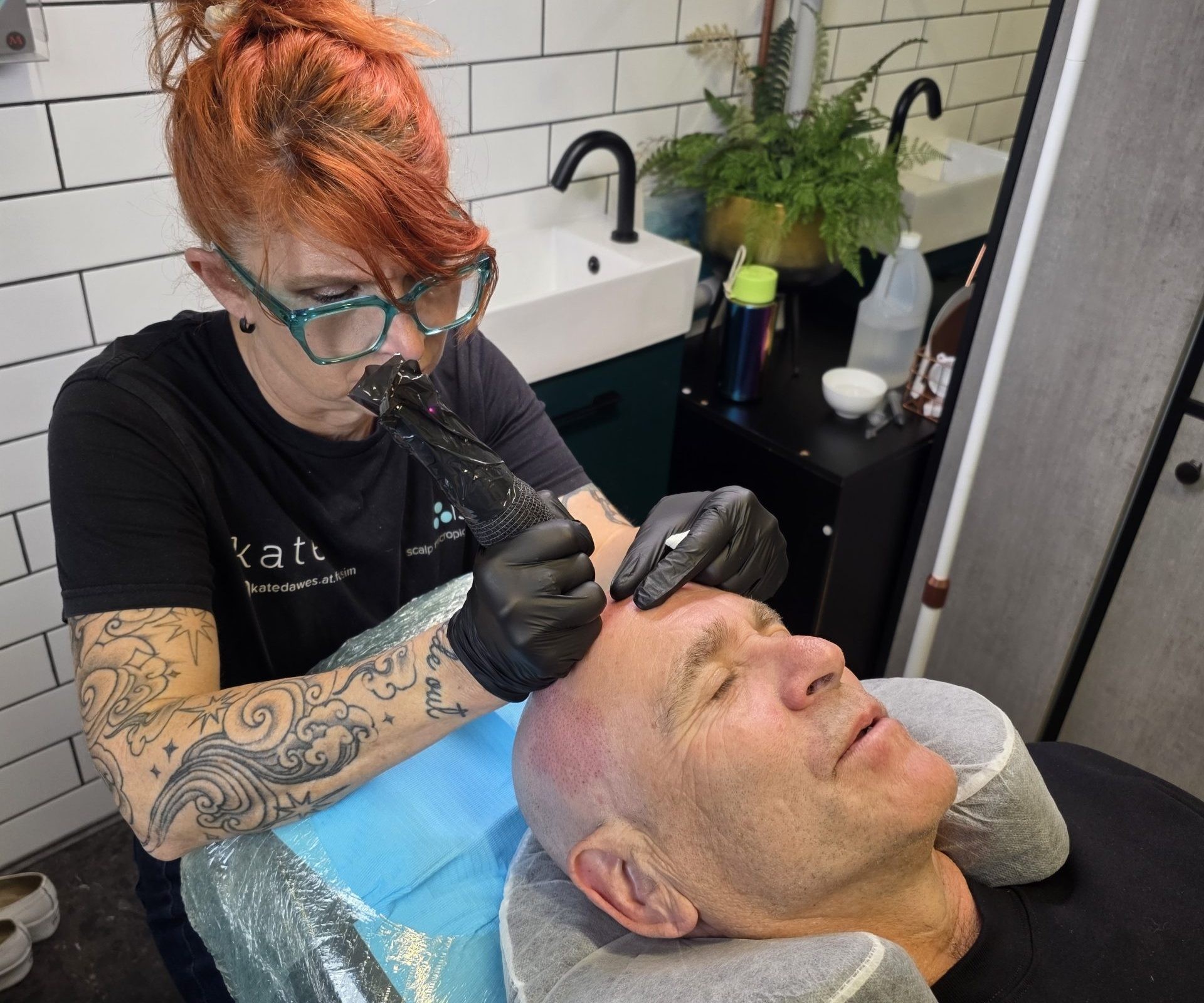
Most of the comfort in an SMP session comes from preparation and pacing, not from products.
What helps on the day
- Arrive rested and fed. Sleep and food are the two easiest pain controls you have, and both are backed by the evidence above.
- Ask for a walkthrough before the first dot. Knowing the order of work (sides, back, top, hairline, or whatever your artist uses) cuts the unknowns that feed anxiety.
- Agree on a break signal. One clinic page notes that breaks are available whenever needed. Settle on a word or a hand signal at the start so you never have to talk yourself into speaking up.
- Breathe slowly through the sharp spots. The NHS scar guidance recommends slow breathing and relaxing music to manage discomfort during desensitization work, and the same tools help in the chair.
- Bring something to listen to. A podcast or playlist gives your brain something other than the needle to process for three hours.
- Unclench. Jaw and shoulder tension makes temple work feel worse. Check your jaw every time the artist moves to a new area.
- Keep your usual medicines unless a doctor says otherwise. Ask your doctor or pharmacist about painkillers before the day, not on the day.
On painkillers specifically: in the 2026 SMP study, patients stopped aspirin at least three days before treatment, because aspirin affects bleeding. Do not stop anything a doctor prescribed for your heart or blood without speaking to that doctor first.
Numbing creams: what is used and what regulators say
Numbing is where the real safety questions sit, because the products are easy to buy and easy to misuse. This section explains what is out there and what regulators have said. It is not medical advice, and the right answer for you depends on your health and your medicines.
What is commonly used
Practices vary. One clinic page states that numbing cream is part of its standard SMP procedure. Another says clients can choose local anesthetics or sedative medication. In the 2026 study, doctors injected 1% lignocaine (the same drug as lidocaine) with adrenaline around the treatment area, a technique called a ring block. Injected anesthetic and sedation are medical procedures and belong in a medical setting with a doctor.
| Option | Who gives it | What to know |
|---|---|---|
| Over-the-counter lidocaine cream, 4% or less | Only if your doctor or pharmacist agrees; never on broken skin | FDA: no heavy use over large areas, no broken skin, no plastic wrap |
| High-strength tattoo numbing cream | Sold online | FDA warning letters cite labels of 20% to 40% lidocaine |
| Injected local anesthetic | A doctor | Used in the 2026 SMP study as a ring block |
| Sedative medication | Prescribed by a doctor | Offered by some medical practices |
| No numbing | Not applicable | Relies on pacing, breaks and preparation |
What the FDA says
In March 2024, the FDA warned consumers to avoid certain over-the-counter pain relief products marketed for use before cosmetic procedures, including tattooing, and sent warning letters to six companies. Its advice: do not use over-the-counter products with more than 4% lidocaine, do not apply them heavily over large areas or to irritated or broken skin, and do not cover treated skin with plastic wrap or other dressings.
The risks the FDA lists are serious: irregular heartbeat, seizures and breathing difficulties when high-concentration lidocaine is absorbed through the skin. The products may also interact with other medicines and supplements.
In February 2025, the FDA sent a warning letter about a range of tattoo numbing creams labeled at 20% to 40% lidocaine, well above the 0.5% to 4% range allowed for over-the-counter external pain relievers. The letter points out that such products are often used without trained health supervision, so large amounts may be applied, and that use around cosmetic procedures increases how much of the drug reaches the bloodstream.
My advice on numbing
Ask your artist what they use, at what strength, and when it goes on. If they plan to use a numbing product, tell them and your doctor about every medicine and supplement you take. If you have a heart condition, a seizure disorder or any history of reacting to local anesthetics, speak to your doctor before agreeing to any numbing at all.
Pain over scars
Scars are their own category, and they are a big reason people come to SMP. The SMP for scars guide covers whether and how scar camouflage works. Here I will stick to how it feels.
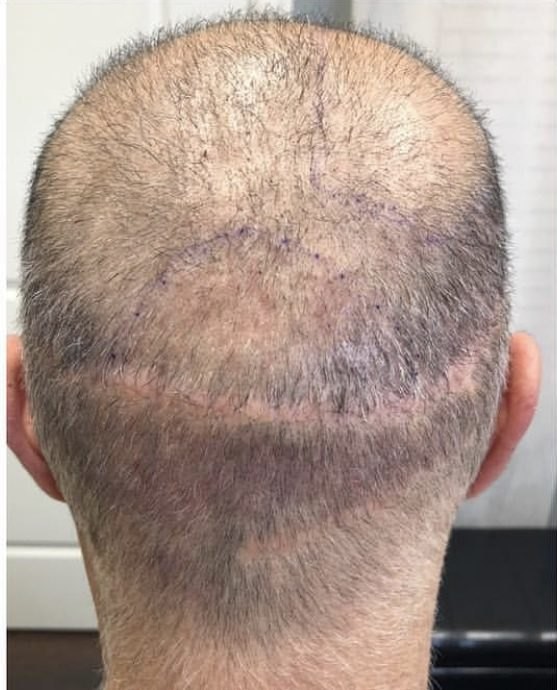
Scar tissue can feel very different from the skin around it. Great Ormond Street Hospital explains that hypersensitivity in a scar is caused by damage to the nerve endings during the original injury or surgery, and that those endings can become overactive and keep sending pain signals after healing. People describe it as tingling, shooting or burning pain, or pins and needles. Other scars go the other way and feel partly numb.
What that means in the chair:
- A numb scar can feel like almost nothing, while the healthy skin around its edge feels normal or sharper by contrast.
- A hypersensitive scar can feel out of proportion to the work being done on it. That is a nerve response, not a sign that something has gone wrong.
- Scar tissue does not always take pigment like normal skin, so the artist may work it more slowly or over more sessions.
If you know a scar is touchy, tell your artist before they start. If a scar is painful in everyday life, that is worth raising with a doctor before SMP. The same hospital guidance describes desensitization exercises (gently rubbing the scar with different textures for a few minutes several times a day), and a doctor or therapist can tell you whether that is right for you.
SMP for women: does it feel different?
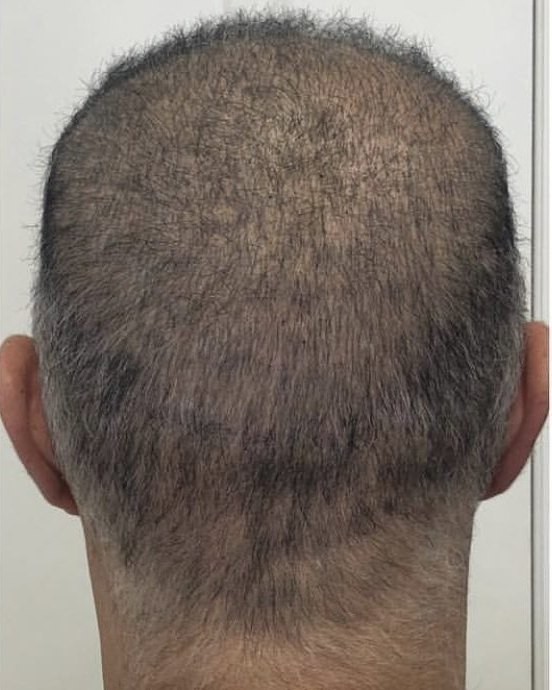
When SMP is used for diffuse thinning rather than a receding hairline, the work is different. Instead of creating a full shaved look, the artist adds density between existing hairs, usually across the top and part line. The SMP for women guide explains the approach and who it suits.
The sensation per dot is the same. What changes is the process. Longer hair has to be parted and held out of the way, and the artist works in rows. That can stretch a session, and it means your head is held at angles for longer. The top of the scalp is not usually one of the sharper areas, but fatigue and neck strain can make the last hour tougher than the first.
My practical advice for women: wear a top you can sit in comfortably for hours, bring a hair tie for between sections, and ask about the order of work so you know how long each section will take.
How long a session lasts
Cleveland Clinic says an SMP treatment may take up to five hours, depending on the size of the area, and that most people need three or more sessions, spaced several weeks apart. The first session is usually the longest.
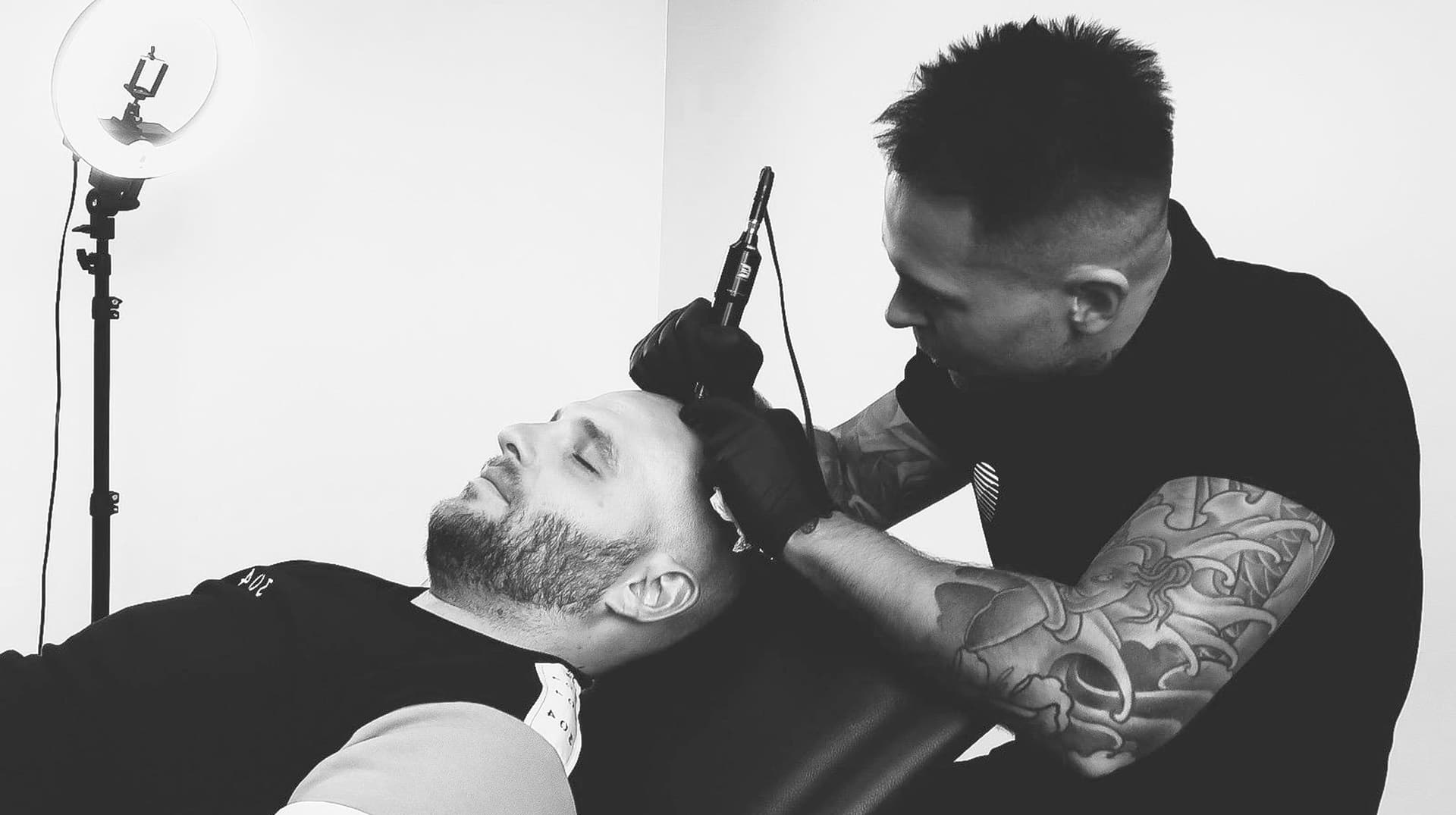
Duration matters for pain because tolerance drops over time. An hour into a session, most people are settled. Three hours in, the same sensation feels bigger. That is why breaks are not a sign of weakness, they are part of managing a long procedure. If you know you struggle with long appointments, ask whether your work can be split into shorter sessions. The touch-ups guide covers how later sessions fit into the plan.
How your scalp feels afterward
Most of the discomfort ends when the needle stops. What is left is a mild, sunburn-like tenderness and some redness. Here is a realistic timeline from the sources I could find.
| Time after | What is common | Source |
|---|---|---|
| First few hours | Redness and mild irritation, often fading within hours | Clinic description (Vinci Hair Clinic), 2025 |
| 24 to 48 hours | Tenderness like mild sunburn, a tight feeling | Clinic description (Skalp), 2026 |
| 1 week | In the scar study, 6 of 18 still had pain and 12 of 18 had swelling | JCAS 2026 |
| 7 to 10 days | Treated areas usually healed | Clinic description (Jae Pak MD Medical), 2023 |
| 2 weeks | In the scar study, pain in 1 of 18; no bruising | JCAS 2026 |
Remember that the 2026 study involved scarred scalps and injected anesthetic with adrenaline, which may explain the higher rates of swelling and bruising than clinics describe for routine work. Itching, flaking and some scabbing are also normal during tattoo healing in the first two weeks, according to UPMC.
Good aftercare keeps that tenderness short. The SMP aftercare guide covers washing, sweating, sun and sleeping in the days after each session.
When pain is not normal
Normal SMP discomfort peaks during the session and fades over the following days. Pain that builds instead of fading is the signal to stop and get checked. Infection is a real risk: Cleveland Clinic states that any tattoo carries a risk of infection, and the FDA notes that contaminated inks can cause infections even when the artist follows hygienic procedures.
Signs to see a doctor
- Redness that spreads beyond the treated area, or gets worse after the first week instead of better.
- Pain or tenderness that increases after the first few days.
- Pus, thick yellow or green discharge, or bumps that contain pus.
- Swelling that grows rather than settles.
- Fever, chills or sweats.
- Itching, bumps, scaling or raised areas weeks, months or even years later, which can point to an allergic reaction.
The American Academy of Dermatology advises seeing a doctor right away for signs of infection, and seeing a board-certified dermatologist, rather than the artist, for later problems like itching, bumps or a raised area. It also suggests telling your artist, because artists need to know when complications happen. UPMC adds that allergic reactions can appear immediately, within the first few months, or years later.
You can also report a reaction to a tattoo pigment to the FDA, which treats tattoo inks as cosmetics. In the case of numbing products, the FDA asks consumers to report side effects to its MedWatch program.
Questions to ask your artist about comfort
A good artist will be glad you asked. The way they answer tells you a lot about how they run a session, and it belongs alongside the checks in the guide to choosing an SMP artist.
Questions to ask before you book
- How long will my first session be, and how many sessions do you expect?
- In what order will you work the scalp, and when do you do the hairline?
- Do you use any numbing product? Which one, at what strength, and who applies it?
- What should I avoid in the 24 hours before, and should I stop any medicines? (Then check the medicine question with your own doctor.)
- How do I ask for a break, and how often do clients usually take one?
- I have a scar or a sensitive area. How will you approach it?
- What is normal after a session, and who do I contact if something looks wrong?
If an artist brushes off comfort questions, promises it will be completely painless, or offers to put strong cream on your whole head without asking about your health, take that as information. Comfort and safety are part of the job, not extras.