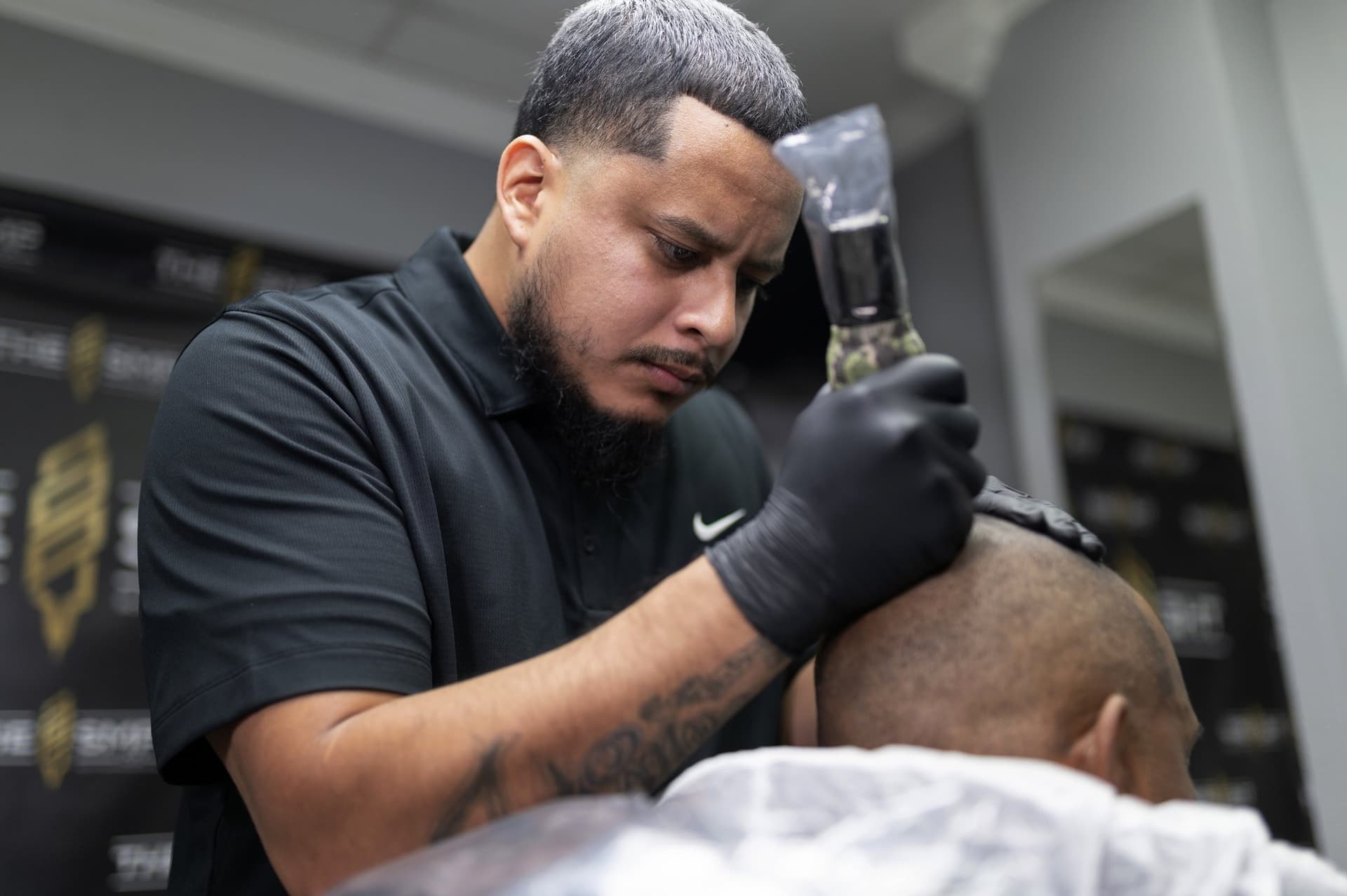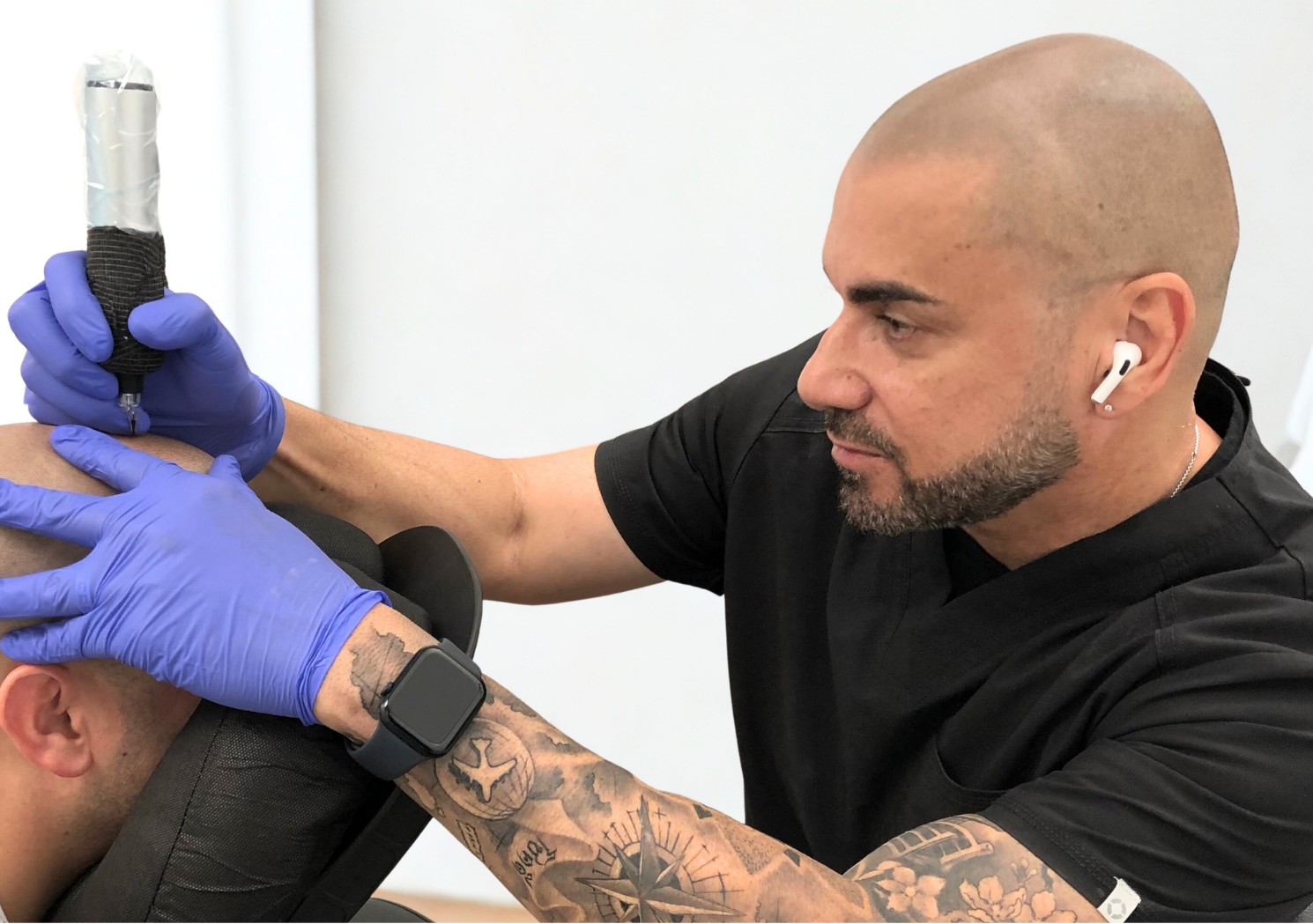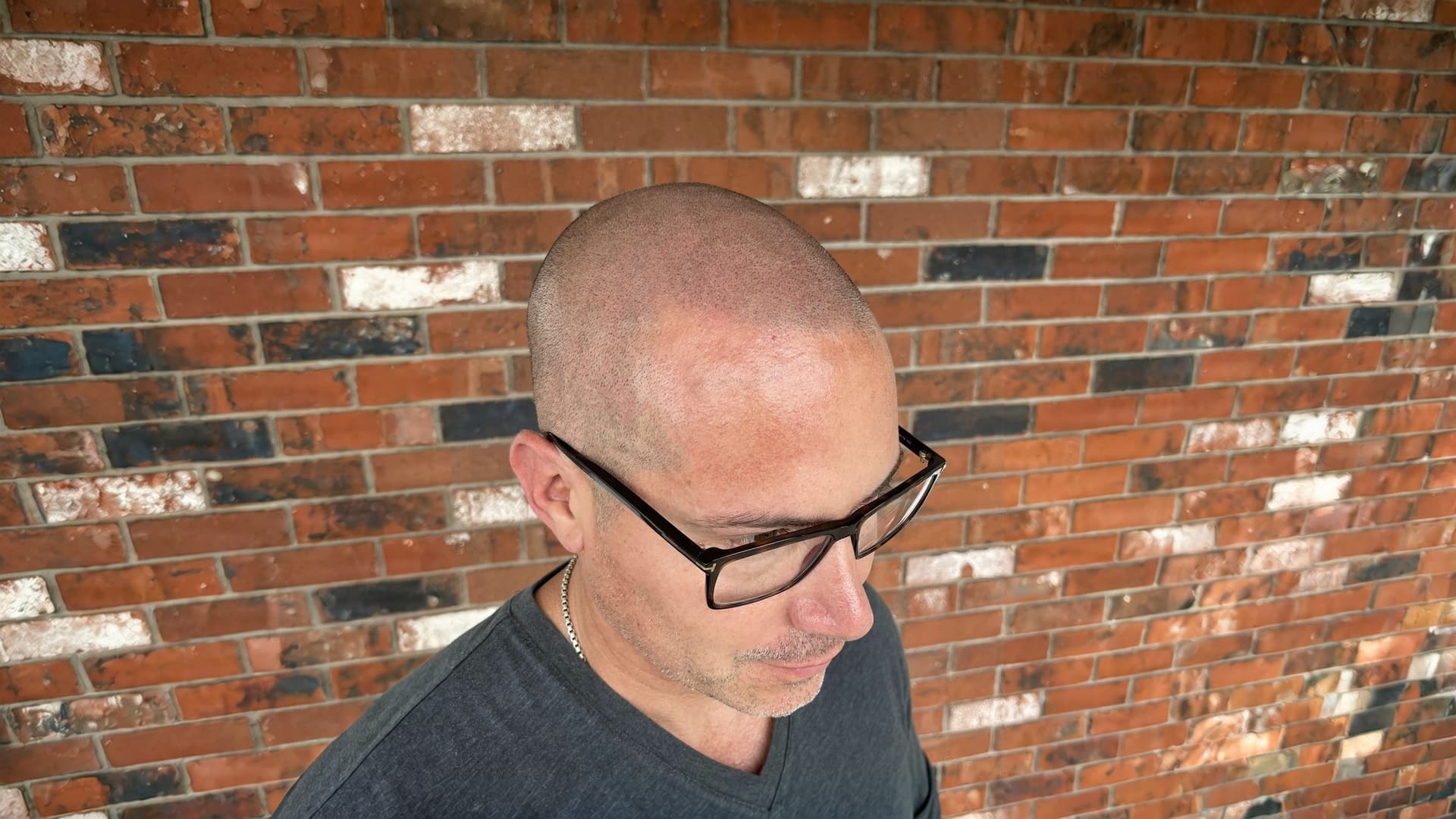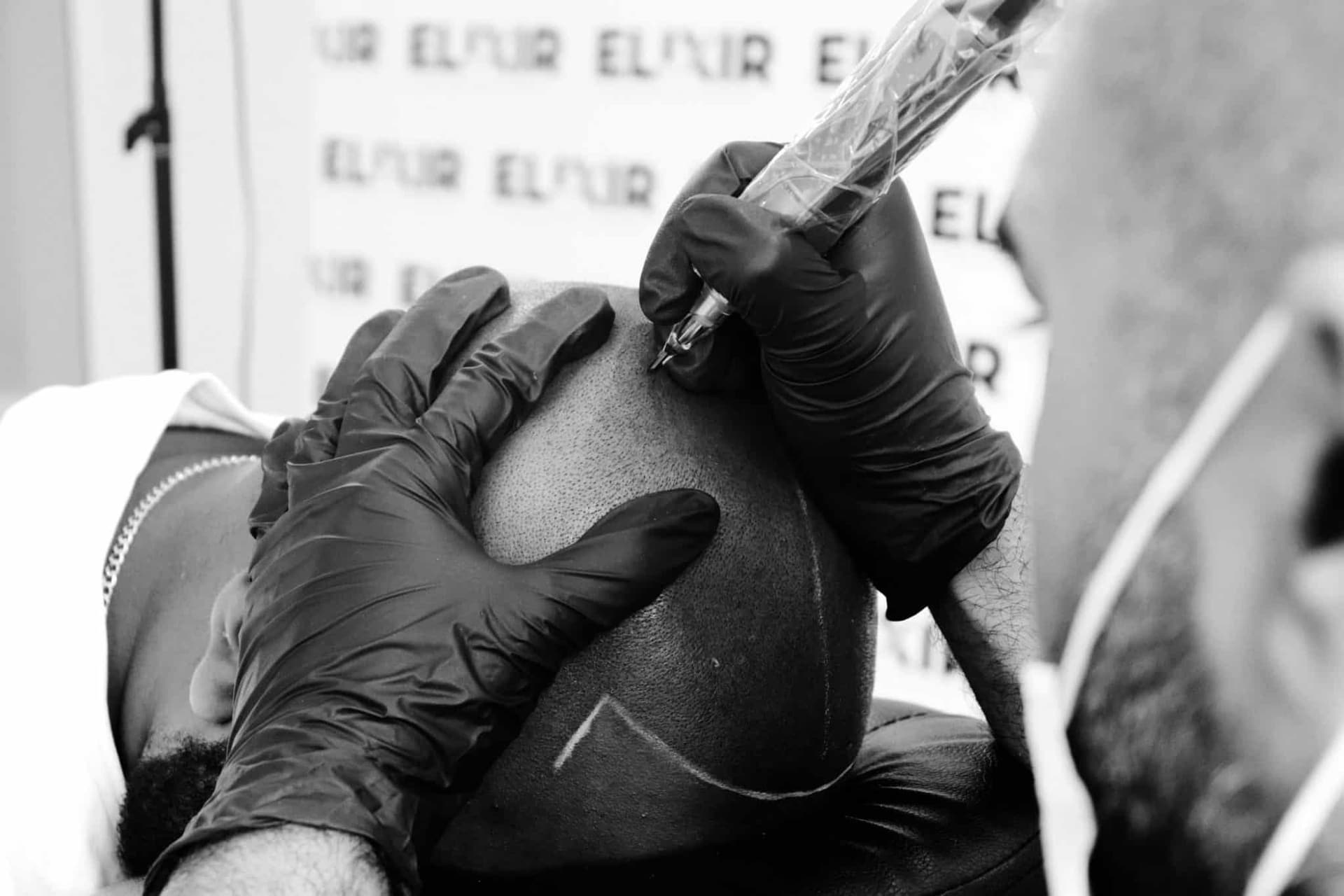
Tricopigmentation and scalp micropigmentation (SMP) look almost identical the day you walk out of the chair: thousands of tiny dots that read as a fresh buzz cut or extra density. The real difference shows up over the next five years, and that is where most of the confusion, and most of the marketing, lives. I have spent 17 years in scalp micropigmentation and permanent makeup. This guide sets out what each treatment is, where the published sources agree and disagree, what each one costs over time, and how to work out which one you are actually being sold.
Where the name tricopigmentation comes from
"Tricho" is the Greek root for hair, so tricopigmentation, or trichopigmentation, simply means hair pigmentation. One Italian company describes its tricopigmentation method as a patented system and says the Italian Society of Trichology officially recognized it in November 2013 (source: the company's own site, listed in our sources). A hair loss blog wrote in 2016 that the Italian practitioner behind that company had become synonymous with the term, while saying it was not sure she invented temporary scalp tattooing.
Italian hair specialists were discussing scalp pigmentation openly by then. The Italian Society for Hair Science and Restoration's 20th anniversary program in 2016 included a session by Milena Lardi on scalp dermopigmentation, described there as a method "by now affirmed" and still evolving with new pigments.
Same word, three different meanings
Here is the problem for anyone comparing the two: the word does not mean the same thing to everyone. The International Society of Hair Restoration Surgery (ISHRS), the main professional body for hair surgeons, opens its SMP page by saying SMP is also known as TrichoPigmentation. To them, they are one treatment.
Many clinics use the word the other way, for a version with pigment designed to fade. And at least one European provider sells both a semi-permanent and a permanent treatment, each under the trichopigmentation name.
| Who uses it | What they mean | What it tells you |
|---|---|---|
| ISHRS (hair surgeons) | Another name for SMP | No difference at all |
| Many clinics | A fading, refresh-every-year version | A different pigment and plan |
| Some providers | A brand name with semi-permanent and permanent options | You must ask which one |
So the label alone tells you very little. The rest of this guide uses "SMP" for treatment intended to be permanent and "tricopigmentation" for treatment sold as fading, because that is how most people searching the term mean it. If you are new to all of this, the complete guide to scalp micropigmentation covers the basics first.
How SMP works
SMP places a tiny droplet of pigment through the surface of the skin into the upper dermis, the layer just under the outer skin. The doctors who published one of the first medical papers on SMP explained why depth matters so much: if the pigment sits only in the epidermis, the process fails because the pigment leaks out, and if it goes too deep, it diffuses and spreads (Rassman et al., Journal of Clinical and Aesthetic Dermatology, 2015).
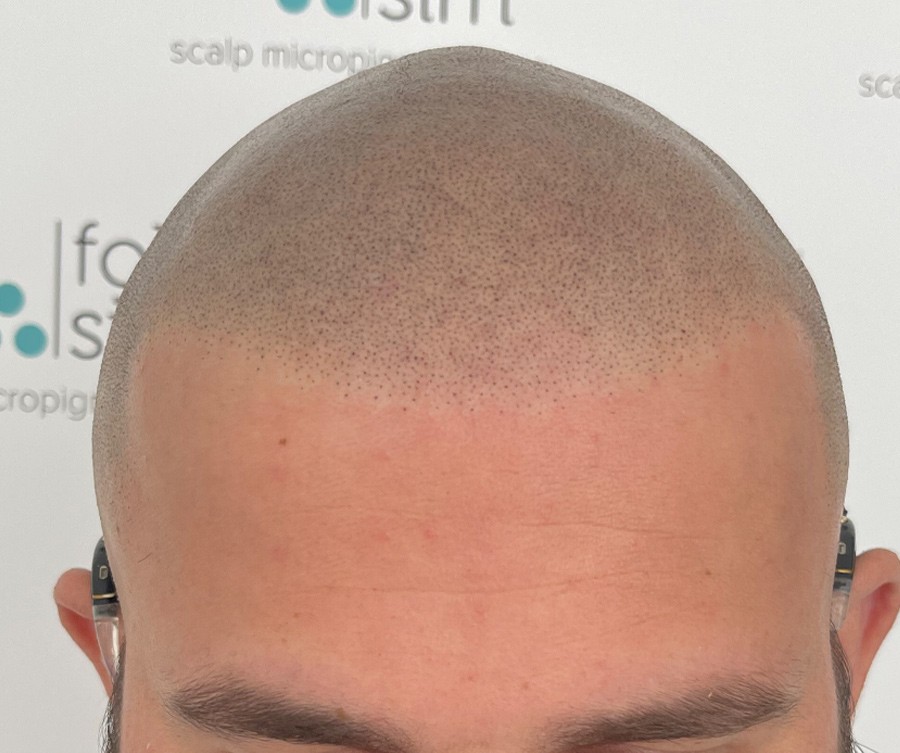
The ISHRS says the preferred SMP pigment is carbon-only, a grayscale pigment rather than a blend of colors, and that needle penetration is shallow, usually about 0.5 mm, to keep pigment in the epidermis, which differs from the 2015 paper's description. It says well-placed SMP lasts 5 to 10 years, with some people choosing a yearly touch-up to keep the three-dimensional look (ISHRS).
What "permanent" really promises
Cleveland Clinic says SMP usually keeps its appearance for four years or longer, and that most people need three or more treatments spaced several weeks apart, each taking up to five hours depending on the area (Cleveland Clinic, 2022).
Permanent does not mean frozen. The 2015 paper warns that there may be a blue or green tint to some pigments, that pigment bleeding is common, and that touch-ups are an important part of follow-up care. That blue or green look comes from the wrong product, such as tattoo ink, or from pigment placed too deep, where the skin scatters light (the Tyndall effect); a proper carbon SMP pigment does not change color. The ISHRS puts it bluntly: "permanent" pigments can fade. Permanent means the pigment stays; it does not mean the dots stay as sharp as the day they healed. Our guide to how long SMP lasts goes deeper on that.
How tricopigmentation works
Tricopigmentation uses the same basic method, a fine needle placing dots of pigment that mimic hair follicles, but with pigment its makers say the body gradually clears. The Italian company most linked to the name describes its pigments as organic, biocompatible and bio-absorbable. One provider's price list says that because "natural pigments reabsorb over time," all its treatments need a maintenance session, typically once a year (source: a European provider's price page, listed in our sources).
Clinics put the fade at different speeds. A London clinic says the pigment is designed to fade within 12 to 18 months and needs refreshing every year. A UK grooming blog says results tend to last around one year to 18 months. The 2016 hair loss blog quoted a US hair restoration practice saying the pigment is designed to fade completely over 6 to 24 months, and itself said the marks can last anywhere from 6 months to 2 or 3 years.
| Source type | Claimed fade or lifespan | Evidence behind it |
|---|---|---|
| London clinic | Fades within 12 to 18 months | Clinic experience |
| UK grooming blog | About 12 to 18 months | Not stated |
| US practice, quoted on a blog | Fades fully in 6 to 24 months | Not stated |
| Hair loss blog | 6 months to 2 or 3 years | Not stated |
| European provider | Maintenance about yearly | Says natural pigments reabsorb |
Where the sources disagree
On depth, the sources do not line up. The ISHRS and a London clinic both say SMP pigment sits in the epidermis, while the 2015 SMP paper says pigment placed only in the epidermis leaks out and the treatment fails. Both cannot be the whole story, and I have not found a published measurement of how deep tricopigmentation pigment actually sits. If an artist tells you their fading treatment works because it is "shallower," ask them how deep, and how they control it.
On fading, the strongest professional source is skeptical. The ISHRS writes that "permanent" pigments can fade, and "temporary" pigments never leave. Lab research helps explain why pigment in the dermis is stubborn: in a 2018 mouse study, immune cells called macrophages held tattoo pigment, released it when they died, and neighboring macrophages picked it straight back up (Inserm, 2018; commentary in the Journal of Experimental Medicine). That study used tattoo ink in mice, not tricopigmentation pigment in people, so it does not settle the question, but it is a good reason not to assume dermal pigment simply vanishes.
On evidence, there is very little either way. One hospital group's guide notes that no major medical guideline body publishes verified longevity data even for SMP, and that the year ranges online come from practitioner experience (source: a hospital group's 2026 patient guide, listed in our sources). In researching this guide I could not find a peer-reviewed study measuring how fast tricopigmentation fades.
SMP vs tricopigmentation side by side
This is the table I would want in front of me before booking either treatment. Each cell sums up what the sources above say, and where they conflict, I have said so.
| Factor | SMP | Tricopigmentation |
|---|---|---|
| Permanence | Meant to stay; ISHRS says 5 to 10 years before it looks tired | Sold as fading in about 6 to 24 months; not independently proven |
| Depth | Upper dermis per the 2015 paper; ISHRS says about 0.5 mm, in the epidermis | No published measurement; claims conflict |
| Pigment | Carbon-only grayscale preferred | Described by makers as natural or absorbable |
| Maintenance | Touch-up every few years | Refresh about every year |
| Cost over 5 years | US full treatment $2,000 to $5,000 (ThePricer, 2026), plus maybe one touch-up | Lower start, then a refresh about yearly; total can end up higher |
| Who it suits | People sure they want a lasting look | People wanting a trial and happy with yearly visits |
| Reversibility | Laser removal, often several sessions | Sold as self-fading; ISHRS doubts it fully leaves |
| Risks | Allergy, infection, blurring, blue or green tint | The same tattoo risks, plus uneven fading |
How to read the table
The two rows that matter most for most people are maintenance and cost over five years. Tricopigmentation trades a lower first bill for a standing appointment every year. If you are the kind of person who already misses haircut appointments, be honest with yourself about that.
The reversibility row is where marketing does the most work. "Fades on its own" sounds like a safety net, but the professional body for hair surgeons says temporary pigments may never leave, and nobody has published proof of a clean fade. SMP, by contrast, is openly permanent, with a known, if slow, removal route.
The risk row is closer than many sales pages suggest. The FDA treats permanent makeup as a type of tattoo, says no pigments are approved for injection into the skin, and lists allergic reactions, infections and removal problems among the risks (FDA, 2024). A pigment that is labeled natural or absorbable still goes through the skin with a needle.
What semi-permanent really means in practice
Semi-permanent is a promise about the future, so think about what that future looks like day to day. The pigment is meant to soften over months. That means the look you leave with is the best it will be until your next refresh, and it drifts lighter in between.
Fading is rarely even. The same hospital group guide calls sun exposure the single largest controllable driver of SMP fading, and the ISHRS says UV light fades scalp pigment more quickly. In practice that can mean the parts of your scalp that see the most sun lighten first, and the pattern stops looking like one even shadow.
If you stop refreshing
This is the question I would want answered in writing. If tricopigmentation fades completely, as sold, stopping means going back to your natural scalp. If it does not, as the ISHRS warns can happen with any pigment, stopping may leave a faint, partial pattern that is neither hair nor bare skin. Nobody can promise you which way it will go, because the long-term studies do not exist.
Color also matters. The 2015 SMP paper warns that some pigments can take on a blue or green tint; that comes from the wrong product, such as tattoo ink, or from pigment placed too deep, not from a carbon SMP pigment changing color. A faded dot with a color shift is harder to hide than a crisp gray one.
What to ask about fading before you book
- How long, in months, do you expect my dots to stay visible without a refresh?
- Have you seen clients who stopped refreshing, and what did their scalp look like a year later?
- What is the pigment, and can I see the bottle and label?
- Does fading change the color, or only the strength?
- What should I do about sun exposure on the top of my head?
Who each treatment suits
Neither treatment is better in general. Each one fits a particular kind of person and a particular kind of hair loss, and the wrong match costs you either money or a result you do not want.
Women and diffuse thinning
Women usually want to look like they have more hair under longer hair, not a shaved head. Cleveland Clinic lists hair loss in women among the problems SMP can help with, and the 2015 paper describes treating women who are thinning and not responding to minoxidil or other medical treatment. The ISHRS says SMP works where there is still hair everywhere, just at lower density.
Tricopigmentation appeals to some women because it lets them try density work without a lifetime commitment. The trade-off is the yearly refresh. Thinning in women has many possible causes, so see a doctor before any pigment goes in. Our guide to SMP for women covers this in detail.
People who are unsure about committing
This is the strongest case for tricopigmentation. The London clinic says shorter-lasting treatment appeals to people who are hesitant, cautious or not yet decided. The same clinic notes that many people who chose trichopigmentation first later changed their minds and moved to SMP. I read that as a fair use of tricopigmentation: a paid trial run, not a cheaper version of the same thing.
Scars
Scars behave differently. The ISHRS calls them the most demanding and difficult area for SMP, and the 2015 paper says scars retain pigment very differently from normal scalp, while still calling SMP very effective at camouflaging them. Cleveland Clinic says people prone to keloids should not have SMP.
My view is that scar work is where you want the fewest unknowns. Refreshing pigment in scar tissue every year adds more sessions on the hardest skin to work on. If you are considering either treatment for scars, read our guide to SMP for scars first.
People who want a permanent shaved look
If you already shave your head and want a lasting hairline or a stronger shadow, SMP was built for you. You are not trialing a look you already wear. Paying for a fading pigment and yearly visits, when what you want is the same look for years, makes little sense.
People whose hair loss is still changing
Some argue that a fading treatment suits people whose loss is still moving, since the design can change with them. That has logic, but a good SMP artist also plans for future loss. Either way, get your hair loss assessed by a doctor first, because no pigment treats the cause.
Quick fit guide
- Sure you want a lasting buzz-cut look: SMP.
- Curious but nervous about permanence: tricopigmentation as a trial, with a budget for yearly refreshes.
- Woman with diffuse thinning: either, after a medical diagnosis; decide on upkeep.
- Scars, especially from surgery: SMP with an artist who shows healed scar work, or a careful conversation about why not.
- Hair loss not yet diagnosed: neither, until a doctor has seen you.
Cost and maintenance over time
As of 2026, ThePricer's US guide says a complete SMP treatment typically costs $2,000 to $5,000, with many standard full treatments around $2,500 to $4,000. Small hairline or temple work can start around $800 to $1,500, and touch-ups range from a few hundred dollars to more than $1,000 (ThePricer, 2026). Prices vary a lot by city and artist. Our SMP cost guide breaks those numbers down.
I could not find a published US price range for tricopigmentation. The Italian provider TricoLab2000's price page, accessed in November 2026, lists €750 for one area up to €1,850 for full coverage, plus VAT, and €150 for each maintenance session. That is one provider in one market, so use it as a sense of shape, not a quote. The London clinic says tricopigmentation costs less at the start, but the top-up sessions make the final cost slightly higher.
| Period | SMP | Tricopigmentation |
|---|---|---|
| Year 1 | Full treatment, several sessions | Initial treatment, usually cheaper |
| Year 2 | Usually nothing | Refresh session |
| Year 3 | Usually nothing | Refresh session |
| Year 4 | Possible touch-up | Refresh session |
| Year 5 | Possible touch-up | Refresh session |
| Hidden costs | Sun protection | Travel and time for every visit |
Touch-ups vs refreshes
The two words sound similar but they work differently. An SMP touch-up tops up a pattern that is still there. A tricopigmentation refresh partly rebuilds a pattern that is designed to disappear. That is why the refresh calendar is fixed, while SMP touch-ups depend on how your scalp ages. Our guide to SMP touch-ups explains what a touch-up session involves.
How to tell which one an artist is actually offering
Because the same word covers both treatments, the only way to know what you are buying is to ask. Some providers sell a semi-permanent course of 2 to 4 sessions with a consolidation session after 12 to 18 months, and a permanent version with an extra session at 36 to 48 months, both under one name (source: one European provider's treatment page). If you do not ask, you could easily book one thinking it was the other.
A good artist will answer these without hesitation. A vague answer is information too.
Questions to ask before you book
- Is this treatment meant to be permanent or to fade?
- What pigment will you use, and can I see the labeled bottle?
- How deep will you place it, and how do you control depth?
- How long do you expect it to stay visible without maintenance?
- How often will I need a session, and what does each one cost?
- What will my scalp look like if I stop coming back?
- Can I see healed photos of clients at least a year after their last session?
- If I later want the other treatment, how would you handle the switch?
- What would make you advise me against this treatment?
For the wider checks on licensing, hygiene, portfolios and red flags, use our guide on how to choose an SMP artist. The questions above are the extra layer you need when the word tricopigmentation is on the menu.
What a straight answer sounds like
A straight answer names a pigment, a timescale in months or years, and a price for every future session. It admits uncertainty where it exists, such as "most clients come back at about a year, but sun makes a big difference." A weak answer leans on words like natural, reversible or medical-grade without saying what they mean for your scalp.
Switching from one to the other
People do move between the two, mostly from tricopigmentation to SMP. Moving the other way is much harder.
From tricopigmentation to SMP
The artist needs to see what is left. If the earlier dots are still visible, new SMP dots have to be planned around them, and any shift in color needs to be matched or corrected. The 2015 paper notes that poor pigment choices can cause color changes, so ask what was used before and bring any records you have. Some artists may want to wait for more fading first; ask why, and for how long.
From SMP to tricopigmentation
You cannot turn permanent pigment into fading pigment. If you want a lighter or temporary look after SMP, the existing pigment usually has to be lightened or removed first. The ISHRS says a tattoo removal laser can do this in as little as a single session, and warns that removal is usually all or nothing, because cleared spots will not match the surrounding pigment. The American Academy of Dermatology is more cautious: it says a laser cannot safely break down all the layers in one session, that skin needs time to heal between treatments, and that some people get light or dark spots that tend to fade within 6 to 12 months (AAD, 2023). Plan for more than one session, and see a board-certified dermatologist.
Steps if you want to switch
- Book a consultation with photos of your scalp in daylight, close up and from a distance.
- Bring anything you know about your earlier treatment: dates, pigment, number of sessions.
- Ask the new artist whether they would add to, wait on, or remove the existing pigment, and why.
- If removal comes up, get a dermatologist's opinion before anyone starts new pigment.
- Get the full plan and price in writing before the first session.
If your earlier result went badly, our guides to SMP regrets and botched SMP cover the repair options.
Marketing claims to treat with care
Both treatments are sold hard, and some lines turn up again and again. None of these claims is automatically false. Each one simply needs a follow-up question before you rely on it.
| Claim | Ask this | Why it matters |
|---|---|---|
| "Fully reversible" | What is left if I stop? | ISHRS says temporary pigments may never leave |
| "Fades in 12 months" | Based on what evidence? | No published fade studies found |
| "Not a tattoo" | Does a needle place pigment in my skin? | FDA treats permanent makeup as tattooing |
| "Natural pigment, no allergy" | Can I have a patch test? | Allergy to cosmetic pigments is a listed risk |
| "Permanent, never fades" | When do clients usually need a touch-up? | ISHRS says permanent pigments can fade |
| "Removed in one laser session" | Who does removal, and how many sessions? | AAD says one session cannot safely clear all layers |
"Cheaper" and "safer"
"Cheaper" usually means cheaper today. Run the five-year sum from the cost section before you accept it. "Safer" usually rests on the idea that the pigment leaves, which brings you back to the reversibility row in the comparison table. Cleveland Clinic says the biggest risks come from an unlicensed or inexperienced practitioner, and that applies to both treatments equally.
"Invented by" and "patented"
Some providers describe their system as invented by them or as patented. Even if that is true, a patent protects a product or method; it does not tell you how your scalp will look in three years. Judge the artist's healed work, not the origin story.
A three-question decision rule
If you are choosing between the two, it comes down to three questions. Answer them honestly and the choice usually makes itself.
First, has a doctor confirmed the cause of your hair loss and whether it is stable? If not, that comes before either treatment. Second, will you realistically turn up for a session every year for as long as you want the look? If not, tricopigmentation will drift away from you. Third, would you be fine with this look in ten years? If yes, SMP is built for that.
Whichever way you lean, choose the artist before the treatment. The same pigment in skilled hands and unskilled hands gives two very different heads, and that is true whatever the treatment is called. Start with the complete guide to SMP if you want the full picture before you book a single consultation.